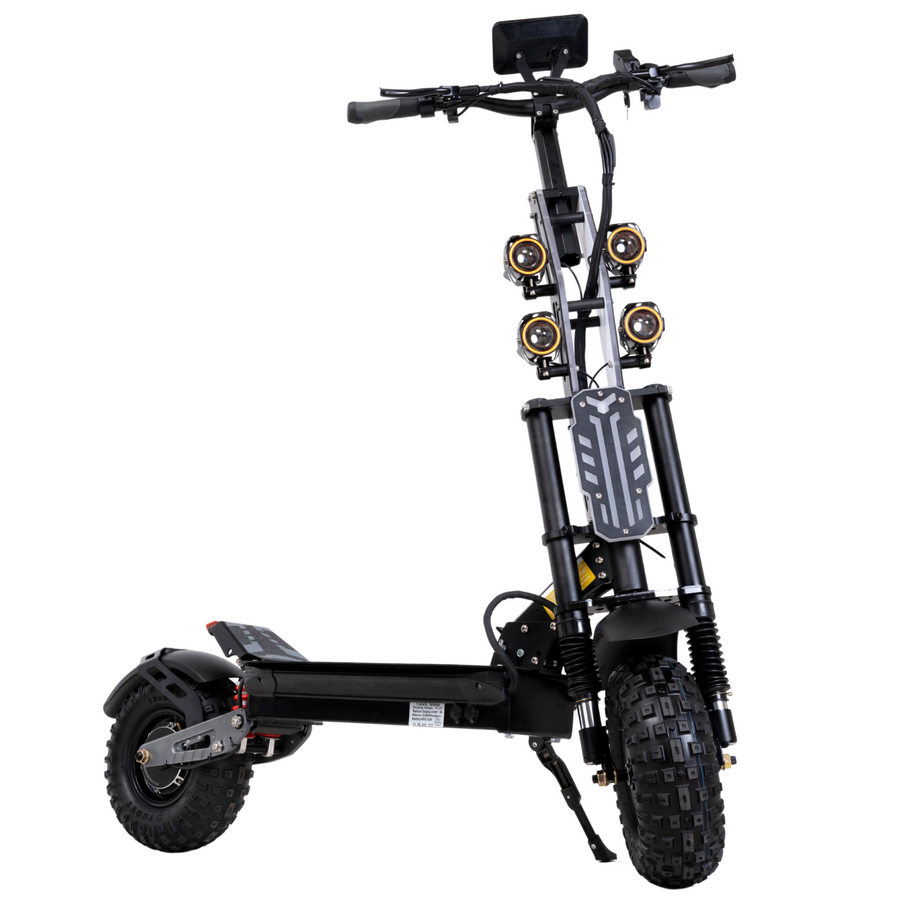
For years, the general public has viewed electric scooters as 15-mile-per-hour rental toys littering city sidewalks. This perception drastically misrepresents the current state of micro-mobility engineering. Today, hyper-scooters share more mechanical DNA with high-performance electric motorcycles than they do with traditional kick scooters. When clients ask us if e-scooters go 60 mph, they are often surprised to learn that 60 mph is no longer the absolute ceiling; it is the new benchmark for premium performance models designed for serious enthusiasts.

At TopRiding, we handle the most extreme hardware in the industry. We know firsthand that the leap from a 20 mph commuter to a 60 mph hyper-scooter requires a massive overhaul in chassis rigidity, thermal management, and braking dynamics. If you are asking whether e-scooters go 60 mph because you are considering purchasing one, you must separate marketing hype from physical reality. In this comprehensive guide, we will break down the engineering that makes these incredible speeds possible, the strict safety protocols you must follow, and how to determine if upgrading to a hyper-scooter is actually the right commercial and practical choice for you.
Quick Answer: Can E-Scooters Go 60 MPH?
Yes, absolutely. Modern high-performance electric scooters can comfortably reach and exceed 60 mph. These "hyper-scooters" utilize massive 60V, 72V, or 84V electrical systems paired with dual brushless DC motors that generate between 5000W and 11000W of peak power. However, to make sure e-scooters go 60 mph safely, they require motorcycle-grade components including hydraulic disc brakes, robust steering dampers to prevent high-speed wobbles, and heavy-duty chassis designs. Riding at these extreme speeds requires full motorcycle protective gear and advanced riding experience.
What is a 60 MPH Hyper-Scooter?
In the micro-mobility sector, a 60 mph electric scooter is classified as a "hyper-scooter." Unlike standard commuter models that rely on lightweight 36V or 48V systems, hyper-scooters utilize aggressive 60V, 72V, or even 84V architectures. These extreme voltages are necessary to spin the motor stators at the massive RPMs required to push a rider past highway speed limits.
These machines are not portable last-mile solutions. They feature reinforced tubular steel or aviation-grade forged aluminum frames, with curb weights routinely ranging from 100 to 160 pounds. To eliminate the inherent instability of a standing-rider vehicle geometry, they are equipped with complex, adjustable hydraulic or air suspension systems. Because the rider stands high above the axle line, the center of gravity is significantly elevated, making aerodynamic drag and crosswinds major factors at 60 mph.
How Do E-Scooters Go 60 MPH? The Engineering Explained
How do e-scooters go 60 mph when they look so small? The physics rely on advanced electrical engineering. High-amperage sine-wave controllers draw massive currents from a high-capacity lithium-ion battery pack and feed it into dual brushless DC (BLDC) gearless hub motors located in both the front and rear wheels.
The core equation for electrical power is Watts = Volts x Amps. To achieve 60 mph, overcoming rolling resistance and squared aerodynamic drag, an e-scooter generally needs a peak output of at least 5000 watts. A 72V battery paired with 50-amp controllers on each wheel can deliver upwards of 8000W of peak power. When the rider engages the throttle, these controllers pull direct current (DC) from the battery cells, convert it to alternating phases, and drive the massive electromagnets inside the wheel hubs.
Mechanical stabilization is equally critical. At 60 mph, centrifugal force physically expands the tires. To maintain steering geometry, hyper-scooters rely on a specifically calculated rake angle on the steering column and a hydraulic steering damper. This damper acts as a lateral shock absorber for the handlebars, preventing speed wobbles (tank slappers) that occur when small front-wheel deflections amplify at high velocity. Deceleration requires massive stopping power; therefore, these scooters use fully hydraulic quad-piston disc brakes paired with adjustable electronic regenerative braking. This dual-system approach is required to dissipate massive kinetic energy without instantly boiling the hydraulic brake fluid.
The Real Benefits of 60 MPH Capability
The primary benefit of owning an e-scooter capable of 60 mph is not necessarily riding at top speed constantly, but the massive power overhead it provides. In most professional situations, we recommend having significantly more power than you need. A hyper-scooter driven at 35 mph will run incredibly cool and efficiently, placing zero strain on the controllers or battery cells. Conversely, a budget 35 mph scooter pushed to its absolute limit will overheat, degrading the battery rapidly.
Additionally, this level of power allows riders to keep pace with traffic on multi-lane suburban roads, practically eliminating the danger of being aggressively passed by cars. The extreme torque means that steep hills—even those with 35-degree inclines—become entirely unnoticeable. Larger riders also benefit immensely; if you are looking at the best electric scooters for heavy adults, a 60 mph capable motor system will not bog down under payloads exceeding 250 to 300 pounds.
Limitations & Safety Hazards
The limitations of a 60 mph e-scooter are tied directly to its massive physical footprint, legal restrictions, and thermal management. These are not devices you can casually fold and carry onto a crowded subway train or haul up a narrow flight of stairs. They demand dedicated garage or secure ground-floor parking.
Thermal throttling is an undeniable reality. Pushing 7000W+ of power generates immense heat in the phase wires, controllers, and battery cells. Continuous riding at 60 mph will rapidly deplete the battery, often cutting the manufacturer's advertised maximum eco-range by up to 60%. Legality is another major constraint. In many jurisdictions worldwide, operating an electric scooter capable of 60 mph on public bike paths is strictly illegal, restricting you to private property, off-road trails, or specific motor vehicle lanes where you are treated legally as a moped or motorcycle.
Who Should Ride 60 MPH Scooters
We recommend 60 mph hyper-scooters exclusively for highly experienced riders who are prepared to treat them like motorcycles. If you are a veteran rider, a powersports enthusiast, or an individual commuting long distances on rural/suburban roads where keeping up with 45 mph traffic is a matter of safety, this class of scooter is ideal. They are also top choices for riders seeking the most powerful electric scooters in the world for private track days and extreme off-road overlanding.
Who Does Not Need One
For beginners, casual urban commuters, or last-mile transit users, a 60 mph electric scooter is expensive, dangerous, and a massive overkill. If your daily commute involves navigating congested city sidewalks, carrying the unit into office elevators, or hopping on trains, the 100+ pound weight and aggressive throttle response of a hyper-scooter will be a severe hindrance. You are far better off researching the top 5 electric scooters of 2026 optimized for 20-30 mph urban commuting.
Common Mistakes When Riding at Extreme Speeds
The most catastrophic mistake riders make is wearing inadequate protective gear. A standard bicycle helmet and a t-shirt are absolutely useless when sliding across asphalt at 60 mph. In our testing, DOT or ECE-approved full-face motorcycle helmets, CE-rated armored jackets, kevlar-lined gloves, and rigid riding boots are completely non-negotiable.
Another common error is launching the scooter aggressively on cold tires. High-performance pneumatic rubber requires thermal cycling to grip the road effectively. Slamming the throttle on cold tires with high-voltage motors will cause immediate wheel spin and loss of lateral control. Furthermore, novice riders tend to grip the handlebars too tightly at high speeds out of fear. This "death grip" transfers upper body movements directly into the steering column, actively inducing high-speed wobbles. To ride safely, you must grip the deck firmly with your feet, keep your knees slightly bent to act as secondary suspension, and maintain a relaxed but firm grip on the bars while allowing the steering damper to stabilize the wheel.
Crucial Buying Considerations for Hyper-Scooters
When evaluating a purchase, you must look far beyond the manufacturer's top speed claim. You must aggressively assess the build quality of the chassis. Demand fully hydraulic disc brakes with large 140mm or 160mm rotors to handle the intense heat of high-speed deceleration.
Check the battery chemistry and construction. A 60 mph run drains massive amperage; you need a battery built with name-brand 21700 or 18650 cells (such as LG, Samsung, or Panasonic) capable of high continuous discharge rates without triggering thermal runaway. Suspension geometry is equally critical. Look for adjustable hydraulic shocks or inverted front forks that keep the tires firmly planted on the pavement over imperfections. Ensure the scooter comes factory-equipped with a steering damper. If you are comparing the best 50 mph electric scooters 2026 to 60 mph models, the structural integrity of the folding mechanism is paramount—it must feature a secure double-clamp or robust locking pin to prevent any stem flex during heavy braking.
Expert Recommendation & Product Spotlight
From our experience at TopRiding, true 60 mph capability requires uncompromising, heavy-duty engineering. For commercial users, heavy riders, and thrill-seekers looking for an absolute powerhouse that can safely touch extreme limits while remaining remarkably stable, we highly recommend the TopRiding FOHOLO F19.
TopRiding FOHOLO F19 - Fast Electric Scooter for Adult
Engineered for those who refuse to compromise, the FOHOLO F19 pushes the boundaries of extreme micro-mobility.
-
Top Speed: 55+ MPH
-
Motor Power: 7000W Dual Motors for relentless torque
-
Battery: 60V 33AH lithium pack for up to 65 miles of range
-
Safety: UL 2272 Certification with full Hydraulic Disc Brakes
-
Chassis: Triple Clamp Hydraulic Fork & 13″ All-Terrain Fat Tires
-
Capacity: Massive Max Rider Load of 440 LBS
View the FOHOLO F19
This machine perfectly bridges the gap between daily reliability and extreme performance. With its 7000W dual motors, it effortlessly dominates steep inclines and offers the massive speed headroom needed to safely navigate fast-moving traffic. Furthermore, the massive 13-inch all-terrain fat tires provide a gyroscopic stabilizing effect that smaller 10-inch tires simply cannot replicate at high speeds, making it an exceptional contender among the best dual motor electric scooters.
Summary and Comparison Tables
Quick Summary Table: Speed Tiers & Hardware Requirements
| Target Speed |
Required System Voltage |
Required Peak Power |
Mandatory Safety Hardware |
| 20 - 25 MPH |
36V - 48V |
500W - 1000W |
Drum or Mechanical Disc Brakes |
| 35 - 45 MPH |
52V - 60V |
2000W - 4000W |
Full Suspension, Hydraulic Brakes |
| 55 - 60+ MPH |
60V - 84V |
5000W - 11000W+ |
Steering Damper, Motorcycle Gear, 11"+ Tires |
Comparison Table: Commuter vs. Hyper-Scooter
| Feature |
Standard Commuter Scooter |
60 MPH Hyper-Scooter |
| Weight |
30 - 45 lbs (Highly Portable) |
100 - 150 lbs (Requires dedicated parking) |
| Motors |
Single Rear Hub |
Dual High-Torque Hub Motors |
| Tire Profile |
8.5" - 10" Narrow Street Tires |
11" - 13" Ultra-Wide Fat Tires |
| Best Environment |
Bike lanes, congested city centers |
Multi-lane roads, off-road trails
|
Pros and Cons of 60 MPH E-Scooters
| Pros |
Cons |
| Massive power overhead means motors rarely overheat at normal speeds. |
High cost of entry ($2,500 to $4,500+). |
| Ability to flow safely with 45-55 mph vehicle traffic. |
Extreme danger if ridden without proper motorcycle safety gear. |
| Unmatched hill-climbing ability, easily carrying 300+ lb riders. |
Extremely heavy; impossible to carry up stairs. |
| Incredible suspension systems absorb major potholes effortlessly. |
Strict legal gray areas regarding road and bike path usage. |
Buying Guide: Technical Specifications to Demand
| Component |
Minimum Acceptable Standard for 60 MPH |
Why It Matters |
| Brakes |
Fully Hydraulic Disc Brakes (140mm+ Rotors) |
Cable brakes will stretch and fail under the extreme heat of stopping a 150 lb scooter from 60 mph. |
| Battery |
Name Brand Cells (LG, Samsung), Smart BMS |
Prevents thermal runaway during high continuous amperage discharge. |
| Steering |
Adjustable Hydraulic Steering Damper |
Eliminates high-speed wobble, keeping the front wheel tracking perfectly straight. |
Frequently Asked Questions (FAQ)
Are 60 mph electric scooters street legal?
In most regions, e-scooters capable of 60 mph exist in a legal gray area. They are often too fast to be legally classified as bicycles or standard micro-mobility devices for use in bike lanes. Many jurisdictions require them to be registered as mopeds or motorcycles if ridden on public roads, requiring a valid driver's license and insurance. Always check your local municipal codes.
What causes "speed wobble" on an electric scooter?
Speed wobble occurs when small deflections in the front wheel hit a resonant frequency, causing the handlebars to shake violently side to side. It is caused by the steep steering rake angles of scooters, combined with rider tension (gripping the bars too hard) and lack of a steering damper. Installing a steering damper and keeping a relaxed upper body grip mitigates this severe risk.
How far can a 60 mph scooter travel on a single charge?
While a high-end scooter might advertise a 60 to 80-mile range, that is calculated riding in eco-mode at 15 mph. If you continuously ride at 50 to 60 mph, the immense power draw will drastically reduce your range. Expect to achieve roughly 25 to 35 miles of real-world range when riding aggressively at top speeds.
Authoritative References & Safety Standards
For more information on high-speed micromobility safety standards, vehicle classifications, and battery safety, please refer to the following authoritative organizations: