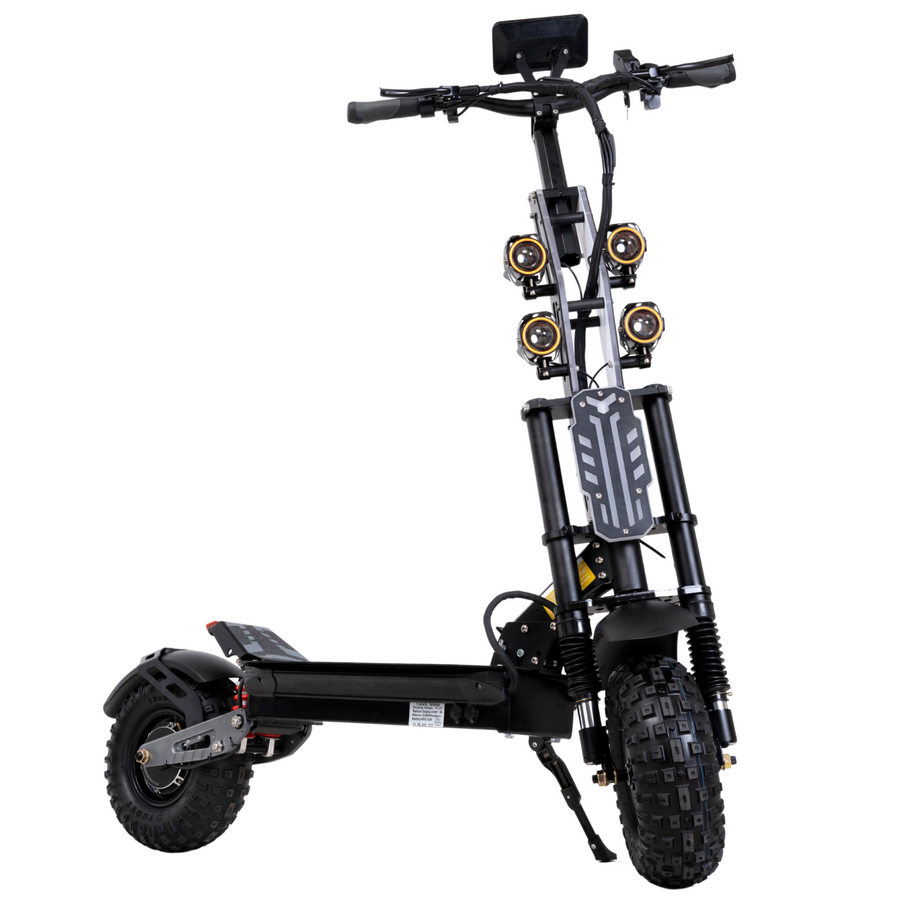
The urban micro-mobility market has entered a mature, highly diversified manufacturing era. Driven by strict global carbon mandates, rising fuel overheads, and chronic metropolitan traffic congestion, individual commuters and logistics fleets have moved far past old-style public transit options. When evaluating the contemporary light electric vehicle landscape, retail buyers, fleet managers, and campus operators must balance dynamic technological features against baseline budget limitations. Understanding the true market-wide cost of a motorized scooter is no longer a matter of checking raw price tags; it demands analyzing battery chemistry lifecycles, motor drivetrain configurations, and long-term return on investment metrics.
At TopRiding, we build high-performance Personal Transportation Vehicles (PTVs) from an unyielding stance of engineering precision and industrial accountability. Specializing in advanced dual-motor adult vehicles, heavy-duty logistics options, and smart personal commuters, we track global micro-mobility supply chains from raw lithium cells to finished structural alloys. From our experience, many new micro-mobility buyers drop their long-term profitability by falling into the trap of purchasing ultra-cheap unvetted models based purely on introductory discounts. They frequently suffer early controller burning, frame material cracks, and rapid cell capacity drop-offs that leave them stranded. This authoritative guide deconstructs the current retail tiers dictating the cost of a motorized scooter in 2026, delivering complete transparency across engineering hardware, performance profiles, and life-cycle asset management.
1. Sourcing Matrix: Cost of a Motorized Scooter Tiers & Specs
Before launching a commercial fleet deployment, calculating localized commuter allowances, or procuring individual performance machines, buyers must map out market pricing segments. The table below profiles how standard classes segment across price, drivetrain capacity, and range indicators this season.
| Scooter Performance Class |
Average Retail Price Range |
Nominal Motor Layout |
Real-World Range Expectation |
Target Consumer Market Segment |
| Entry-Level / Budget Commuter |
$300 - $600 |
250W - 350W Single Hub |
10 - 15 Miles per charge |
First-time casual riders, short inner-city blocks, and teens |
| Mid-Tier / Mid-Range Commuter |
$600 - $1,000 |
500W - 1000W Single/Dual |
20 - 35 Miles per charge |
Daily office professionals, urban grid crossers, and mixed transit |
| High-Performance / All-Terrain |
$1,000 - $2,000 |
2000W - 5600W Dual Motors |
40 - 55 Miles per charge |
Serious micro-mobility enthusiasts, off-road track riders, and pro couriers |
| Ultra-Hyper / Racing Class |
$2,000 - $4,000+ |
6000W - 10000W+ Dual |
60 - 85+ Miles per charge |
Extreme track racers, heavy long-distance commuters, and prestige collectors |
2. Micro-Mobility Physics: Why Component Chemistry Dictates the Price
To successfully evaluate the real cost of a motorized scooter, an engineer must look past plastic shell covers and analyze the underlying power electronics. The total manufacturing cost of a modern personal vehicle is heavily dominated by two primary sub-assemblies: the lithium-ion traction pack and the dual-field field-oriented control (FOC) motor inverters. These assemblies dictate both the raw performance envelope and the long-term structural durability of the vehicle.
From our experience, high-performance machines require wide voltage baselines (typically 60V to 72V) to push immense currents without generating destructive internal heat. When you step up to a professional performance platform like the TopRiding FOHOLO F15, your investment shifts directly into heavy mechanical hardware, featuring a 5600W dual-motor drivetrain and a solid all-terrain suspension system engineered to absorb massive off-road shock loads at up to 47MPH fast. Conversely, cheap entry-level models utilize basic 36V setups with narrow square-wave controllers that drop efficiency instantly under heavy climbing loads, burning out their internal silicon chips within a single season of hill climbing.

From Our Experience: The Battery Capacity Math
We recommend calculating your real cost based on watt-hours (Wh) rather than relying on unverified manufacturer range slogans. To isolate real battery capacity, multiply the nominal pack voltage by the ampere-hour (Ah) rating (e.g., a 60V 30Ah pack delivers exactly 1,800 Watt-hours of raw electrical volume). If a cheap competitor promises a 50-mile range on a tiny 400Wh battery pack, the math fails completely under real-world adult rider weights. True commercial-grade range requires high-density cell arrays that hold their capacities through thousands of continuous charge cycles.
3. Application Matching: Sourcing for Campuses, Commutes, and Logistics
Selecting an ideal vehicle array requires matching the physical build limits of the scooter line with the specific loading demands of your target operating environment.
High-Yield Last-Mile Delivery Logistics
For independent couriers, urban food delivery firms, and fast-paced micro-logistics operators, vehicle downtime translates directly to immediate revenue failure. To maximize corporate profit margins, fleets require long-range setups built to withstand 10 hours of daily high-speed routing. Sourcing our extreme-range TopRiding FOHOLO F19 platform gives logistics teams access to a massive 7000W dual-motor powertrain capable of delivering up to 65 miles of long-range operations on a single charge. To analyze detailed return-on-investment parameters, peak velocity metrics, and cargo capacity indicators for commercial operations, explore our corporate review of the best electric scooters for delivery business requirements.
Daily Professional Commuting and Campus Crossings
When selecting a personal vehicle for urban city travel or high-density university navigation, the primary design focus shifts to portability, lightweight folding locks, and reliable electronics. For students attempting to avoid parking fees and cross large campus layouts efficiently, consulting our specialized guide on the best scooters for college commuting profiles lightweight options built to slide easily underneath standard lecture hall desks.
For office commuters managing tight daily budgets, securing high performance under a fixed price ceiling is key. Reviewing our technical manual on the best long range electric scooters under 1000 showcases how modern mid-tier platforms combine advanced 48V electronics with reliable drum-and-disc braking arrays to deliver outstanding daily value without breaking your budget.
4. Risk Mitigation: Asset Security and Cold Weather Management
Operating a high-value micro-mobility fleet or private commuter vehicle demands a proactive engineering approach to mitigate common real-world liabilities like physical theft and seasonal environmental capacity drops.
| Environmental / Safety Variable |
Physical Impact on the Vehicle Asset |
Engineering Mitigation Protocol |
TopRiding Sourcing Resource Link |
| Sub-Zero Atmospheric Cold |
Drops cell internal ion velocity, compressing range by up to 30% |
Store packs indoors; implement internal smart BMS monitoring |
How cold weather affects scooter battery |
| Targeted Physical Theft |
High threat index in unmonitored metropolitan parking sectors |
Deploy heavy steel folding locks paired with active GPS tracking |
Are electric scooters easily stolen |
| Wet Weather / Road Splash |
Corrodes external terminal bearings and triggers short circuits |
Specify certified IPX5 or IPX6 water-resistant structures |
TopRiding Sourcing Portal |
Managing Cold-Weather Cell Potency
Lithium-ion cells operate via a liquid electrochemical electrolyte layer that facilitates ion tracking between the anode and cathode. When ambient temperatures drop below freezing, this fluid viscosity hardens, increasing internal electrical resistance. This restriction limits the pack's ability to discharge current efficiently, causing a noticeable drop in range. To safeguard your fleet's winter range, we recommend reviewing our technical analysis on how cold weather affects scooter battery metrics, which outlines storage temperatures and charging safeguards required to preserve cell life through winter freeze cycles.
Securing Assets Against Street Theft
Because premium adult scooters are lightweight and highly portable, they represent a high-value target for urban street thieves if left unmonitored. Standard cable locks can be snipped silently in seconds using basic hand tools. To build a robust security plan for your commuter assets, explore our industrial safety overview on are electric scooters easily stolen lines, detailing the usage of heavy steel folding locks, smart app-controlled ignition cutoffs, and deep-chassis GPS tracking chips to secure your mobility assets permanently.
5. Frequently Asked Questions (FAQs)
What is the core engineering factor driving the cost difference between budget and premium scooters?
The price variance is primarily driven by battery cell density, motor layout, and structural alloy grades. Budget scooters utilize low-capacity 36V batteries paired with narrow single motors that struggle on inclines. Premium scooters incorporate high-capacity 60V or 72V lithium arrays, dual high-torque hub motors, advanced sine-wave FOC controllers, and fully adjustable hydraulic suspension systems built to handle extreme mechanical loads safely.
How many full charge cycles can a standard lithium-ion scooter battery sustain before dropping capacity?
High-quality, factory-certified lithium-ion packs typically sustain between 500 and 800 full discharge-and-charge cycles before experiencing a standard drop to 80% of their original factory capacity. For a daily commuter executing one complete cycle per day, this translates to roughly 3 to 5 years of highly reliable operational service before requiring a factory cell replacement.
Can I safely charge my electric vehicle battery immediately after finishing a high-speed speed run?
No, we highly recommend against plugging your scooter into a charger immediately after a high-speed run. Intense riding heats up the internal lithium cells significantly. Sucking high current into a hot battery pack can trigger intense thermal stress, accelerate internal crystal growth, and lower the overall lifespan of your cells. Allow the deck to cool down for 30 minutes before charging.
What exact maintenance step is most critical for protecting a dual-motor performance scooter?
The most critical routine maintenance step is tracking your tire inflation pressures weekly. Running on soft, under-inflated tires increases rolling resistance dramatically, which overworks your FOC controllers, drops your maximum range by up to 20%, and increases the risk of dangerous pinch flats when striking sharp potholes or street curbs.
What does an IPX6 water-resistance rating mean for commercial delivery scooters?
An IPX6 rating certifies that the vehicle's electrical enclosures, internal wire connections, and main battery bays are fully protected against high-pressure water streams from any angle. This high safety certification allows commercial couriers to ride confidently through heavy downpours and wet city streets without risk of short-circuiting or water damage.
6. Academic, Regulatory, and Aerospace Engineering References
For official micro-mobility safety certifications, battery transportation codes, and international structural testing regulations, consult these authoritative international organizations: