Selecting the right power output for an electric vehicle is often the most misunderstood aspect of the purchasing process. When prospective riders ask many watts should an adult scooter possess, the answer is rarely a single number. Instead, it is a calculation involving rider mass, local topography, and desired safety margins. From our experience at TopRiding, many consumers mistakenly equate wattage solely with top speed, overlooking the critical role of torque and thermal management in sustained performance.
Understanding Wattage: Nominal vs. Peak Power
In the electric micromobility sector, wattage is the measurement of electrical power, calculated as the product of voltage and current. However, there is a technical distinction that riders must recognize: nominal power versus peak power. Nominal wattage refers to the continuous power the motor can handle indefinitely without overheating. Peak wattage is the maximum power the motor can draw for short bursts, such as when accelerating or conquering a steep hill.
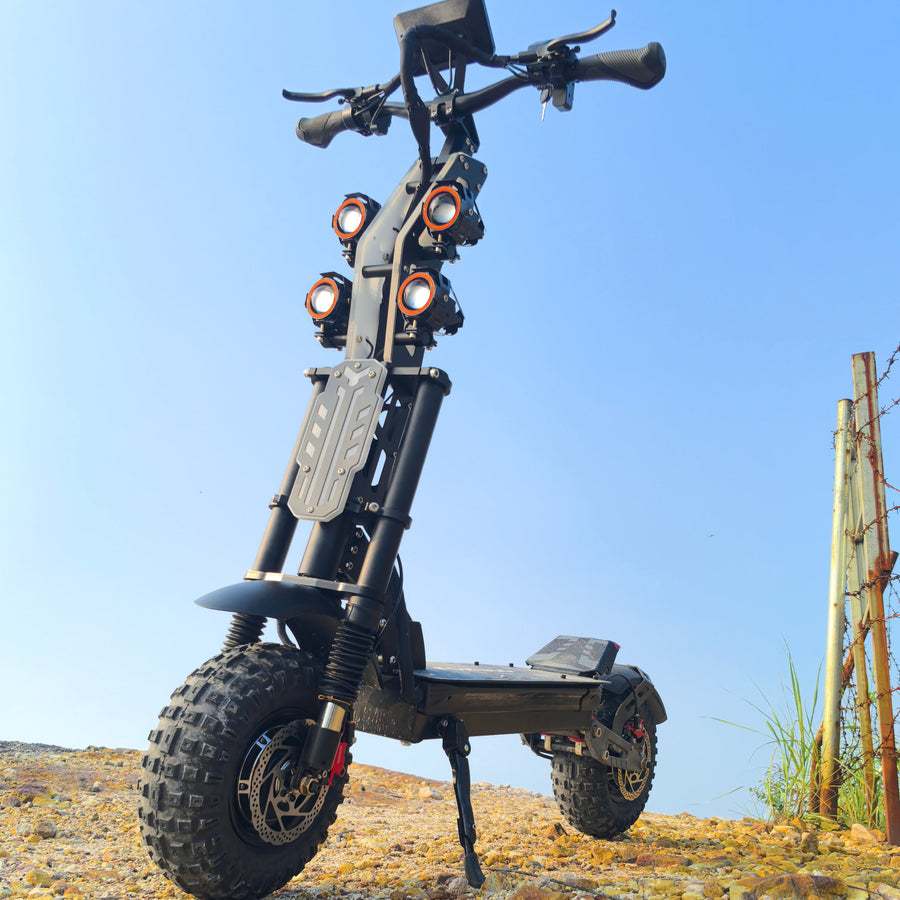
We recommend prioritizing nominal wattage ratings when evaluating long-term reliability. A motor pushed to its peak for extended periods will suffer from heat soak, leading to efficiency loss and potential controller failure. In our field testing, we have found that a high-quality 500W nominal motor often outperforms a poorly engineered 1000W peak motor. This discrepancy is why high-performance models, like the TopRiding FOHOLO F19, utilize dual brushless motors to distribute the load, totaling 7000W of peak performance while maintaining thermal stability.
Rider Weight and Power Requirements
The physics of motion dictate that more mass requires more energy to accelerate and maintain velocity. For riders under 150 lbs, a 250W to 350W motor is generally sufficient for flat city streets. However, as the rider's weight increases, the efficiency of low-wattage motors plummets. When considering many watts should an adult scooter have for a larger individual, we suggest a baseline of at least 500W to 750W.
This becomes particularly critical for individuals near or above the 300 lb mark. For a detailed analysis of this specific demographic, you can read our findings on can a 300 lb person ride an electric scooter. In these scenarios, low-wattage motors struggle to initiate motion from a dead stop, which places immense strain on the battery and electronic speed controller (ESC). For heavy-duty use, we recommend dual-motor setups that provide redundant power and superior torque.
Terrain, Inclines, and Torque Demands
A scooter's ability to climb is directly proportional to its wattage and motor configuration. If your daily commute involves hills with gradients exceeding 10%, a standard 250W hub motor will likely stall or slow to a walking pace. From our experience, single-motor scooters under 500W are strictly "flat-land" vehicles. For regions like San Francisco or hilly suburban areas, a minimum of 1000W (either single or dual motor) is necessary to maintain a safe traffic speed during ascent.
Torque is the rotational force that actually moves the wheels. While wattage is the electrical input, torque is the mechanical output. High-wattage systems typically offer higher torque, which is essential for off-road conditions or navigating "stop-and-go" urban traffic. For instance, the FOHOLO F19’s 7000W dual-motor system allows for a 45-degree incline capability, a feat impossible for mid-range units. When evaluating how many watts should an adult scooter have, always consider the steepest hill on your route.
Wattage Categories by Use Case
The Commuter Tier (250W - 500W)
This is the most common category for students and office workers. These scooters are designed for portability and "last-mile" connectivity. They are ideal for college campus commuting where distances are short and speeds are capped. However, they lack the "oomph" for long-distance travel or heavy payloads.
The Performance Tier (500W - 1500W)
This range represents the "sweet spot" for most adults. It provides enough power to reach speeds of 25-30 MPH and handles moderate hills with ease. Riders often look for the best long range electric scooters under 1000 within this category, as they balance cost with capable 48V or 52V systems.
The Professional and Utility Tier (1500W - 7000W+)
These are high-voltage machines (60V to 72V) designed for serious transit. If you are operating a delivery business, time is money. A scooter with insufficient wattage will be slow to accelerate and limited in range under heavy cargo loads. In the 2026 market, professional delivery riders are increasingly moving toward dual-motor systems to ensure uptime and speed.
Featured Professional Model: TopRiding FOHOLO F19
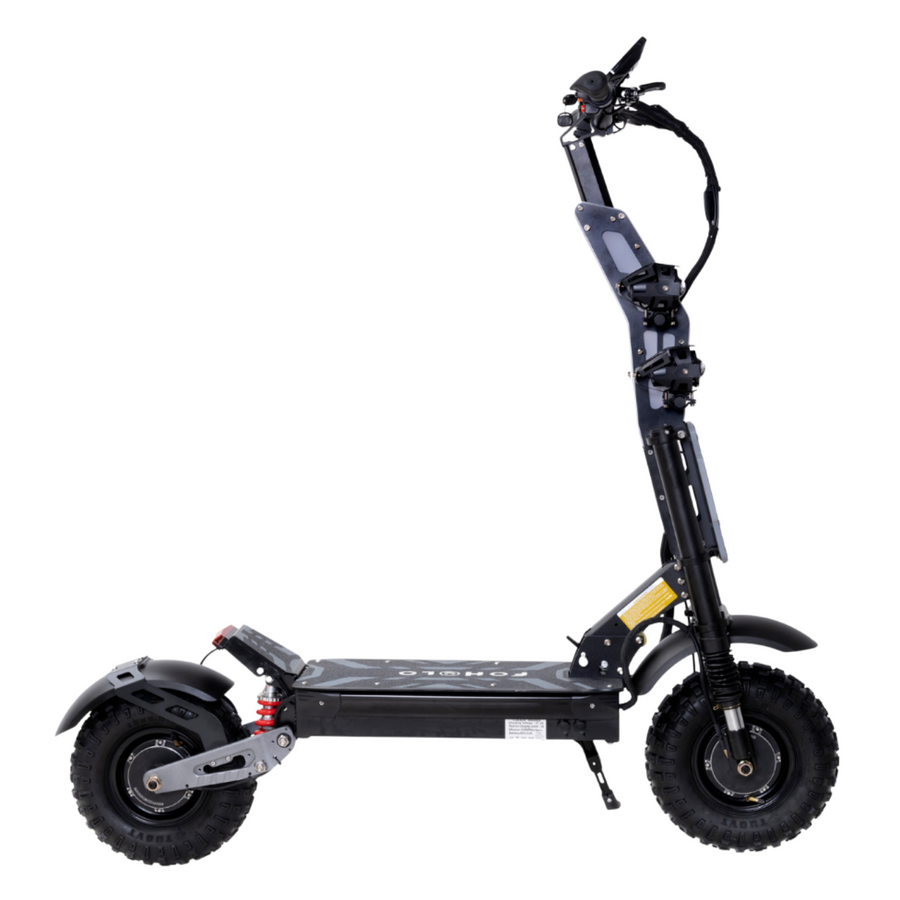
For those who require the pinnacle of power, the FOHOLO F19 defines the ultra-high-performance segment. With a 7000W dual brushless motor configuration, it is engineered for riders who refuse to compromise on speed or terrain capability.
-
Power: 7000W (Dual 3500W Motors)
-
Top Speed: 55 MPH - Professional Grade
-
Incline: Conquers up to 45° slopes effortlessly
-
Safety: UL2272 Certified with Hydraulic Disc Brakes
-
Tires: 13-inch All-Terrain Fat Tires for maximum grip
This model is particularly suited for high-load riders and long-distance commuters, offering a 65+ mile range on a single charge. Explore the FOHOLO F19 specifications to see how high wattage transforms the riding experience.
The Relationship Between Voltage, Watts, and Range
Wattage does not exist in a vacuum; it is heavily influenced by the battery's voltage and capacity (Amp-hours). A 1000W motor on a 36V system will draw significantly more current than the same motor on a 60V system, leading to more heat and less efficiency. Higher voltage systems are intrinsically more efficient at delivering high wattage. We recommend 60V systems for any adult scooter intended to exceed 30 MPH.
Furthermore, weather conditions play a role in how this power is delivered. Cold temperatures increase the internal resistance of the battery, effectively reducing the available wattage the motor can draw. Understanding how cold weather affects scooter battery performance is vital for year-round commuters. If you live in a cold climate, we suggest choosing a scooter with a higher nominal wattage than you think you need to compensate for seasonal performance drops.
Summary Table of Wattage Needs
| Rider Profile |
Typical Terrain |
Recommended Wattage |
Typical Top Speed |
| Lightweight ( < 150 lbs) |
Flat Urban |
250W - 350W |
15 - 18 MPH |
| Average Adult (150 - 220 lbs) |
Mixed City Hills |
500W - 800W |
20 - 28 MPH |
| Heavy Rider / Delivery |
Frequent Steep Hills |
1000W - 2500W |
30 - 45 MPH |
| Off-Road / Extreme Pro |
All Terrain / 40°+ Inclines |
3000W - 7000W |
50+ MPH |
Security Concerns for High-Wattage Scooters
As wattage and price increase, so does the attractiveness of the vehicle to thieves. High-performance scooters are high-value targets. Because these machines are heavier and more powerful, traditional bike locks are often insufficient. We recommend using heavy-duty motorcycle-grade chains and GPS tracking. For more tips on protecting your investment, see are electric scooters easily stolen.
Frequently Asked Questions
Is 250W enough for an adult?
From our experience, 250W is only sufficient for lightweight riders on perfectly flat ground. For the average adult male (approx. 190 lbs), 250W will feel sluggish and struggle to maintain speed against even light headwinds.
Does higher wattage mean less range?
Not necessarily. While a 7000W motor can consume energy quickly at full throttle, it is often more efficient than a 250W motor that is constantly struggling at 100% capacity. Range depends more on battery capacity (Wh) and riding style than motor wattage alone.
What is the legal wattage limit for electric scooters?
Laws vary significantly by region. In many European countries, the limit is 250W continuous. In many US states, the limit is 750W for road use. However, for private property or off-road use, there are typically no limits, which is where high-wattage monsters like the F19 excel.
Is dual motor better than single motor for wattage?
We recommend dual motors for anyone dealing with hills. Two 500W motors (1000W total) will almost always climb better and accelerate smoother than a single 1000W motor because of the increased traction and distributed load.
References
Conclusion: When determining how many watts should an adult scooter have, baseline your decision on your weight and your steepest hill. For casual urban use, 500W nominal is the professional standard. For those seeking a vehicle that replaces a car or handles extreme conditions, the jump to a dual-motor, high-wattage system like the FOHOLO F19 is not just about speed—it is about the security of having power in reserve when you need it most.