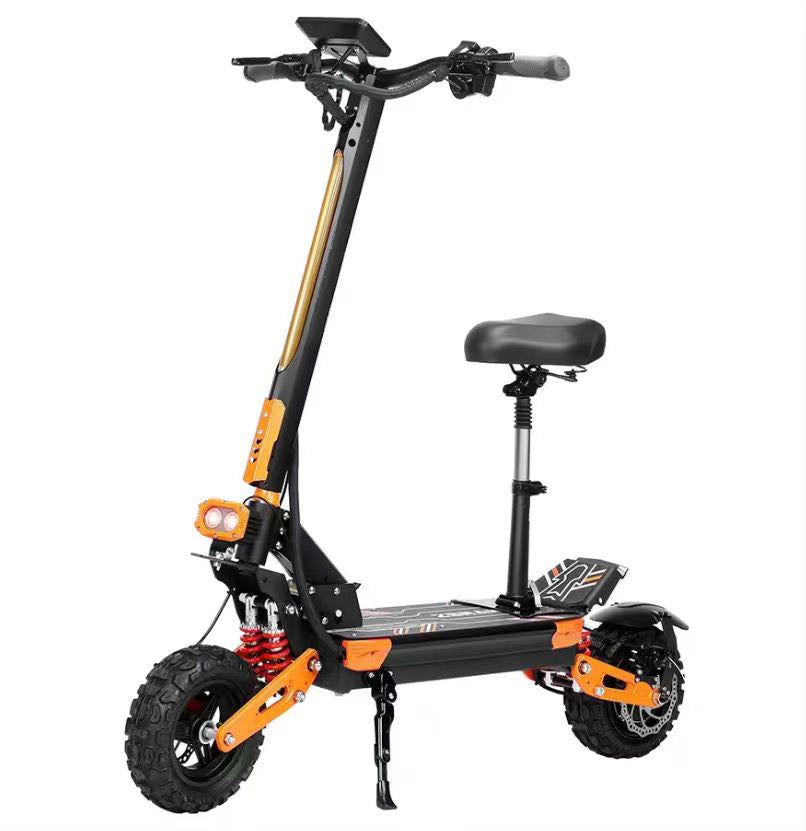
The micro-mobility industry has evolved rapidly, moving far beyond the smooth, paved bike lanes of metropolitan cities. Today, riders are pushing their personal electric vehicles to the absolute limit. Whether you are navigating a rural driveway, exploring state park trails, or simply dealing with poorly maintained gravel shortcuts on your daily commute, a critical question inevitably arises: do electric scooters work on dirt roads?

From our experience engineering and testing high-performance personal electric vehicles at TopRiding, we see consumers making catastrophic purchasing mistakes every day. They buy a standard 250-watt commuter scooter with solid 8-inch tires, take it on a gravel path, and end up with a snapped stem or a severe injury. In most professional situations, taking an urban scooter off-road is a recipe for disaster. However, if you are armed with the correct hardware, electric scooters are not only capable of conquering dirt roads—they excel at it. In this guide, we break down exactly what makes a scooter dirt-road ready, and help you make a decisive buying decision.
Quick Answer: Can You Ride on Dirt?
Yes, electric scooters work on dirt roads, but only if you are using an off-road specific model. A standard commuter scooter will fail on dirt due to a lack of traction, insufficient suspension, and weak motor torque.
To safely navigate dirt, gravel, and unpaved trails, your scooter must feature pneumatic (air-filled) knobby tires of at least 10 inches, dual suspension (spring or hydraulic), and a minimum of 1000W total motor power. If your current scooter lacks these three elements, keep it on the pavement.
What Defines an Off-Road Electric Scooter?
Before you ask if can electric scooters go off road, you must understand the anatomical differences between a sidewalk cruiser and a dirt-devouring machine. An off-road electric scooter is a heavy-duty micro-mobility vehicle engineered specifically to absorb kinetic trauma.
Unlike urban models that prioritize lightweight portability, off-road variants prioritize structural integrity. They feature aircraft-grade aluminum alloy frames capable of withstanding massive shear forces. They utilize dual-motor setups to distribute traction evenly, preventing the front wheel from digging into loose soil. Essentially, they are the SUV equivalent of the scooter world.
How Electric Scooters Function on Dirt
Riding on dirt requires overcoming two distinct physics problems: kinetic absorption and traction loss. Here is how a proper scooter handles these challenges:
Pneumatic Knobby Tires: Solid tires are completely useless on dirt. They skip over rocks and transfer 100% of the vibration into the steering column. Pneumatic (air-filled) tires act as the first line of suspension. By dropping the tire pressure slightly (e.g., from 45 PSI to 35 PSI), the tire footprint widens. Deep, aggressive treads (knobby tires) bite into loose topsoil and eject mud as the wheel spins, ensuring the rubber maintains contact with the harder sub-layer of dirt.
Advanced Suspension Geometry: Dirt roads are characterized by washboards, ruts, and embedded rocks. A scooter requires independent front and rear suspension to keep the deck level. Swingarm suspensions with heavy-duty hydraulic or coil-over shock absorbers compress upon impact, keeping the tire pressed firmly against the dirt rather than bouncing into the air. If the tire leaves the ground, you lose all braking and acceleration capabilities.
Torque over Speed: On dirt, top speed is largely irrelevant; torque is everything. We frequently receive questions asking, can a 500W scooter go uphill on a dirt road? In our testing, a single 500W motor will bog down and stall on a loose, 15-degree dirt incline. Off-road scooters utilize dual motors (e.g., 1000W to 3000W total) operating at higher voltages (52V or 60V) to deliver the raw rotational force required to pull the rider out of ruts and over obstacles.
Comparison: Commuter vs. Off-Road on Dirt
To clearly illustrate whether electric scooters work on dirt roads, review this comparison of standard urban scooters versus dedicated heavy-duty models when subjected to unpaved environments.
| Feature |
Standard Commuter Scooter |
Dedicated Off-Road Scooter |
| Tire Type |
8.5" Solid or Smooth Pneumatic |
10" to 11" Pneumatic Knobby Fat Tires |
| Suspension |
None, or basic front spring |
Dual independent hydraulic/coil-over |
| Motor Power |
250W - 500W (Single Hub) |
1200W - 4000W+ (Dual Hub) |
| Ground Clearance |
3 to 4 inches (Prone to bottoming out) |
6 to 8 inches (Clears rocks and roots) |
| Dirt Performance |
Extremely Dangerous / Will get stuck |
Highly Capable / Stable and aggressive |
The Benefits of Riding on Dirt
Why take an electric scooter off the pavement in the first place? For commercial users and weekend warriors alike, the benefits are substantial.
First, route optimization. If you live in a rural or semi-urban area, cutting across a dirt path or gravel trail can shave miles off your daily commute. Second, avoiding traffic. Riding on paved roads forces you to contend with automobiles, which is statistically the highest risk factor for scooter riders. Moving to unpaved trails removes car traffic from the equation. Finally, the recreational thrill. With high-performance models, navigating off-road terrain is an exhilarating motorsport experience.
Limitations and Mechanical Risks
We must present commercial and practical judgment: riding on dirt degrades your scooter significantly faster than riding on asphalt. Dust and fine particulate matter are the enemies of moving parts. Dust will infiltrate unsealed wheel bearings, causing them to grind and eventually seize. Mud can cake onto the disc brake calipers, glazing the brake pads and reducing stopping power to zero.
Furthermore, navigating dirt roads drains your battery rapidly. The constant micro-accelerations required to maintain traction, coupled with the friction of loose soil, can reduce your maximum range by 30% to 40% compared to smooth pavement riding. If you are looking to cover vast distances off-road, you must invest in the best long range electric scooters under 1000 with massive battery capacities to compensate for the terrain drain.
Pros and Cons of Dirt Riding
| Pros (Advantages) |
Cons (Disadvantages) |
| Unlocks new, traffic-free commuting routes. |
Accelerates wear and tear on wheel bearings and brakes. |
| Provides excellent recreational and outdoor utility. |
Drastically reduces battery range due to high friction. |
| Safer from vehicular traffic accidents. |
Higher risk of flat tires from sharp rocks or thorns. |
| High-torque motors easily handle rural property tasks. |
Requires frequent, meticulous cleaning and maintenance. |
Who Should Use It & Who Does Not Need It
Who should use it: We recommend off-road capable scooters for rural commuters, agricultural workers needing quick property transport, RV owners who frequent campsites, and adrenaline enthusiasts. Furthermore, larger riders must opt for these heavy-duty builds. If you are wondering can a 300 lb person ride an electric scooter, the answer is yes, provided it is an off-road model with reinforced suspension and high-voltage motors designed to carry that payload.
Who does not need it: If you live in a dense metropolitan area with well-maintained bike lanes, purchasing a massive 80-pound off-road scooter is a logistical nightmare. You will struggle to carry it up apartment stairs or fit it onto a subway train. For urban dwellers, especially students looking at the best scooters for college commuting, a lightweight pavement-only scooter is the superior choice.
Common Mistakes Riders Make on Dirt
Expert Insight: The most catastrophic mistake we see on dirt roads is improper braking technique. Grabbing the front brake on loose gravel will instantly lock the front wheel, washing out the steering and throwing the rider over the handlebars.
On dirt roads, you must shift your weight backward and rely primarily on the rear brake to control your speed. The front brake should only be feathered gently.
Another frequent error is improper tire pressure. Riders will pump their tires to the maximum 50 PSI recommended on the sidewall. On pavement, this is great for range. On a dirt road, it creates a rock-hard tire with a tiny contact patch that slides dangerously. Drop your pressure by 10-15% when transitioning to dirt to allow the tire to flex and grip the terrain.
Expert Buying Considerations
When shopping for a scooter intended for dirt roads, prioritize these three specifications over everything else:
-
Dual Motors: You need all-wheel drive. A rear-wheel-drive only scooter will fishtail violently in loose dirt, while a front-wheel-drive only scooter will simply dig a hole and stall. Dual motors pull and push the vehicle through adverse conditions.
-
IP Water and Dust Resistance Rating: Dirt roads equal dust and mud puddles. Look for an IP54 rating at an absolute minimum. If you plan to ride through wet mud, you need IPX5 or higher. Remember to understand how cold weather affects scooter battery if you are riding off-road in the winter, as cold and moisture are battery killers.
-
Braking Systems: Electronic brakes or drum brakes are insufficient for off-road descent. You must demand front and rear disc brakes (preferably hydraulic) to ensure stopping power when descending steep, loose hills.
For those on a budget, researching the best off-road electric scooters under 1000 will reveal models that balance these necessary features without breaking the bank.
Expert Recommendation: TopRiding ZSNAKE Z35
In our professional testing of heavy-duty applications, bridging the gap between extreme off-road capability and commercial affordability is difficult. However, the TopRiding brand consistently delivers. If you are serious about conquering dirt roads, we recommend the TopRiding ZSNAKE Z35.
TopRiding ZSNAKE Z35 - Best Budget Off-Road Electric Scooter
Engineered explicitly for unpaved terrain, the ZSNAKE Z35 eliminates the traditional boundaries of scooter commuting. With massive 11-inch off-road fat tires and a full spring suspension system, it absorbs the kinetic shock of gravel and dirt paths flawlessly.
-
Motor: 2800W Single Motor (Massive torque for steep dirt inclines)
-
Battery & Range: 60V 15AH Battery delivering a Max Range of 35 Miles
-
Speed: Top Speed 33 MPH (See how to make electric scooter faster for off-road tuning)
-
Traction & Safety: 11” Off-road Fat Tires & Front/Rear Disc Brakes
-
Payload: Max Rider Load 330 LBS (Heavy-duty capable)
-
Certifications: UL 2272 Certification ensures battery safety under extreme stress.
View the ZSNAKE Z35
For adults seeking uncompromising performance off the pavement, this model ranks heavily among the top off-road scooters for adults due to its 60V architecture, which prevents voltage sag when attacking steep dirt hills.
Frequently Asked Questions (FAQ)
Will riding on a dirt road void my electric scooter's warranty?
In most professional situations, yes, unless the scooter is explicitly marketed and rated by the manufacturer for off-road use. Taking a commuter scooter on a dirt road constitutes "abusive riding," which voids standard warranties when the stem snaps or the motor burns out from excessive strain.
How do I clean my electric scooter after riding in the dirt?
Never use a high-pressure power washer, as it will force water past the rubber bearing seals and into the electrical deck. We recommend letting mud dry, brushing it off with a stiff nylon brush, and wiping the chassis down with a damp microfiber cloth. Always ensure the charging port cover is securely closed before cleaning.
Are electric scooters easily stolen if left at a trailhead?
Yes, high-value off-road scooters are prime targets for theft. Because they can be physically lifted into a truck, standard cable locks are insufficient. If you are wondering are electric scooters easily stolen, the answer is yes, unless you use a heavy-duty motorcycle U-lock combined with an audible alarm system.
Do I need to change my tires to ride on a dirt road?
If your scooter currently has slick street tires, yes. Street tires on loose dirt act like ice skates. You must swap them out for pneumatic knobby tires, which feature aggressive tread blocks designed to dig into soft surfaces and eject debris, providing the necessary mechanical grip.
Authoritative References & Safety Standards
-
U.S. Consumer Product Safety Commission (CPSC): Guidelines on micromobility safety and the structural requirements for safe operation of motorized scooters. Visit CPSC
-
UL Solutions: Safety standards for electrical systems in personal e-mobility devices, specifically outlining the rigorous UL 2272 certification process preventing thermal runaway. Visit UL Solutions
-
Battery University (Cadex Electronics): Technical analysis of lithium-ion battery discharge rates under high-stress, high-torque applications (such as off-road riding). Visit Battery University