As urban mobility evolves, riders are increasingly looking beyond city streets. The thrill of exploring nature trails, navigating gravel paths, or simply cutting across a grassy park has led many to ask a critical question: can electric scooters go off-road? The short answer is yes, but with significant caveats. Not every scooter is built to handle the rigors of unpaved terrain. Attempting to take a standard commuter scooter onto a rocky trail can lead to mechanical failure, flat tires, and even injury.

To successfully ride off-road, you need a machine specifically engineered for stability, power, and durability. In this comprehensive guide, we will explore the essential mechanics that define a true off-road electric scooter, analyze the risks involved, and introduce high-performance models that are redefining adventure riding in 2026. Whether you are a weekend warrior or a daily commuter facing rough roads, understanding these capabilities is the first step toward a safe and exhilarating ride.
1. What Defines an Off-Road Electric Scooter?
When we ask can electric scooters go off-road, we must distinguish between "all-terrain" capabilities and true "off-road" performance. A standard commuter scooter is designed for flat asphalt. It typically has small, solid tires, minimal suspension, and a single motor ranging from 250W to 500W. These specifications are insufficient for dirt, sand, or steep inclines.
An off-road electric scooter is a different beast entirely. It is essentially a crossover vehicle, borrowing engineering principles from motocross and mountain biking. These machines are characterized by robust frames made from aviation-grade aluminum or carbon fiber to withstand high-impact shocks. They feature high ground clearance to avoid scraping rocks and roots, and they possess the torque necessary to climb hills that would stall a lesser vehicle. In 2026, the definition of off-road has expanded to include "hyper-scooters" capable of speeds exceeding 60 mph, though for trail riding, torque and control are far more valuable than top speed.
2. Key Features to Look For: Power and Suspension
If you plan to leave the pavement, two components are non-negotiable: the motor and the suspension system. Without these, your off-road experience will be short-lived and uncomfortable.
Dual Motors and Wattage
Off-road terrain creates significant resistance. Sand, mud, and loose gravel require more energy to traverse than smooth concrete. Therefore, a single-motor scooter is rarely sufficient. You should look for dual-motor configurations (one in each wheel) which provide all-wheel drive (AWD) traction. This ensures that if your front wheel slips on loose dirt, the rear wheel can still push you forward.
Wattage is the measurement of power. For off-road use, a combined power output of at least 2000W is recommended. High-end models, such as the TopRiding FOHOLO F19, push this boundary significantly with 7000W setups, allowing for aggressive hill climbing and rapid acceleration out of corners.
Advanced Suspension Systems
Suspension is what keeps your tires in contact with the ground and prevents your teeth from chattering on bumpy trails. Standard springs are often too bouncy for serious off-roading. Look for hydraulic suspension or air shocks. These systems dampen the energy from impacts, providing a smoother ride and better handling. Swing-arm suspension designs are particularly effective as they allow for greater wheel travel, absorbing deep ruts and landing jumps safely.
3. The Importance of Tires and Traction
The tires are the only point of contact between you and the trail. Standard 8.5-inch solid tires are dangerous off-road because they offer zero shock absorption and have poor traction. For off-road adventures, you need pneumatic (air-filled) tires that are at least 10 inches in diameter, though 11 to 13 inches is preferred.
Tread Pattern: You need "knobby" tires. These have deep grooves and large rubber lugs that dig into soft soil and mud to provide grip. Slick street tires will simply spin on grass or dirt.
Tire Width: Wider is better. A "fat tire" distributes the rider's weight over a larger surface area, preventing the scooter from sinking into sand or soft earth. This is a key feature of the TopRiding ZSNAKE Z39, which utilizes 13-inch fat tires for superior stability on uneven ground.
4. TopRiding: Redefining Electric Riding

In the crowded market of electric mobility, it is crucial to choose a manufacturer with a proven track record. TopRiding, a globally recognized brand that integrates both production and sales, specializes in electric scooters and electric bikes. We deliver high-quality products and reliable services to riders worldwide, aiming to redefine electric riding in the 21st century.
Founded in 2015, TopRiding initially focused on the B2B market, serving numerous global brands and enterprise clients. With decades of combined experience in design, R&D, and manufacturing, we have built a strong professional foundation and earned a stellar reputation within the industry. This background in industrial-grade manufacturing ensures that when we ask can electric scooters go off-road, our products answer with a resounding "yes."
5. Spotlight: TopRiding FOHOLO F19 Off-Road Electric Scooter
TopRiding FOHOLO F19: The Powerhouse
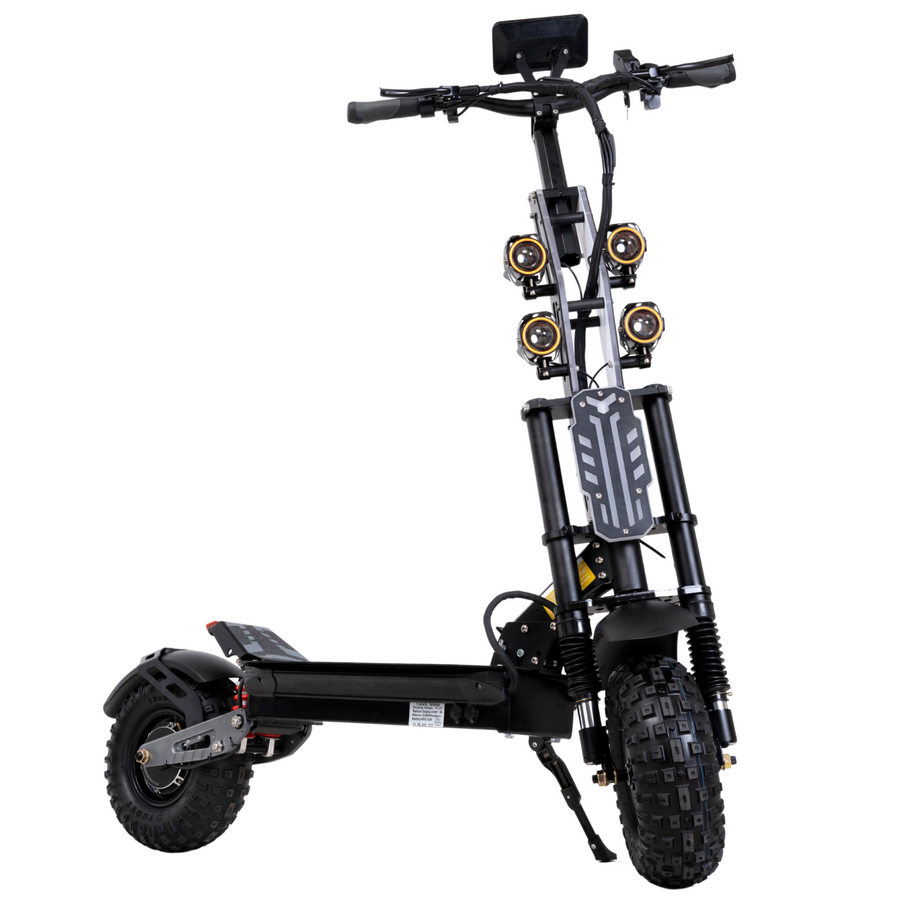
For the adrenaline junkie who refuses to compromise, the TopRiding FOHOLO F19 Off-Road Electric Scooter is the pinnacle of performance. This super-fast, long-range machine is engineered to tackle the most challenging terrains with ease.
-
7000W Dual Motor: Unmatched torque for climbing steep gradients and powering through mud.
-
Hydraulic Disc Brakes: Essential for safety, providing precise stopping power even in wet or dusty conditions.
-
4 Angel-Eye Front Headlights: Superior visibility for night rides or dense forest trails.
-
Long Range Battery: Designed to keep you exploring for hours without range anxiety.
This model exemplifies what is possible when high wattage meets rugged construction, making it a top contender for the best off-road scooter of 2026.
6. Spotlight: TopRiding ZSNAKE Z39 Rugged Design
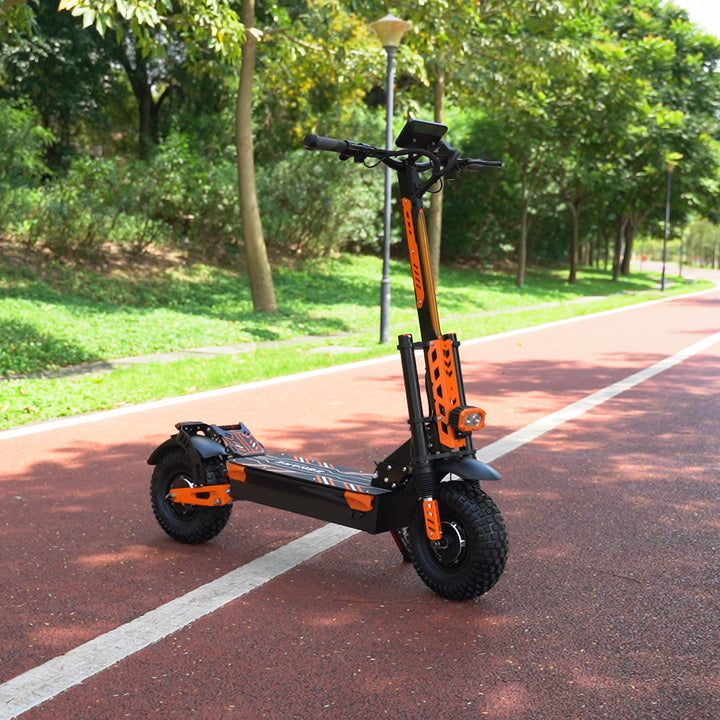
If stability and comfort are your priorities, the TopRiding ZSNAKE Z39 Off-Road Electric Scooter is the ideal choice. It balances power with a user-friendly design that inspires confidence on loose surfaces.
-
13" All-Terrain Fat Tires: These massive tires provide incredible grip and act as secondary suspension, smoothing out smaller vibrations.
-
Hydraulic Suspension: A premium feature that actively dampens shocks from rocks and roots.
-
Rugged Design: Built to take a beating, with reinforced structural components.
-
Adjustable Handlebar: Allows riders of different heights to find the perfect ergonomic stance for control.
The Z39 answers the question "can electric scooters go off-road comfortably?" by providing a plush ride over surfaces that would rattle other scooters apart.
7. Essential Maintenance for Off-Road Riding
Riding off-road puts significantly more stress on your vehicle than city commuting. Dust, vibration, and moisture are the enemies of electronics and mechanics. To keep your scooter running safely, follow this maintenance schedule:
-
Pre-Ride Check: Always check tire pressure. Lower pressure can provide better grip off-road, but too low can damage rims. Ensure all bolts, especially on the stem and wheels, are tight.
-
Cleaning: After a ride, wipe down the scooter. Do not use a high-pressure hose directly on the deck or motor hubs, as water ingress can damage the battery or controller. Use a damp cloth and a brush for the tires.
-
Brake Care: Mud and sand can wear down brake pads quickly. Inspect your pads regularly and clean the rotors with isopropyl alcohol to prevent squeaking and loss of braking power.
-
Lubrication: Keep the suspension and folding mechanisms lubricated with a silicone-based spray to prevent rust and ensure smooth operation.
8. Safety Gear Checklist for Rough Terrain
The risk of falling is higher off-road. Asphalt gear is often not enough; you need impact protection. Standard bicycle helmets do not offer chin protection, which is vital if you go over the handlebars on a trail.
-
Full-Face Helmet: A downhill mountain bike helmet or motocross helmet is recommended.
-
Gloves: Wear full-finger gloves with palm sliders or knuckle protection.
-
Knee and Elbow Pads: Hard-shell pads are best for deflecting impacts from rocks.
-
Eye Protection: Goggles are essential to keep dust, mud, and branches out of your eyes.
-
Proper Footwear: Wear boots or high-top sneakers that provide ankle support.
9. Legal Considerations for Trail Riding
Just because your scooter can go off-road doesn't mean it is legal everywhere. Laws regarding electric vehicles on public trails vary by country, state, and even municipality.
In many regions, motorized vehicles are banned from non-motorized hiking trails to protect wildlife and hikers. However, OHV (Off-Highway Vehicle) parks and designated bike trails often allow electric scooters. Always check local regulations before you ride. In the USA, National Forests often classify e-scooters similarly to e-bikes, but restrictions apply. Riding responsibly ensures that trails remain open for the e-scooter community in the future.
10. Summary Comparison Table
| Feature |
Commuter Scooter |
Off-Road Scooter |
| Motor Type |
Single Motor (250W-500W) |
Dual Motor (2000W - 7000W+) |
| Tires |
8.5" Solid or Pneumatic |
10"-13" Pneumatic Knobby/Fat Tires |
| Suspension |
Minimal or None |
Hydraulic/Air Swing-Arm |
| Brakes |
Electronic or Drum |
Hydraulic Disc Brakes |
| Frame Material |
Standard Aluminum |
Aviation-Grade Aluminum/Carbon Fiber |
| Best For |
Paved Streets |
Dirt, Gravel, Sand, Grass |
11. Frequently Asked Questions (FAQs)
Can I ride a regular electric scooter on grass?
It is not recommended. Commuter scooters with small tires and low clearance will likely get stuck, overheat the motor, or drain the battery very quickly due to the high resistance of grass.
Are off-road electric scooters waterproof?
Most high-end off-road scooters have an IP rating (e.g., IP54 or IPX5) making them water-resistant to splashes and light rain. However, they are rarely fully waterproof. Submerging them in deep puddles or riding in torrential rain can still cause damage.
How fast can off-road electric scooters go?
Models like the TopRiding FOHOLO F19 can reach extremely high speeds, often exceeding 50-60 mph. However, when riding off-road, speed should be modulated for safety and traction control.
Do I need a license to ride off-road?
On private land, usually no. On public lands and OHV trails, some states require an OHV sticker or registration. Check your local Department of Motor Vehicles (DMV) or Parks Department rules.
12. References