The electric scooter revolution has fundamentally transformed urban mobility across North America. However, the legal landscape surrounding these high-performance machines remains a chaotic patchwork of provincial mandates and municipal bylaws. As an industry practitioner supplying premium mobility solutions at TopRiding, we field questions daily from customers worried about confiscation, fines, and safety. The most frequent inquiry we receive is entirely logistical: exactly where does a machine capable of hitting local speed limits belong in the public right-of-way?

From our experience consulting with urban planners and avid riders, assuming that micromobility devices are legally equivalent to walking pedestrians is a massive liability. If you want to ride an electric scooter on the sidewalk in Canada, you must immediately adjust your operational expectations. Doing so is not only dangerous to pedestrians, but it exposes you to severe regulatory penalties that can result in your expensive investment being impounded.
Direct Answer
No, you generally cannot ride an electric scooter on the sidewalk in Canada. In almost all professional situations and municipal jurisdictions across the country, it is strictly illegal to operate a motorized personal vehicle on pedestrian walkways. E-scooters are legally classified similarly to bicycles or low-speed motor vehicles. Therefore, you are mandated by law to use designated bike lanes, multi-use pathways, or the right-hand side of public roads where permitted. Riding on the sidewalk invites hefty fines, confiscation of the vehicle, and severe liability in the event of a collision.
What It Is: The Legal Classification of E-Scooters
To understand why you cannot simply hop on a concrete sidewalk, you must understand what an electric scooter legally is. Transport Canada and provincial Ministries of Transportation do not view e-scooters as toys. They are defined as motorized personal mobility devices or motor-assisted vehicles. Because they possess an electric motor and can maintain speeds matching urban traffic, they are stripped of pedestrian privileges.
When you browse the Top 10 electric scooters 2026, you will notice that even entry-level commuter models are capable of achieving 25 km/h. At that speed, the kinetic energy transferred during a collision with a walking pedestrian is catastrophic. The law reflects basic physics: motorized kinetic mass belongs on infrastructure designed for vehicular flow, not pedestrian meandering.
How It Works: Navigating Canadian Jurisdictions
Canadian micromobility law works on a tiered system, which is why confusion runs rampant. The federal government (Transport Canada) dictates the importation and baseline manufacturing standards. However, the provincial governments determine if e-scooters are allowed on public roads at all. Finally, the municipal governments (the individual cities) have the ultimate authority to dictate exactly which streets, paths, or lanes are legally accessible.
For example, the province of Ontario initiated a pilot program allowing e-scooters, but handed the final decision to municipalities. The city of Ottawa embraced them on streets and bike lanes, while the city of Toronto famously banned them entirely from public streets, bike lanes, and sidewalks (though enforcement remains a highly debated topic). Regardless of the city's overall stance on road legality, the rule regarding sidewalks remains universally identical: they are forbidden zones.
Quick Summary Table: Sidewalk Laws by Major City
| Canadian City |
Sidewalk Riding Legal? |
Where You Must Ride |
Potential Fine for Sidewalk Riding |
| Vancouver, BC |
Strictly Illegal |
Designated bike lanes & minor streets (Pilot specific) |
Up to $2,000 under Motor Vehicle Act |
| Calgary, AB |
Strictly Illegal |
Bike lanes, pathways, quiet roads |
$400+ |
| Toronto, ON |
Strictly Illegal |
Technically banned on all public property (Zero enforcement) |
$100 to $1,000 depending on bylaw |
| Ottawa, ON |
Strictly Illegal |
Bike lanes, multi-use paths, roads under 50km/h |
$150+ |
| Montreal, QC |
Strictly Illegal |
Bike paths only (Strict enforcement) |
$200 to $300 |
Benefits of Keeping Off the Sidewalk
While novice riders often feel intimidated by road traffic, staying off the sidewalk provides massive operational benefits for your hardware. Sidewalks are littered with deep expansion joints, unexpected curb drops, tree root upheavals, and blind driveways. Hitting a two-inch sidewalk crack at 25 km/h on solid 8-inch tires will rattle your dental fillings and drastically reduce the lifespan of your scooter's stem and folding mechanism.
In our testing, riding in a smooth, asphalt bike lane reduces mechanical vibration by up to 60%. Furthermore, visibility is vastly improved. Drivers backing out of driveways rarely look fast enough down a sidewalk to spot a scooter traveling at high speeds. By placing yourself in a predictable vehicular lane, you inherently increase your visibility to surrounding traffic.
Limitations of Current Road Infrastructure
We must apply commercial and practical judgment here: the limitation of staying off the sidewalk is that Canadian cycling infrastructure is wildly inconsistent. In many suburban areas, dedicated bike lanes simply end without warning, forcing the rider to merge with heavy vehicular traffic. This reality dictates the type of machine you must purchase.
If you are forced to ride on the shoulder of a busy road, a flimsy 250-watt rental-style scooter is a liability. You need adequate acceleration to merge safely and avoid aggressive drivers. This is why we consistently direct commuters to review the Best 25 mph electric scooters. Having the speed reserve to pace urban traffic rather than being constantly passed is a fundamental safety requirement.
Who Should Use It & Who Does Not Need It

For beginners and urban commuters: You absolutely must familiarize yourself with your city's specific bike lane map. You should use lightweight, nimble machines. Check out our guide on the Best lightweight electric scooters for adults. These are perfect for navigating dedicated bike paths safely and carrying onto public transit when the weather turns.
For commercial users and heavy-duty applications: Delivery riders and heavy adults require serious torque to navigate hilly Canadian cities. If you require a machine from our Best electric scooters for heavy adults list, you absolutely cannot ride these 80-pound behemoths on a pedestrian sidewalk. You must stick to the road and utilize robust suspension systems to handle potholes.
Common Mistakes Canadian Riders Make
From our experience, the most egregious mistakes stem from a false sense of entitlement. Do not make these errors:
-
The "Pedestrian Pace" Myth: Many riders believe that if they simply ride at 5 km/h on the sidewalk, bylaws do not apply to them. This is false. A motorized vehicle is a motorized vehicle in the eyes of local bylaw enforcement, regardless of current speed.
-
Ignoring Turn Signals: Because you are legally riding on the road or bike lane, you are subject to the Highway Traffic Act equivalents. Failing to signal lane changes makes you unpredictable and highly vulnerable to rear-end collisions.
-
Under-Equipping for the Weight Class: Buying a cheap, rigid scooter when you weigh over 220 lbs. When forced onto rough Canadian roads, the frame will snap. Always consult load ratings, such as finding an Electric scooter for 400 lbs weight capacity if applicable.
Pros and Cons Table: Road Riding vs. Multi-Use Paths
| Riding Environment |
Pros |
Cons |
| Dedicated Bike Lanes / Roads |
Smooth asphalt; predictable traffic flow; legal compliance; faster commuting times. |
Exposure to distracted drivers; requires high-visibility gear; terrifying for beginners. |
| Multi-Use Pathways (Parks) |
Separated from cars; highly scenic; safe for all skill levels. |
Shared with unpredictable dogs, children, and joggers; strict 15 km/h speed limits. |
Buying Considerations for Legal Road Riding
If you cannot ride an electric scooter on the sidewalk in Canada, the vehicle you purchase must be capable of surviving the street. We recommend focusing heavily on suspension and braking. A machine without dual suspension will transfer the impact of every street pothole directly into your knees and lower back. Review our selection of Electric scooters with suspension for adults to ensure physiological comfort.
Furthermore, consider your lighting package. Canadian winters mean dark commutes by 4:30 PM. A scooter must have a high-mounted, powerful headlight and integrated turn signals to communicate your intentions to cars. Do not rely on a low-mounted deck light to alert a pickup truck to your presence.
Comparison Table: Scooter Specs Required for the Road
| Component |
Sidewalk Use (Illegal/Hypothetical) |
Required for Canadian Road/Bike Lane Use |
| Tire Type |
Solid 8-inch (Rattles uncontrollably) |
10 to 11-inch Pneumatic (Tubeless preferred for grip) |
| Motor Power |
250W Single Motor |
Minimum 500W Single, or Dual Motor for hills |
| Braking System |
Electronic only |
Dual mechanical disc or full hydraulic brakes |
| Suspension |
None required |
Front and Rear Spring/Hydraulic shocks are mandatory |
Expert Recommendation from TopRiding
In most professional situations, we advocate for overwhelming power and structural integrity when mixing with urban traffic. If you are stepping off the sidewalk and commanding your lane on the road, you need a machine that commands respect. We recommend evaluating the Best dual motor electric scooters to ensure you have the torque required to escape blind spots and climb steep inclines without losing speed.
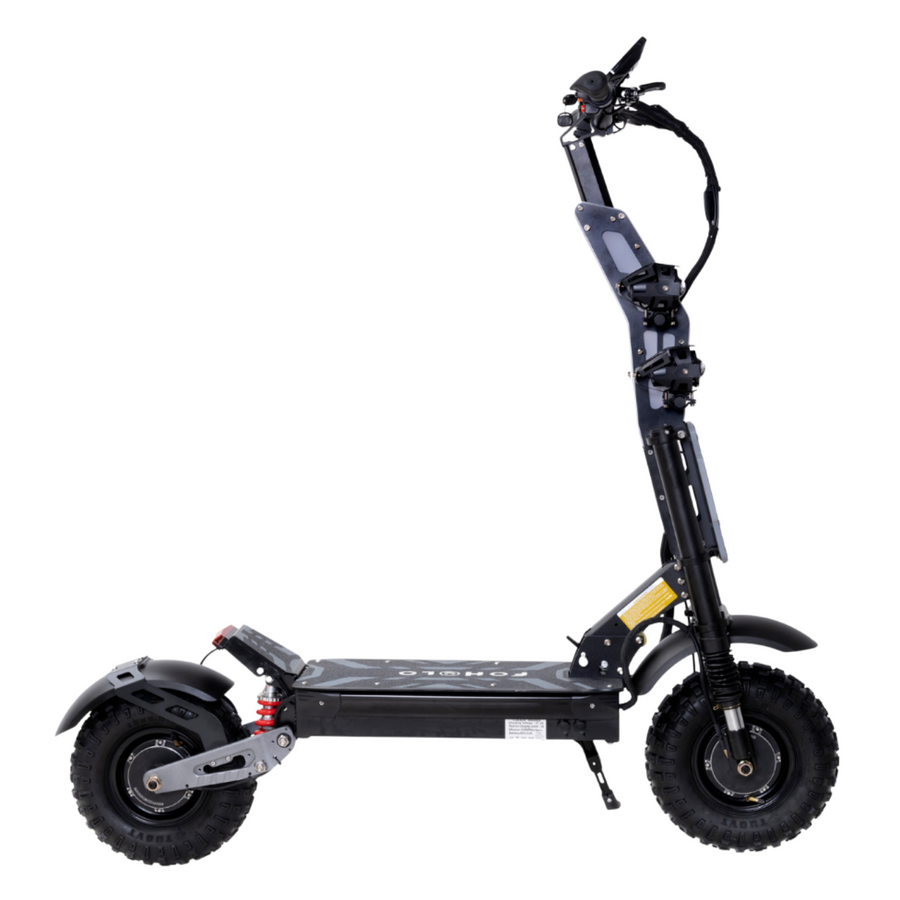
For those seeking the pinnacle of road-dominating performance, we proudly present the TopRiding FOHOLO F19. This is not a commuter toy; it is an aggressive, heavy-duty mobility solution designed to master both asphalt and off-road trails. With 7000W of dual-motor power, it provides the acceleration needed to merge with traffic safely, backed by a massive 65-mile range that eradicates range anxiety.
The Bottom Line
Attempting to ride an electric scooter on the sidewalk in Canada is a losing proposition. It is legally prohibited, structurally damaging to your scooter, and highly disrespectful to pedestrian safety. To truly enjoy the freedom of electric micromobility, you must transition to the bike lanes and roadways. This transition requires commercial and practical judgment: equip yourself with high-visibility gear, understand your local municipal bylaws, and invest in a scooter engineered with the suspension, braking, and motor power required to confidently navigate the asphalt.
Frequently Asked Questions (FAQ)
Are there any exceptions where I can ride an electric scooter on the sidewalk in Canada?
No. There are virtually zero municipal exceptions allowing motorized e-scooters on pedestrian sidewalks. The only technical exception is if you dismount from the vehicle and physically push/walk the scooter along the sidewalk, at which point you are legally operating as a pedestrian.
What is the speed limit for electric scooters in Canadian bike lanes?
Provincial guidelines, such as those in Ontario and British Columbia, generally cap the legal operating speed of an electric scooter at 24 km/h to 25 km/h when riding in designated bike lanes or on public roads. Even if your scooter is capable of higher speeds, exceeding this limit can result in speeding infractions.
Do I need a driver's license or insurance to ride an e-scooter on the road in Canada?
Currently, most provinces do not require a driver's license, vehicle registration, or mandatory insurance to operate a standard kick-style electric scooter, provided the rider meets the minimum age requirement (usually 16 years old). However, mopeds and electric scooters with seats that exceed certain speed/wattage thresholds may be reclassified as limited-speed motorcycles, which do require licensing and insurance.
Authoritative Legal References
Disclaimer: Micromobility laws change rapidly. We recommend checking your specific municipal bylaw website for the most up-to-date enforcement policies before riding. To ensure you buy the correct compliant model, browse our Best electric scooter for the money 2026 buying guide. For those seeking premium alternatives to mainstream brands, our analysis on the Best electric scooter alternatives to Segway offers deep technical insights.