First-time micromobility buyers usually begin their search with a single figure in mind, only to discover a chaotic pricing landscape. Online marketplaces feature basic entry-level models advertised for under $300, while specialist performance dealerships promote dual-motor hyper-scooters that surpass $3,500. Evaluating the true electric scooter cost requires cutting through flash-sale discounts, generic spec sheets, and marketing claims to understand what specific hardware components your hard-earned money actually purchases.

A reliable adult electric scooter is an engineered micro-vehicle governed by battery cell chemistry, motor winding quality, braking safety standards, and structural frame metallurgy. Skimping on the initial purchase price to save a few dollars often forces riders into underpowered platforms that stall on modest 8-degree inclines, shake uncomfortably over cracked pavement, and demand complete battery pack replacements within six months. In our testing across dozens of platforms, understanding how component tiers dictate the overall electric scooter cost prevents expensive upgrade regret and helps you secure the most reliable machine for your daily commute.
Quick Answer: What Does an Average Electric Scooter Cost in 2026?
Across the entire adult market, the true statistical average electric scooter cost sits between $800 and $1,100. However, practical buying costs depend entirely on rider use case and performance demands: Budget Entry Models ($300 – $550) provide basic 15 to 19 mph flat-ground transportation for short last-mile trips; Mid-Range Commuter Scooters ($600 – $950) represent the optimal value sweet spot, offering 20 to 28 mph speeds, full suspension, pneumatic tires, and 25 to 35 miles of real-world range; Performance Heavy-Duty Scooters ($1,000 – $1,800) introduce high-voltage 52V/60V systems, dual-motor power, or high-torque 2800W configurations capable of carrying 300+ lb payloads up steep urban hills; and Flagship Hyperscooters ($2,000 – $4,000+) deliver 50+ mph highway speeds and extreme 60+ mile battery packs. In most professional situations, spending between $750 and $950 delivers the lowest cost per operating mile over a multi-year service life.
The Engineering Breakdown: What Actually Drives Electric Scooter Cost?
The sticker price of an electric scooter is not an arbitrary figure plucked from thin air. It directly mirrors the cost of internal electro-mechanical hardware. When examining the bill of materials, the lithium-ion battery pack alone accounts for 35% to 50% of total manufacturing expenditure. A 36V 7.5Ah battery found in budget units holds only 270 Watt-hours (Wh) of energy, whereas a heavy-duty 60V 15Ah battery pack delivers 900 Watt-hours—over triple the energy capacity. High-capacity packs require Grade-A cylindrical cells (such as LG, Samsung, or high-discharge EVE cells), heavy-duty nickel interconnect strips, and sophisticated Battery Management Systems (BMS) with overcharge and thermal runaway protection.
The secondary driver of electric scooter cost is powertrain torque and motor controller electronics. Inexpensive scooters deploy basic 250W or 350W front hub motors paired with square-wave controllers that shudder under strain and lose all velocity on minor overpasses. In contrast, heavy-duty commuter and sport platforms deploy high-power 1000W to 2800W motors managed by sine-wave controllers, generating rapid acceleration and high gradeability. Sourcing these platforms requires matching motor output with braking capability; mechanical disc brakes and four-piston hydraulic calipers cost substantially more to manufacture than simple rear-fender friction stompers or electronic motor brakes, but they are mandatory to stop safely at speeds above 20 mph.
Finally, frame metallurgy, suspension hardware, and certified electrical compliance shape the bottom line. Premium platforms utilize aerospace-grade 6061-T6 aluminum extrusions, forged folding stem linkages, independent swing-arm spring or hydraulic dampers, and official UL 2272 electrical safety certification. In our testing, skipping these structural refinements to target a rock-bottom purchase price introduces stem play, cracked cast brackets, and premature mechanical fatigue.
Quick Summary: Electric Scooter Cost Tiers at a Glance
The table below provides a quick benchmark of market price tiers, defining realistic operational parameters, motor capabilities, and practical lifespan expectations:
Deep Dive: What Every Price Tier Actually Delivers
1. Entry-Level / Budget Tier ($250 to $499)
This category is dominated by entry-level machines built strictly for flat, smooth pavement over short distances. At this price point, you get lightweight frames weighing between 26 and 33 pounds, basic 250W to 350W front or rear hub motors, and small 36V battery packs. Top speeds are capped around 15 to 19 mph, and while manufacturer packaging routinely advertises a "20-mile range," real-world testing with an adult rider typically exhausts the battery in 8 to 12 miles.
For beginners or students navigating flat college campuses, budget models provide accessible transportation. However, their physical compromises are severe: most feature zero mechanical suspension, small 8.5-inch solid or honeycomb tires that transmit every asphalt imperfection into your knees, and single mechanical drum or electronic brakes. If your route includes steep grades or broken road surfaces, budget scooters quickly prove frustrating. For ultra-portable flat-ground options, explore our analysis of the best lightweight electric scooters for adults.
2. Mid-Range Commuter Sweet Spot ($500 to $950)
From our experience on urban test routes, the $500 to $950 price band represents the true value sweet spot for daily commuters. In this tier, toy-like components disappear. Manufacturers deploy robust 48V to 52V architectures, 500W to 800W sustained motors, and large 10-inch or 11-inch pneumatic tires that cushion road vibration. Top speeds reach 20 to 28 mph, and real-world range extends to a dependable 20 to 35 miles on a single charge.
Crucially, this tier introduces true mechanical spring or hydraulic suspension, integrated turn signals, dual disc brakes, and official water-resistance ratings (IPX5 or higher). If you want to replace public transit passes or avoid parking garage fees without sacrificing structural reliability, this tier yields the fastest return on investment. Review top-performing commuter options in our guide to the best electric scooter for the money 2026, check proven non-brand choices in our best electric scooter alternatives to Segway, and compare daily city speeds in our review of the best 25 mph electric scooters.
3. Performance and Heavy-Duty Commuters ($1,000 to $1,800)
Once your budget crosses the thousand-dollar mark, you enter high-torque commercial and utility territory. This tier introduces high-voltage 52V and 60V systems, dual-motor drivetrains, or massive high-torque single motors (1000W to 2800W) capable of climbing 25-degree grades without thermal throttling. Top speeds range from 30 to 42 mph, and battery capacities exceed 750 to 1,200 Watt-hours, delivering 35 to 50 miles of actual high-speed range.
For heavy-duty applications, adult riders weighing over 220 pounds, or long suburban commutes requiring vehicular lane speeds, this tier is non-negotiable. Frames feature reinforced forged necks, wide standing decks, four-wheel coil-over-spring suspension, and full hydraulic disc brakes. If you commute across mixed gravel or fire roads, compare machines in our guide to the best off-road electric scooters under 1000 and explore our trail breakdown in top off-road scooters for adults.
4. Enthusiast Hyperscooters ($1,900 to $4,000+)
Hyperscooters are essentially stand-up electric motorcycles. Operating on massive 72V to 84V architectures with dual motors pushing 4,000W to 8,000W peak output, these machines easily hit 45 to 65+ mph. They carry massive 30Ah to 45Ah battery packs that provide 60 to 90 miles of aggressive riding on a single charge.
While technologically impressive, hyperscooters are heavy, weighing between 90 and 135 pounds, making them impossible to carry onto trains or up apartment stairwells. Unless you are an experienced enthusiast seeking weekend adrenaline or substituting for a secondary car on rural routes, spending over $2,000 represents performance you will rarely deploy in urban bike lanes. For maximum output options, see our analysis of the best dual motor electric scooters, explore terminal velocity platforms in our guide to the best 50 mph electric scooters 2026, and evaluate top builds in the most powerful electric scooters in the world.
Hardware Matrix: Budget vs. Mid-Tier Commuter vs. Heavy-Duty vs. Hyperscooter
The matrix below breaks down the physical hardware specifications your dollar purchases across each distinct category:
Pros and Cons of Buying Budget ($300–$500) vs. Mid-to-High Tier ($700–$1,200)
Weigh the immediate upfront savings of budget machines against the long-term mechanical reliability of mid-to-high tier hardware:
Hidden Ownership Expenses: Electricity, Maintenance, and Safety Gear
The upfront purchase price of your electric scooter is only the first entry in your ledger. A comprehensive calculation of electric scooter cost must factor in ongoing electricity expenses, wearable maintenance components, and essential protective equipment:
-
Electricity Charging Costs (Negligible): The operational fuel economy of an electric scooter is virtually unbeatable. A 60V 15Ah battery holds 0.9 kilowatt-hours (kWh) of electricity. At the national average residential electricity rate of $0.16 per kWh, a complete dead-to-full recharge costs roughly $0.14 to $0.18. Over 1,000 miles of commuting, your total electrical utility bill will total less than $6.00.
-
Safety Gear Outlay ($120 to $250): Never ride a 20+ mph electric scooter without certified protective gear. Budget at least $70 to $120 for a certified CPSC/ASTM bicycle or full-face downhill helmet, $30 for abrasion-resistant gloves, and $40 for a high-security U-lock or folding lock to prevent theft.
-
Wearable Maintenance Items ($50 to $100 annually): Like any wheeled vehicle, consumable parts wear down. Replacement brake pads run $10 to $20 per pair, inner tubes or tubeless sealant run $15 to $25, and replacement tires cost $30 to $50 after 1,500 to 2,000 miles of asphalt friction.
-
Long-Term Battery Replacement ($250 to $450): After 3 to 4 years of daily commuting (roughly 700 full charge cycles), lithium cells experience natural capacity fade, holding around 70% of their original range. Budgeting for a replacement battery pack ensures your vehicle stays roadworthy for a decade.
Who Should Spend $400 vs. Who Needs an $800+ Platform
In our experience evaluating commuter requirements, your body weight, local topography, and daily mileage dictate your required spending bracket.
Who Should Spend $300 to $500:
-
Flat Campus Students: If your round-trip commute is under 4 miles across flat college campus paths, spending $350 on an entry-level platform is entirely sensible.
-
Multi-Modal Transit Linkers: If you ride 1 mile to a subway station, carry the scooter aboard a crowded train car, and ride another half-mile to your office, lightweight portability (under 30 lbs) matters far more than motor torque.
-
Casual Weekend Park Riders: If the scooter sits in an apartment closet five days a week and emerges only for Sunday park strolls, a basic 36V machine meets your needs without locking up capital.
Who Needs to Invest $800 to $1,400+:
-
Adults Weighing Over 200 lbs: Basic 250W/350W motors lose up to 60% of their acceleration under heavy loads. Heavier riders require high-torque 60V platforms; review our dedicated testing in the best electric scooters for heavy adults and the electric scooter for 400 lbs weight capacity guide.
-
Hilly Terrain Commuters: If your daily route crosses 12-degree to 20-degree hills, sub-$500 scooters will slow to a crawl or shut down from thermal overload. You need a minimum of 800W sustained or a 2800W peak motor setup.
-
Rough Pavement and Suburban Riders: Cities with broken asphalt, expansion joints, and trolley tracks require 10-inch or 11-inch pneumatic fat tires and dual spring suspension to prevent joint fatigue. Compare high-comfort setups in our roundup of electric scooters with suspension for adults and seated platforms in electric scooter with seat for adults 30 mph.
TopRiding ZSNAKE Z35 - 2800W High-Performance Adult Commuter ($899.00)
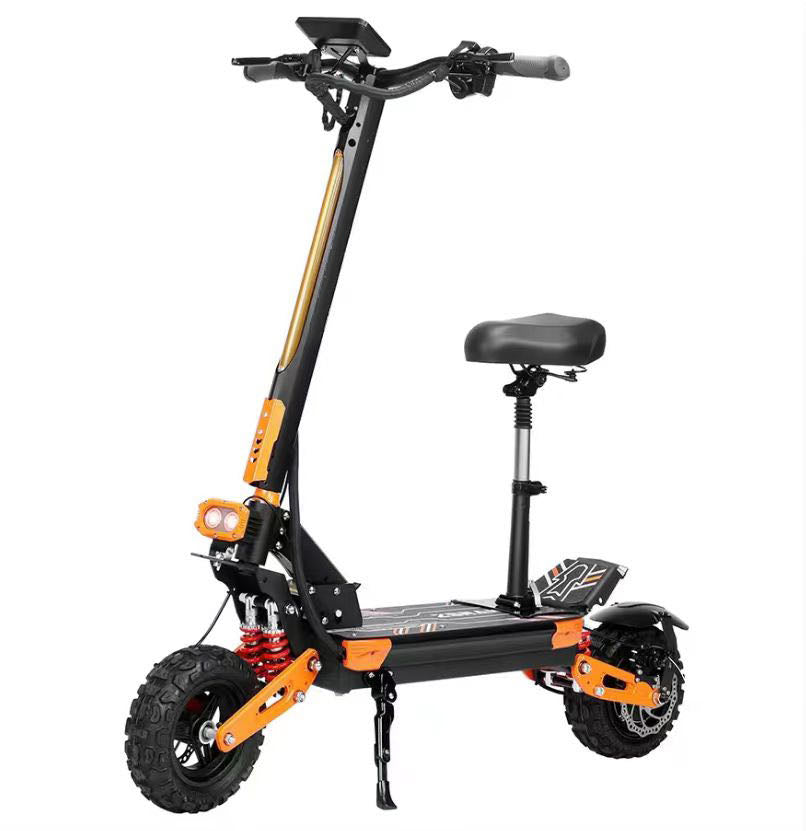
When riders search for the optimal balance of power, range, and build quality under $1,000, the TopRiding ZSNAKE Z35 delivers exceptional engineering value. Equipped with a massive 2800W high-torque motor powered by a genuine 60V 15Ah lithium battery architecture, the ZSNAKE Z35 easily conquers steep city hills and rough suburban terrain that stop basic commuter scooters in their tracks.
Retail Price: $899.00 USD (Value Sweet Spot)
Motor Power: 2800W High-Torque Single Motor
Top Speed: Up to 33 MPH (Fast Urban Commuting)
Battery Architecture: 60V 15AH High-Capacity Lithium-Ion (900Wh)
Max Real-World Range: Up to 35 Miles per charge
Safety Certification: Official UL 2272 Electrical System Certified
Tire Architecture: 11-inch All-Terrain Off-Road Fat Tires
Suspension System: Full Front & Rear Heavy-Duty Spring Damping
Braking Setup: Front & Rear Cable Disc Brakes
Fast Charging: Dual Charging Ports for rapid turnaround
Max Payload Capacity: Tested for up to 330 LBS (150 kg)
Order directly with factory warranty support on the official TopRiding ZSNAKE Z35 product page.
Common Costly Mistakes Buyers Make When Evaluating Scooter Prices
In our failure analysis testing of returned e-scooters, consumer frustration almost always stems from four common purchasing mistakes:
-
Believing Advertised Lab Range Numbers: Manufacturers calculate advertised range using an ultralight 130-lb test rider coasting at 9 mph on flat, smooth pavement in warm 75°F ambient air with no headwind. In the real world—carrying a 185-lb adult at 20 mph through stop-and-go city traffic—you will achieve roughly 55% to 65% of the advertised range. Always divide the battery's total Watt-Hours (Volts multiplied by Amp-Hours) by 25 to 30 to calculate true real-world range.
-
Purchasing Solid Tires to Avoid Flats: Solid rubber tires eliminate punctures, but they transfer every impact directly into the folding latch, battery solder joints, and motor hub bearings. The lack of air damping drastically increases frame vibration fatigue and ruins wet-weather traction. High-volume 10-inch or 11-inch pneumatic tubeless tires with tire sealant provide vastly superior comfort, safety, and longevity.
-
Ignoring Voltage When Comparing Motor Wattage: A "500W" motor running on a low 36V system draws high amperage, generating heavy heat and sluggish hill acceleration. A 500W or 1000W motor running on an efficient 52V or 60V platform draws less current to produce the same work, delivering significantly higher torque, cooler operating temperatures, and better battery efficiency. Voltage dictates real-world torque.
-
Buying Non-Certified Bargain Batteries: Sourcing an unbranded $250 scooter from fly-by-night marketplaces lacking UL 2272 certification is an extreme safety hazard. Non-certified battery packs use recycled or low-grade lithium cells without individual cell balancing or thermal cutoffs, creating severe fire hazards during overnight garage charging.
Essential Sourcing and Procurement Considerations
Before entering your credit card details, verify these four essential engineering criteria to ensure your electric scooter cost delivers lasting value:
-
UL 2272 Certification Verification: Confirm that the scooter frame, battery pack, and charging adapter carry genuine UL 2272 certification. Certified electrical systems have undergone extensive puncture, thermal shock, water immersion, and overcharge testing to guarantee fire safety.
-
Stem Latch and Folding Mechanism Redundancy: Inspect the folding joint at the base of the steering column. Avoid cheap single-pin friction latches that develop dangerous back-and-forth wobble over time. Look for heavy dual-collar clamps, safety locking pins, or threaded screw collars that lock the stem securely to the deck.
-
Local Replacement Parts Availability: A $600 scooter becomes a paperweight if you cannot buy replacement brake pads, throttles, or tires when they wear out. Choose established brands that maintain domestic warehouse parts distribution and responsive customer service.
-
Water Resistance Ingress Protection (IP Rating): Commuting in the real world means encountering unexpected puddles and drizzle. Look for an official ingress rating of at least IPX4 (splash-resistant) or IPX5 (low-pressure water jet resistant) to protect internal motor controllers from road spray.
Expert Recommendation and Tactical Purchasing Verdict
In most professional situations, we recommend avoiding sub-$400 bargain scooters unless your riding is strictly confined to short, flat campus hops. The severe cost-cutting required to sell a motorized vehicle for $300 compromises battery lifespan, ride comfort, hill-climbing power, and braking safety. You end up buying a disposable gadget that will need replacement within a year.
For dependable daily urban transportation, target the $750 to $950 mid-range tier. Machines in this price band—exemplified by the TopRiding ZSNAKE Z35—deliver high-torque 60V electrical systems, dual spring suspension, wide pneumatic tires, dual disc brakes, and UL 2272 safety compliance at an accessible price point. You gain the power to climb city hills, the range to cross town without anxiety, and the structural durability to ride daily for years, making your electric scooter one of the most cost-effective vehicle investments available.
Frequently Asked Questions (FAQ)
How much does an average electric scooter cost in 2026?
Across the entire adult market, an average electric scooter costs between $800 and $1,100. Budget entry models range from $250 to $500, balanced mid-range commuter scooters cost between $600 and $950, heavy-duty performance scooters range from $1,000 to $1,800, and flagship hyperscooters exceed $2,000 to $4,000+.
Is a $300 electric scooter worth buying?
A $300 electric scooter is worth buying only for teenagers, students, or light adults (under 160 lbs) with short, flat commutes under 3 to 5 miles. Budget models lack suspension, struggle on hills, and have small batteries that yield only 8 to 12 miles of real-world range, making them frustrating for serious daily commuting.
How much does it cost to charge an electric scooter?
Charging an electric scooter costs between $0.08 and $0.20 per full charge from a standard home electrical outlet, depending on battery capacity and local electric rates. Over 1,000 miles of commuting, total electricity costs typically remain under $6.00, making e-scooters vastly cheaper to operate than cars or public transit passes.
How long does an electric scooter battery last before needing replacement?
A quality lithium-ion battery pack typically lasts between 500 and 1,000 full charge cycles, which translates to 3 to 5 years of regular commuter use. Proper charging habits—such as avoiding sub-freezing charging and storing the battery between 40% and 80% when idle—help maximize overall lifespan.
Why are high-end electric scooters priced over $2,000?
High-end scooters priced over $2,000 feature massive 60V to 72V high-capacity battery packs (1,800Wh to 3,000Wh+), dual motors producing 3,000W to 8,000W peak output, full hydraulic motorcycle-grade brakes, adjustable inverted suspension, and reinforced structural frames capable of sustained speeds exceeding 45 to 60 mph.
Authoritative References
- UL Solutions: UL 2272 Standard for Electrical Systems for Personal e-Mobility Devices
- SAE International: Taxonomy and Classification of Powered Micromobility Vehicles (SAE J3194)
- U.S. Consumer Product Safety Commission (CPSC): Micromobility Product Safety and Operational Standards


