The transformation of urban transit has brought micro-mobility to the forefront of global transportation planning. As cities become more congested and environmental regulations tighten, commuters are rapidly abandoning traditional combustion vehicles in favor of battery-powered alternatives. At the center of this transportation revolution is a persistent consumer dilemma: E-bike vs. Scooter - What is better? Making the correct choice requires a comprehensive understanding of electrical engineering, battery chemistry, biomechanics, and daily commuting logistics.

Authored by
TopRiding, a globally recognized brand specializing in electric scooters and electric bikes. Founded in 2015, we began by serving the B2B market for global brands and enterprise clients. Today, with decades of combined experience in design, R&D, and manufacturing, we deliver high-quality products directly to riders worldwide, redefining electric mobility in the 21st century.
At TopRiding, our engineering teams have spent years analyzing the performance metrics of both platforms. From our experience developing high-output motor controllers and advanced suspension geometries, we know that the answer to the E-bike vs. Scooter question is rarely universal. It depends entirely on the rider's specific use case, storage capabilities, and desired level of physical engagement. In this authoritative guide, we will dismantle the technical specifications of both modalities, objectively evaluate their practical applications, and provide expert recommendations to help you make an informed investment.
1. Engineering Mechanics: Form Factor and Powertrain
To accurately evaluate E-bike vs. Scooter platforms, one must first look at the structural engineering. An electric bicycle utilizes the traditional diamond or step-through frame, utilizing large-diameter wheels (typically 20 to 29 inches) and a drivetrain that integrates human pedal power with an electric motor. The motor is generally located in the rear hub or the mid-drive crank area, providing pedal-assist (PAS) or throttle-only propulsion.
Conversely, the electric scooter utilizes a minimalist chassis consisting of a deck, a steering column (stem), and smaller wheels (typically 8 to 11 inches). The powertrain relies entirely on hub motors located in one or both wheels, entirely omitting mechanical chains or pedals. Because scooters rely solely on the battery and motor to overcome aerodynamic drag and rolling resistance, their power delivery is immediate and throttle-dependent. When weighing E-bike vs. Scooter designs, the core difference is active participation versus passive transportation.
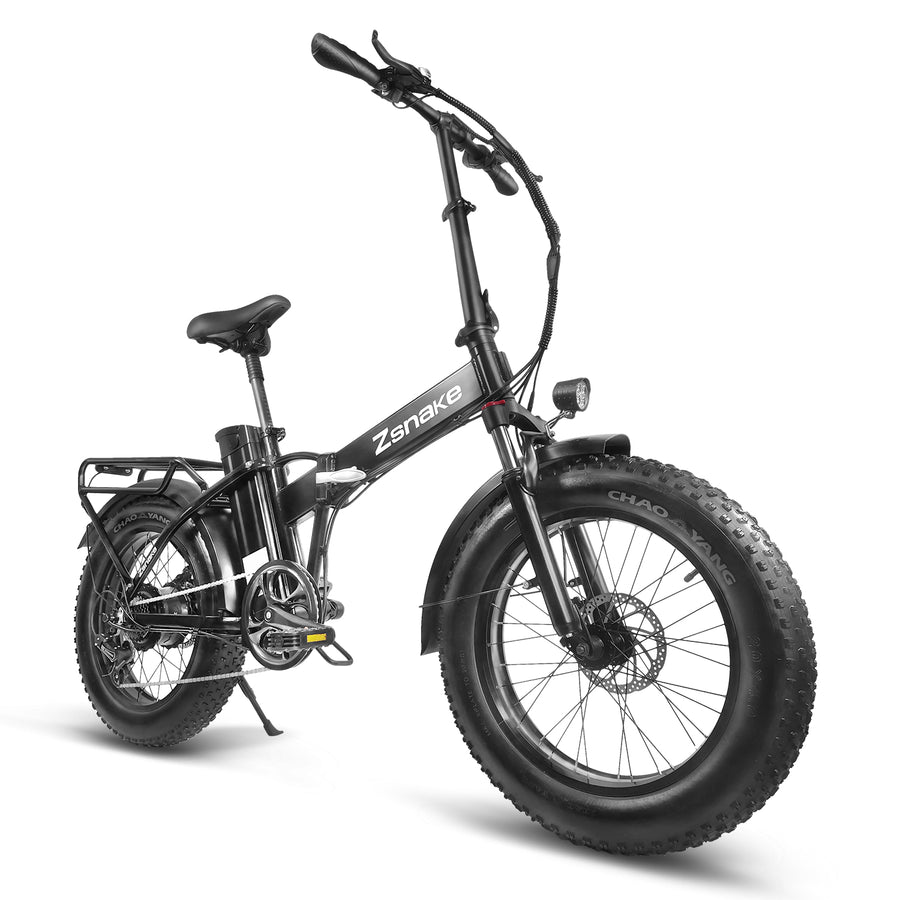
When analyzing E-bike vs. Scooter performance, voltage and motor wattage dictate the ceiling of the vehicle's capability. For long-distance commuters who prioritize range and seated comfort, electric bikes traditionally hold the advantage. The larger frame allows for higher-capacity battery cells to be mounted on the downtube. For example, we engineer the TopRiding ZSNAKE Z205 - 20" Fat Tire Foldable E-Bike with 500W Motor, Best Electric Bike 2025, to provide sustained, comfortable cruising. The combination of pedal assistance and a highly efficient 500W motor allows riders to easily exceed 30 to 40 miles on a single charge, making it an optimal choice for suburban commutes.
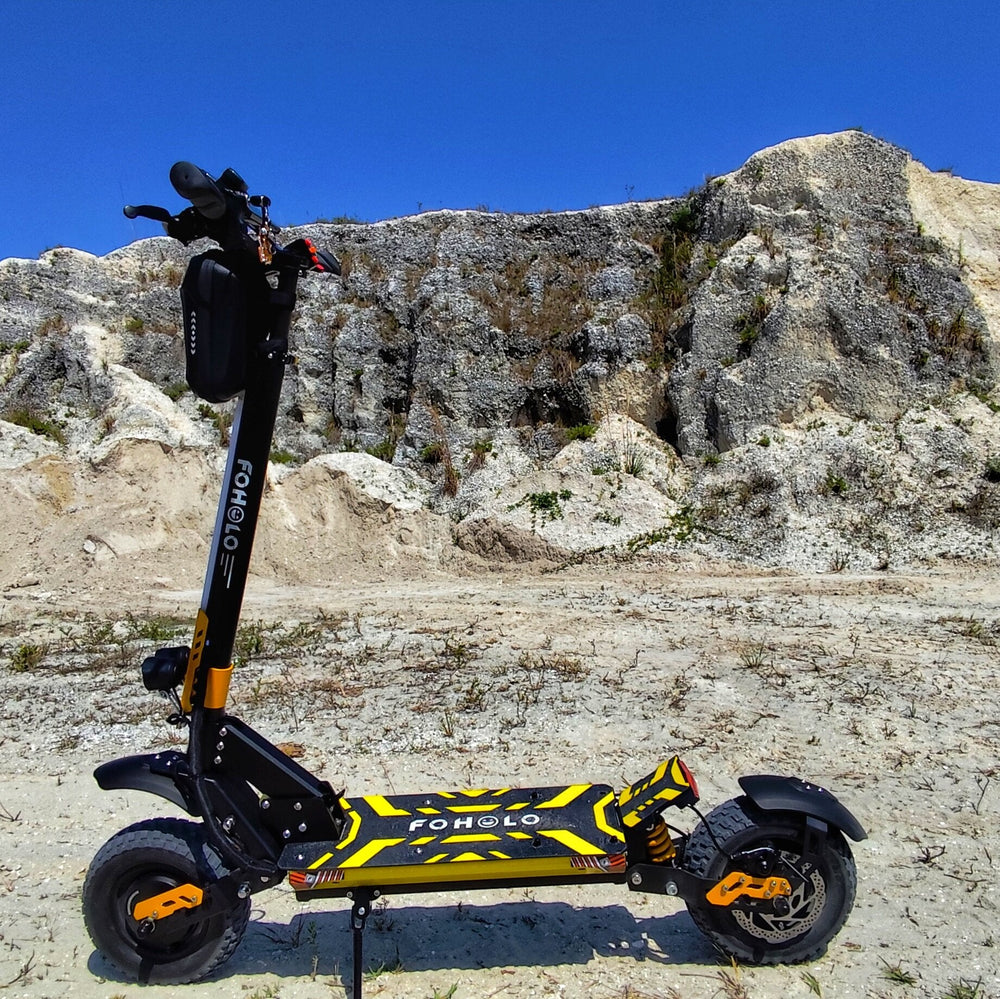
However, if the E-bike vs. Scooter debate is framed purely around raw acceleration and compact speed, high-performance scooters dominate the conversation. From our experience developing extreme micro-mobility solutions, dual-motor scooters offer a power-to-weight ratio that e-bikes cannot match. We recommend looking at the TopRiding FOHOLO F15 --- World’s Best Electric Scooter Under $1000 47MPH Fast • 60V/5600W Dual Motors • Adjustable Handlebar • All-Terrain. With 5600W of dual-motor power operating on a 60V system, this scooter delivers a blistering 47MPH top speed. For thrill-seekers and experienced riders needing to keep up with urban traffic flows instantly, the raw thrust of a high-voltage scooter is unparalleled.
3. Portability and Urban Storage Solutions
In dense metropolitan environments, the E-bike vs. Scooter debate is frequently settled by storage constraints. Electric bicycles, even foldable models like our ZSNAKE Z205, are inherently heavier and bulkier. A standard e-bike weighs between 50 to 75 pounds and occupies a significant footprint in an apartment or office cubicle. While foldability mitigates this, carrying a fat-tire e-bike up three flights of stairs is physically demanding.
Electric scooters offer superior modularity. A standard commuter scooter weighs between 30 to 45 pounds, features a collapsing stem, and can easily be stored under a desk or carried onto a crowded subway train. Even high-performance models like the TopRiding FOHOLO F15, which are heavier due to large battery packs and dual motors, feature folding mechanisms that significantly reduce their spatial footprint. If your daily transit involves multi-modal commuting (e.g., riding to a train station, taking the train, and riding to the office), the scooter wins the E-bike vs. Scooter portability contest decisively.
4. Safety Dynamics and All-Terrain Adaptability
Safety is a critical metric in the E-bike vs. Scooter evaluation. The laws of physics dictate that larger wheels roll over obstacles more safely than smaller wheels. An e-bike with 20-inch or 26-inch tires will glide over potholes, tram tracks, and curbs that could potentially trap an 8-inch scooter tire and cause a forward collision.
Furthermore, the center of gravity on an e-bike is higher but dynamically stabilized by the gyroscopic effect of the large wheels and the rider's seated position. Braking forces are distributed more evenly. On a scooter, the rider stands on a narrow deck, requiring a more active, athletic stance to manage sudden braking and acceleration.
To combat the inherent instability of smaller wheels, high-end scooters must be engineered with advanced suspension. We recommend ensuring that any high-speed scooter you purchase features robust shock absorption. The TopRiding FOHOLO F15 is engineered specifically as an All-Terrain vehicle, utilizing heavy-duty hydraulic suspension and deep-tread pneumatic tires to mitigate the risks associated with uneven surfaces. However, for sheer passive safety and stability across gravel, snow, or poorly maintained roads, the fat tires of the TopRiding ZSNAKE Z205 e-bike provide a more forgiving ride.
5. Physical Engagement and Health Benefits
A frequently overlooked aspect of the E-bike vs. Scooter comparison is cardiovascular health. Electric scooters require balance, core engagement, and leg stamina to absorb road vibrations, but they do not provide aerobic exercise. They are entirely passive forms of transit.
Electric bikes, conversely, are excellent tools for cardiovascular fitness. Because the rider can dial in the level of pedal assist—ranging from zero assistance to full motor propulsion—an e-bike can be used as a rigorous workout device on the way home, while allowing for a sweat-free, high-assist ride on the way to the office. If integrating physical activity into your daily routine is a priority, the E-bike vs. Scooter debate strongly favors the electric bicycle.
6. Summary Table: E-bike vs. Scooter
To synthesize the technical data, we have compiled a comparative matrix to assist in your decision-making process.
| Feature Metric |
Electric Bike (E-Bike) |
Electric Scooter |
| Primary Propulsion |
Pedal assist + Throttle |
Throttle only |
| Storage & Portability |
Bulky, heavier (50-75+ lbs) |
Compact, highly foldable (30-60+ lbs) |
| Top Speed Potential |
Class restricted (typically 20-28 MPH) |
Unrestricted (High-end models reach 40-50+ MPH) |
| Range per Charge |
Excellent (Extended by human pedaling) |
Good to Excellent (Dependent purely on battery size) |
| Terrain Stability |
Superior (Large diameter wheels) |
Moderate (Requires advanced suspension for rough terrain) |
| Physical Exercise |
High (Adjustable cardiovascular output) |
Low (Core and balance engagement only) |
| TopRiding Recommendation |
TopRiding ZSNAKE Z205 |
TopRiding FOHOLO F15 |
7. Expert Verdict: Which Mobility Solution is Better for You?
Ultimately, resolving the E-bike vs. Scooter question relies on your personal logistics. We recommend the electric scooter if you live in a dense urban environment, need to carry your vehicle into elevators or train cars, and desire rapid, sweat-free transportation. For adrenaline seekers looking for maximum torque and speed in a compact frame, the TopRiding FOHOLO F15 stands as the undisputed champion in its price class.
Conversely, we recommend the electric bike if your commute is longer than five miles each way, your route involves rough roads or off-road trails, and you value the option to engage in physical exercise. The TopRiding ZSNAKE Z205 offers the perfect hybrid of foldable convenience and fat-tire stability, making it the superior choice for comfort-focused, long-range commuting. From our experience, both vehicles represent a massive leap forward in sustainable transport; your choice simply dictates the flavor of your ride.
8. Frequently Asked Questions (FAQs)
In the E-bike vs. Scooter debate, which is safer for beginners?
From our experience, electric bikes are generally safer for absolute beginners. The larger wheels, seated position, and familiar bicycle geometry make the learning curve much shallower than a high-powered standing scooter, which requires distinct balance and braking techniques to operate safely.
Which requires more maintenance, an E-bike or a Scooter?
Electric bikes generally require more routine mechanical maintenance. Because they possess traditional bicycle components—chains, cassettes, derailleurs, and pedal cranks—these parts need regular lubrication and adjustment. Electric scooters have fewer moving mechanical parts, though their tires and brake pads still require periodic inspection.
Can I ride the TopRiding FOHOLO F15 in the rain?
While the TopRiding FOHOLO F15 features robust ingress protection against dust and splashes, we recommend avoiding heavy rain or deep standing water with any high-voltage electric scooter. Submerging the deck can risk the integrity of the battery enclosure and motor controllers.
Do I need a license to ride these vehicles?
Regulations for E-bike vs. Scooter usage vary drastically by jurisdiction. In many regions, e-bikes are treated as standard bicycles and require no license. High-speed scooters, particularly those exceeding 30 MPH, may be classified differently depending on local motorized vehicle laws. We strongly advise checking your local Department of Transportation guidelines.
9. Industry and Government References
To ensure you are fully informed on the regulations and environmental impacts regarding micro-mobility, we recommend consulting the following authoritative resources:


