Let us confront a brutal truth that mass-market scooter brands desperately try to hide: riding a rigid, suspension-free electric scooter on modern urban streets is a recipe for physical punishment and mechanical disaster. Thousands of buyers get seduced by clean designs and low prices, only to realize within a week that their daily commute feels like vibrating on a jackhammer. Every pothole, expansion joint, sidewalk lip, and gravel patch sends sharp, unfiltered shockwaves straight up through the rider’s ankles, knees, and spine. If you are analyzing whether the added cost and weight of a dedicated suspension on electric scooters worth your hard-earned money, you need to look past glossy marketing and understand the raw physics of micromobility.
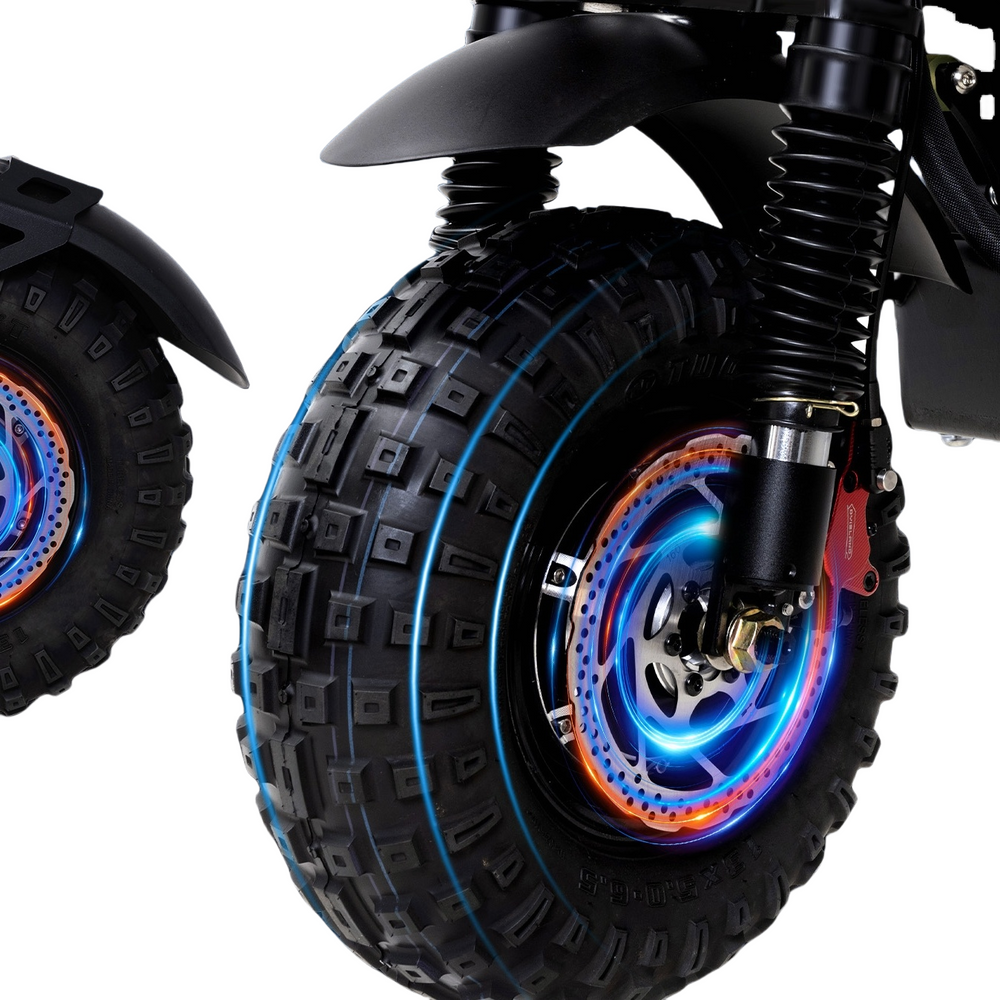
From our experience engineering and testing high-performance vehicles at TopRiding, an active suspension system is not a luxury upgrade for enthusiasts—it is an absolute mechanical necessity for anyone riding faster than 15 MPH. A scooter with a rigid frame leaves your body to act as the primary shock absorber, leading to joint fatigue, lower back pain, and a dangerous loss of tire traction. Beyond driver comfort, suspension protects the vehicle's internal components, preventing battery solder joints from snapping, stem clamps from cracking, and electronic speed controllers from shaking to death. In this comprehensive, expert guide, we will brutally dissect the engineering reality of modern dampening systems, calculate the real return on investment, and help you determine whether a smooth ride is worth the upgrade.
1. The Physics of Road Vibrations and Internal Component Failure
To understand if the integration of a suspension on electric scooters worth the structural trade-off, we must look at the math behind road impacts. When an 8.5-inch solid or pneumatic tire strikes a 1-inch asphalt ridge at 20 MPH without a shock absorber, the energy has nowhere to go. This mechanical energy translates instantly into peak g-forces that hit the vehicle chassis. Because small scooter wheels have minimal deflection compared to large car or motorcycle tires, the acceleration force is incredibly sharp and fast. Your feet experience an immediate, harsh upward acceleration, forcing your knees and lower back to flex aggressively just to keep you balanced on the deck.
This endless, high-frequency rattling is just as damaging to the scooter itself. Electric scooter battery packs are complex arrays of individual lithium-ion cells joined together by delicate nickel strip welds. High-frequency vibrations weaken these welds over time, creating micro-cracks that disrupt power flow, drain balance groups unequally, and can even trigger catastrophic short circuits. Rigid commuters driven across harsh roads regularly suffer from sudden electronic shutdowns and premature battery failure. For budget riders considering a daily commute, analyzing the best long range electric scooters under 1000 will reveal that models featuring at least basic front spring dampening outlast rigid frames by thousands of miles, simply by filtering out these destructive vibrations.
Furthermore, structural components like stem folding mechanisms, axle bolts, and brake calipers are vulnerable to metal fatigue when subjected to continuous road shock. A rigid frame amplifies every stress cycle, accelerating wear on critical joints and raising the risk of sudden steering column failures at speed. Adding a dedicated suspension system solves this problem by catching the impact energy at the wheel axle, dampening the spike in force, and releasing it slowly through a controlled spring or fluid path.
2. Decoupling the Mechanics: Spring, Hydraulic, and Rubber Damping
Not all suspension systems are built the same way. If you decide that an active suspension on electric scooters worth the investment, you must learn to separate effective mechanical layouts from cheap cosmetic gimmicks.
-
Spring Suspension: The most common design found on mid-tier scooters. It uses a coiled steel spring that compresses under load. While spring systems are highly reliable, low-cost versions often lack proper rebound dampening. This can cause the scooter to pogo-stick up and down repeatedly after hitting a bump, reducing tire traction.
-
Hydraulic Suspension: The gold standard of micromobility engineering. Hydraulic setups combine a coil spring with an oil-filled damper cylinder. As the spring compresses, fluid is forced through precise internal valves, slowing down the movement and absorbing the energy completely. This ensures the tire snaps back down and sticks to the pavement instantly, providing excellent control during fast cornering and hard braking.
-
Rubber/Torsion Suspension: Popularized by high-end performance brands, this minimalist system relies on dense polyurethane cartridges inside a metal swingarm swing block. It provides excellent lateral stability and requires virtually zero maintenance, but it can feel stiff in cold climates and offers limited travel over large potholes.
For students navigating fractured campus walkways and rough campus paths, finding the best scooters for college commuting means prioritizing reliable spring or hybrid suspension. A well-damped suspension keeps your ride stable across unexpected obstacles, ensures your books and gear stay secure, and prevents the machine from breaking down halfway through the semester.
3. Engineering Case Study: The TopRiding FOHOLO F19 Architecture
When studying what it takes to build a truly high-speed, durable dual-motor vehicle, look no reference further than the top tier of industrial micromobility engineering.
TopRiding FOHOLO F19 - Extreme Performance Dual-Motor Scooter
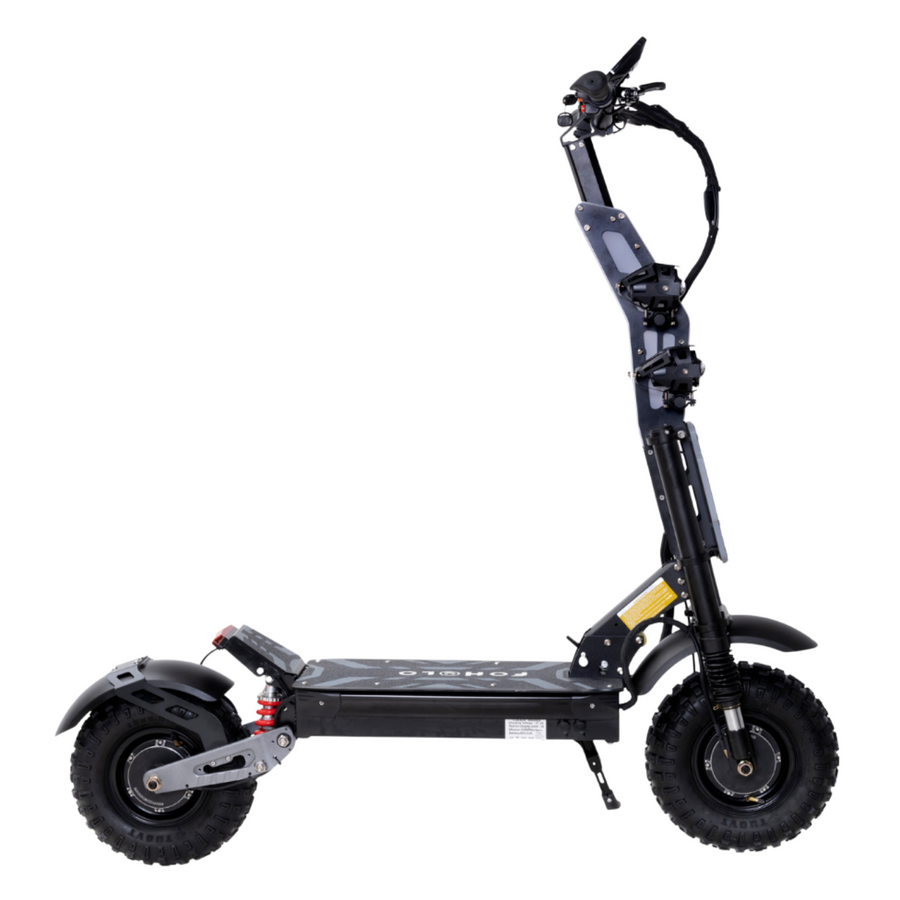
The TopRiding FOHOLO F19 is an absolute masterclass in structural engineering, proving that specialized suspension layout is mandatory once you step into high-speed transportation. Pushing a massive 7000W dual-motor powertrain (3500W x 2) to a phenomenal top speed of 55 MPH, this machine would be completely unrideable on a rigid frame. To handle these extreme speeds safely, it features a heavy-duty Triple Clamp Hydraulic Fork up front paired with a Dual Spring Rear Suspension matrix.
This premium dual-dampening layout works seamlessly with massive 13-inch all-terrain, explosion-proof fat tires. It absorbs severe vertical drops and off-road impacts with absolute control. Powered by a high-capacity 60V 33AH battery and protected by full UL 2272 safety certification, the FOHOLO F19 delivers over 65 miles of range. It features hydraulic disc brakes, adjustable handlebar height, dual charging ports, and 6+1 customizable riding modes (Sport x3, Standard x3, ECO). The FOHOLO F19 completely answers whether premium suspension is necessary: at high speeds, an integrated hydraulic layout is the only thing keeping you safely glued to the road.
View the Complete TopRiding FOHOLO F19 Performance Profile
4. Evaluating the ROI Across Real-World Use Cases
To determine if an integrated suspension on electric scooters worth the extra weight and upfront cost, you must look closely at your specific riding habits, environment, and financial goals. For commercial riders running an independent courier or cargo operation, vehicle uptime is everything. Investing in the best electric scooters for delivery business means buying a machine with a heavy-duty suspension frame. A delivery rider spends up to 8 hours a day on the road, crossing hundreds of curbs and broken utility cuts. Without an active suspension to protect the vehicle, internal component wiring snaps rapidly, forcing your asset into the repair shop and directly hurting your daily revenue.
Seasonal weather conditions also play a massive role in how you manage your vehicle's health. For riders living in northern climates, it is vital to track how cold weather affects scooter battery performance. Sub-zero temperatures lower battery capacity and make aluminum frames more brittle under sudden impacts. A rigid scooter hitting a frozen asphalt edge at 20°F passes the entire unyielding shock into the cold battery array, increasing the risk of interior bracket cracks. A flexible hydraulic fork softens these harsh winter impacts, keeping your battery secure through freezing commutes.
5. Weight Limits, Structural Failures, and Safety Considerations
Rider ergonomics and physical build are crucial factors when evaluating suspension performance. Heavier riders put immense static load on a scooter frame before it even starts moving. If you are researching can a 300 lb person ride an electric scooter safely, the engineering answer depends entirely on the suspension layout. A rigid scooter will trap a heavy rider's feet against a completely unyielding platform, overloading the rear tire bead and risking dangerous high-speed blowouts over common potholes.
Conversely, a heavy-duty scooter built with adjustable coil-over springs or dual hydraulic forks allows you to adjust preload tension to match your exact weight. This keeps the frame riding smoothly in the middle of its suspension travel, preventing the deck from bottoming out and giving you a safe cushion of protection against sudden road hazards. Suspension also drastically improves braking safety; when you grab the brakes hard, a front suspension fork compresses slightly, transferring weight smoothly to the front tire and maximizing its grip on the road to prevent dangerous front-wheel lockups.
Finally, we must emphasize security and lifestyle practicality. High-performance dual-suspension scooters are inherently larger, heavier, and more expensive assets, which makes them prime targets for theft. Owners must constantly ask are electric scooters easily stolen in their urban centers? Yes, they are. While a cheap, ultra-lightweight rigid scooter can easily be folded and carried into a coffee shop, a 100-pound dual-suspension machine like the FOHOLO F19 requires heavy-duty locks, built-in GPS tracking, and secure storage spaces. You must weigh the clear comfort advantages of an advanced suspension system against the logistical reality of parking and storing a larger, high-value vehicle.
6. Technical Evaluation Matrix: Rigid vs. Damped Scooters
To help you see the structural trade-offs clearly, our engineering team has summarized the core operational differences between rigid and fully damped scooters into a clear reference table.
| Chassis Design Type |
Vibration Absorption Profile |
Component Longevity Profile |
High-Speed Safety (>20 MPH) |
Total Weight & Portability |
| Rigid Frame (No Suspension) |
None; transfers all road shocks directly to rider joints |
Poor; high-frequency vibrations cause internal wire failure |
Dangerous; wheels bounce off road hazards, losing grip |
Ultra-lightweight; easy to fold and carry on trains |
| Basic Spring (Front/Rear) |
Moderate; absorbs small bumps but can bounce repeatedly |
Good; cuts down major impact damage on core electronics |
Acceptable; keeps frame tracking relatively flat |
Medium weight; manageable for most apartment stairs |
| Premium Hydraulic (FOHOLO F19) |
Flawless; fluid damping eliminates vibration completely |
Exceptional; layout protects battery array and stem integrity |
Elite; tires stay pinned to asphalt through bumps |
Heavy; built for extreme performance, requires secure storage |
7. Frequently Asked Questions (FAQs)
Can large pneumatic tires replace the need for a dedicated suspension?
From our experience, absolutely not. While large 10-inch or 11-inch pneumatic tires offer a bit of initial cushion against rough pavement, they can only deflect so much before bottoming out against the metal wheel rim. Air tires lack the deep travel and controlled rebound dampening of a true spring or hydraulic fork. Relying only on tire pressure to absorb deep potholes will quickly lead to pinch flats and bent rims.
Does an electric scooter suspension require regular technical maintenance?
Basic spring suspension systems require very little upkeep—just a quick spray with a high-quality dry lithium grease every few months to prevent squeaking. Premium oil-filled hydraulic systems are sealed tightly from the factory and can last for thousands of miles. You only need to inspect them periodically for torn rubber dirt boots or fluid leaks around the upper wiper seals after heavy off-road riding.
Does adding suspension significantly reduce a scooter's real-world range?
No. While suspension arms and shock cylinders add a few pounds to the total weight of the frame, this extra mass has a very minor impact on battery consumption on flat roads. In fact, on rough, uneven terrain, a good suspension can improve efficiency. It allows the scooter to glide smoothly over obstacles rather than losing forward momentum and forcing the motor to draw extra power to accelerate again.
8. Authoritative References
To verify the mechanical safety standards and vehicle dynamics outlined in this engineering guide, we recommend consulting these trusted resources:


