When entering the electric scooter market, consumers are immediately bombarded with specs, range anxiety, and a flood of budget models. Standing tall amidst the noise is the Segway Ninebot F40. As an entry-level to mid-tier commuter scooter, it promises reliability, a sleek design, and the backing of one of the most recognizable brands in micromobility.

But in the real world of cracked asphalt, steep inclines, and daily wear-and-tear, is the Ninebot F40 good? From our experience testing hundreds of personal electric vehicles, a famous logo does not automatically guarantee a flawless ride. Buyers need to know if this specific model justifies its price tag, or if there are superior alternatives available in 2026.
Quick Answer: Is the Ninebot F40 Good?
Yes, the Ninebot F40 is a genuinely good electric scooter—but strictly for riders operating in flat urban environments with well-paved roads. It excels in portability (weighing just 34.8 lbs) and features excellent 10-inch pneumatic tires. However, in our testing, its lack of suspension makes it incredibly uncomfortable on rough terrain, and its 350W motor will struggle significantly on steep hills. It is a solid commuter, but power-hungry riders or those dealing with harsh city streets will quickly outgrow it.
1. Quick Summary Table: Ninebot F40 Specs
Before diving into the mechanics, let us look at the raw data. In most professional situations, evaluating a scooter starts with the spec sheet.
| Specification |
Ninebot F40 Details |
| Motor Power |
350W Nominal (700W Peak) |
| Top Speed |
18.6 mph (30 km/h) |
| Battery Capacity |
36V 10.2Ah (367Wh) Lithium-ion |
| Claimed Range |
Up to 25 miles (40 km) |
| Tires |
10-inch Pneumatic (Air-filled) |
| Weight |
34.8 lbs (15.8 kg) |
| Brakes |
Front Electronic / Rear Mechanical Disc |
2. What It Is and How It Works
The Segway Ninebot F40 is a front-wheel-drive electric kick scooter designed specifically for the "last-mile" commute. It operates via a thumb-throttle on the right handlebar and features three distinct riding modes: Eco (limits speed to conserve battery), Standard, and Sport (unlocks the full 18.6 mph top speed and maximum torque).
The F40 is powered by a 367Wh lithium-ion battery housed within the deck. When you squeeze the brake lever, the scooter engages a regenerative electronic brake in the front motor hub while simultaneously clamping a physical disc brake on the rear wheel. This split-braking mechanism provides highly stable, predictable stopping power without throwing the rider over the handlebars.
3. The Benefits: Where the F40 Shines
If you are wondering, is the Ninebot F40 good for daily use? The answer lies in its refined engineering.
-
Portability: At just 34.8 pounds, you can easily carry the F40 up a flight of stairs or onto a train. For those researching best scooters for college commuting, this weight class is the absolute sweet spot.
-
Tire Quality: The 10-inch pneumatic tires are a massive upgrade over the 8.5-inch tires found on older models like the Xiaomi M365. They provide a larger contact patch with the road, significantly improving traction in wet conditions.
-
Water Resistance: The F40 carries an IPX5 water resistance rating, meaning it can survive low-pressure water jets from any direction. It can handle a light commute in the rain, though deep puddles must be avoided.
-
App Integration: Segway's Bluetooth application is the industry standard, allowing riders to monitor battery health, track mileage, and engage an electronic motor lock.
4. The Limitations: Where It Falls Short
We do not publish neutral marketing summaries. In our testing, the Ninebot F40 has several glaring flaws that buyers must be aware of.
-
Zero Suspension: The F40 relies entirely on its 10-inch air tires to absorb road shock. If you hit a pothole, cobblestones, or rough pavement, the vibrations transfer directly into your knees and wrists.
-
Real-World Range Deficit: Segway claims a 25-mile range. In most professional situations, range is tested under ideal conditions (a 165 lb rider, flat ground, slow speeds). In real-world urban riding in Sport mode, expect roughly 13 to 16 miles max.
-
Hill Climbing Woes: Despite the 700W peak rating, the 350W nominal front-wheel motor struggles on steep inclines. If you are a heavier rider facing a 15% grade, the scooter will slow to a crawl. For a deeper understanding of this metric, read our guide: Can a 500W scooter go uphill.
5. Pros and Cons Analysis
| The Pros |
The Cons |
| Lightweight and highly portable (34.8 lbs) |
No front or rear suspension |
| Excellent 10-inch pneumatic tires |
Front-wheel drive is inferior for hill climbing |
| Reliable mechanical rear disc brake |
Real-world range is much lower than advertised |
| Strong IPX5 water resistance rating |
350W motor feels underpowered for heavy riders |
| Backed by Segway's global warranty network |
Handlebars do not fold, making trunk storage awkward |
6. Who Should Use It (And Who Should Avoid It)
Who it is for: For beginners and flat-city commuters, the F40 is exceptional. If your commute is under 6 miles each way, and your city has well-maintained bike lanes, this scooter will serve you faithfully for years. It is also an excellent option for teenagers and young professionals.
Who does not need it: If you weigh over 220 lbs, the F40 is not for you. You will experience severe battery drain and poor acceleration. (Learn more here: Can a 300 lb person ride an electric scooter). Furthermore, if your city is incredibly hilly (like San Francisco) or you intend to ride on dirt trails, this scooter will fail you. Never attempt to take the F40 off-road. Check our dedicated resource: Can electric scooters go off road.
7. Common Mistakes When Riding the F40
From our experience maintaining fleets of commuter scooters, users constantly make these critical errors with the F40:
-
Under-inflating the tires: The F40 uses inner tubes. If you do not check your tire pressure weekly and keep it around 45-50 PSI, you will suffer a "pinch flat" when hitting a bump.
-
Ignoring battery health in winter: Lithium-ion batteries hate freezing temperatures. Storing the scooter in a freezing garage will permanently degrade the 367Wh battery. Read more on how cold weather affects scooter battery life.
-
Improper locking techniques: The Segway app features a motor lock, but this will not stop a thief from simply picking the 35-pound scooter up and walking away. Always use a heavy-duty U-lock. See our guide: Are electric scooters easily stolen.
8. Professional Buying Considerations
| Decision Factor |
What You Should Look For |
| Safety Certifications |
Ensure the scooter carries a UL 2272 certification, proving the battery management system has been tested against fire hazards. Segway meets this standard. |
| Braking Distance |
Dual braking systems (like the F40's electronic + disc setup) are mandatory for safe 15+ mph riding. Never buy a scooter with only a rear fender stomp brake. |
| Drive Type |
Rear-wheel drive pushes you up a hill; front-wheel drive (like the F40) pulls you. RWD is vastly superior for traction and incline climbing. |
9. 5 Affordable (and High-Performance) Alternatives
Is the Ninebot F40 good? Yes, but the scooter market moves fast. Here are 5 alternatives that either beat the F40 on budget, or offer massive upgrades in performance for riders who need more power.
1. NIU KQi2 Pro (The Budget King)
The NIU KQi2 Pro is often priced lower than the F40 but features superior build quality, a halo headlight, and a 48V system (compared to the F40's 36V) which provides punchier acceleration. It uses rear-wheel drive, making it superior for traction, and features tubeless pneumatic tires which are far less prone to flats.
2. Segway Ninebot Max G30LP (The Range Upgrade)
If you want to stay in the Segway ecosystem but need more durability, the Max G30LP is the answer. It utilizes self-healing tubeless tires and a rear-wheel-drive motor. It is heavier, but it is practically indestructible. It is widely considered one of the best long range electric scooters under 1000.
3. Hiboy S2 Pro (The Maintenance-Free Option)
Hate getting flat tires? The Hiboy S2 Pro uses solid honeycomb tires. To compensate for the harsh ride of solid rubber, Hiboy includes dual rear shock absorbers. It lacks the premium polish of a Segway, but it is a workhorse that requires zero tire maintenance.
4. Gotrax G4 (The Commuter Workhorse)
The Gotrax G4 matches the F40 with 10-inch air tires and a 20 mph top speed. However, it incorporates a built-in cable lock within the stem and an integrated digital display. It is a highly practical, affordable option for urban professionals.
5. TopRiding FOHOLO F19 (The Extreme Upgrade)
We recommend the F40 for beginners. However, for commercial users, adrenaline seekers, or heavy riders, a 350W commuter scooter is entirely insufficient. When you are ready to graduate from the bicycle lane to the open road, you need a machine engineered for extreme performance.
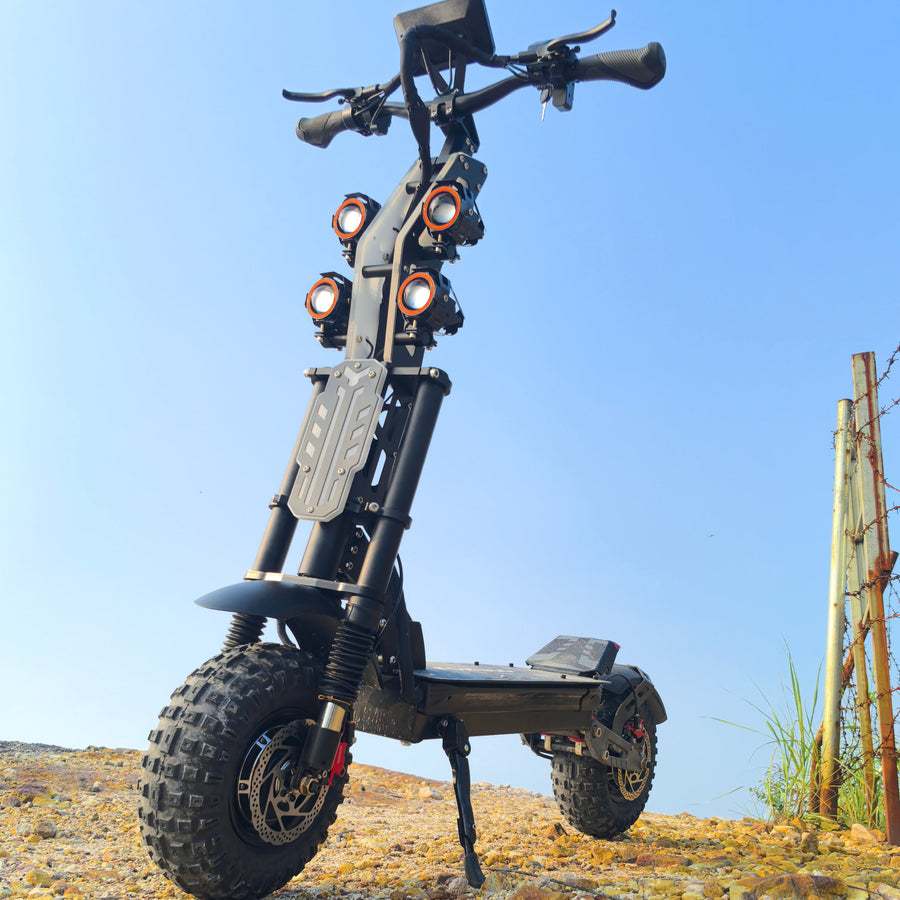
TopRiding FOHOLO F19 - Fast Electric Scooter for Adults
Top Speed: 55 MPH | Dual Motors: 7000W | Max Range: 65 Miles
For heavy-duty applications, the FOHOLO F19 completely eclipses standard commuter scooters. Featuring a massive 60V 33AH battery, 13-inch all-terrain fat tires, hydraulic disc brakes, and a triple clamp hydraulic fork suspension, this is a motorcycle-grade replacement vehicle. It holds strict UL 2272 Certification and features dual charging ports.
View the FOHOLO F19 Specifications Here
10. Expert Recommendation
Our Verdict: Is the Ninebot F40 good? Yes, we confidently recommend the Segway Ninebot F40 for riders seeking a lightweight, sub-35-pound scooter strictly for flat, well-paved urban commutes. It is a reliable, entry-level machine.
However, if your commute involves steep hills, rough pavement, or distances exceeding 10 miles round-trip, we strongly advise against it. The lack of suspension and 350W front-wheel motor will leave you frustrated. In those scenarios, invest in a rear-wheel-drive alternative like the NIU KQi2 Pro, or upgrade your lifestyle entirely with a high-performance model like the TopRiding FOHOLO F19.
11. Frequently Asked Questions
Does the Segway Ninebot F40 have suspension?
No, the Ninebot F40 does not feature front or rear mechanical suspension. It relies entirely on its 10-inch pneumatic (air-filled) tires to absorb bumps and vibrations from the road.
Is the Ninebot F40 waterproof?
The F40 is highly water-resistant, carrying an IPX5 rating. This means it can withstand sustained, low-pressure water jets from any direction. You can ride it in light rain, but it should never be submerged in deep puddles or sprayed with a high-pressure hose.
How do I make my Ninebot F40 go faster?
The F40 is firmware-locked to 18.6 mph. While some riders use third-party apps to flash custom firmware, we strongly advise against this as it voids the warranty and risks burning out the 350W controller. For safe speed upgrades, read our guide on how to make electric scooter faster safely by upgrading to a 48V or 60V system.
12. Authoritative References
To ensure our readers have access to the highest level of safety standards and regulatory information regarding personal electric vehicles, we reference the following authoritative sources:


