The urban mobility market is packed with over-hyped transportation gadgets, but few claims create more debate than the universal promise of the folding electric scooter. Retailers promote them as the ultimate escape from gridlock, parking fees, and transit delays. Many first-time buyers unbox an underpowered toy with an unstable stem latch, a five-mile real-world range, and tiny solid rubber tires that vibrate painfully over asphalt cracks. The practical question remains: is a foldable scooter worth it for your daily transit, or does it become an expensive dust collector in your hallway?

Evaluating personal electric transportation requires cutting through marketing exaggerations and analyzing mechanical stem engineering, battery chemistry under cold loads, and real-world cost recovery. A folding scooter is an investment in portable infrastructure. Sifting through hundreds of options requires knowing whether a compact folding frame meets your specific transit demands, body weight, and street conditions.
Quick Answer: Is a Foldable Scooter Worth the Money?
Yes, a foldable scooter is worth it if you replace short car trips, rideshare expenses, or parking garage tickets with a 5 to 15-mile daily route. A quality machine pays for itself in four to six months. However, an ultra-cheap $250 department store scooter is almost never worth it; low-end models feature thin stem brackets that wobble dangerously, struggle on minor inclines, and run non-certified battery packs. For daily riding, choose a model with a reinforced folding clamp, at least 500W to 1000W of sustained power, pneumatic or fat tires, and UL 2272 electrical safety certification. If your commute includes steep hills, rider weights above 200 lbs, or rough pavement, step up to a high-voltage platform with full suspension.
What Is a Modern Foldable Scooter and How Does the Mechanism Work?
A foldable electric scooter is an individual micro-mobility vehicle powered by a brushless DC (BLDC) motor in the wheel hub, powered by a deck-integrated lithium-ion battery, and built with an articulated steering column. The core component of the entire design is the folding mechanism located at the base of the stem or the front deck neck. This joint allows the vertical handlebar stem to collapse flat against the deck, locking into a carry handle for buses, train cars, car trunks, or desk storage.
In our testing, folding designs split into two categories: single-pin friction latch designs and heavy-duty dual-clamp collar systems. Budget models rely on a single stamped-steel folding lever held by spring tension. Over months of road vibrations and braking force, these cheap single-pin latches loosen, creating dangerous front-to-back stem wobble. Commercial-grade and high-speed commuters use heavy cast clamps, safety pins, or threaded screw collars that lock the steering stem solidly to the chassis, matching the rigidity of fixed-frame platforms.
Beyond the folding latch, modern platforms feature intelligent motor controllers that manage regenerative braking, electronic throttles, and battery thermal cutoffs. Rather than basic toys, high-capacity commuter scooters are regulated electric vehicles capable of keeping pace with urban car traffic.
Quick Summary: Foldable Scooter Value Matrix
The table below provides a quick breakdown of performance tiers, real-world utility, and expected financial payback timelines:
The 4 Concrete Benefits That Deliver Daily Return on Investment
1. Direct Elimination of Parking Costs and Rideshare Surge Pricing
The financial justification for a foldable scooter rests on direct expenses saved. In major metropolitan areas, parking garage fees run between $200 and $500 monthly, while five-mile rideshare trips surge past $25 during morning downpours. By shifting those trips to a personal vehicle, you bypass fuel, vehicle insurance, and parking entirely. Even when factoring in electricity costs, charging a 60V battery from empty to full costs roughly fifteen to twenty-five cents. Commercial users running short courier routes rely on the best electric scooters for delivery business setups to maximize take-home profit margins.
2. True Multi-Modal Transit Compatibility
An electric bicycle provides great range, but carrying a 65-pound, full-size e-bike onto a crowded commuter train or up a three-story walk-up apartment is exhausting. A foldable platform compresses into a package you can carry onto regional rail, slide under a work desk, or stash inside an apartment coat closet. This capability solves the classic last-mile problem: you can live two miles from the station, zip to the train in seven minutes, fold the stem, board without oversized bicycle permits, and ride directly from the destination terminal to your office door.
3. In-Door Theft Elimination
Locking any high-value vehicle on a public city sidewalk invites angle-grinder theft. Bike locks, chains, and GPS trackers slow down thieves, but leaving an e-bike outside eight hours daily carries high risk. Are electric scooters easily stolen? Yes, on the street. But a foldable scooter neutralizes street theft because it stays with you. You fold the neck and bring it inside your apartment, office suite, gym locker, or coffee shop. Bypassing sidewalk bike racks eliminates replacement costs entirely.
4. Predictable Commute Times Free from Urban Gridlock
Sitting in bumper-to-bumper city traffic wastes hours of productivity. On a reliable commuter scooter, transit times become predictable. A four-mile downtown trip that takes 45 minutes by taxi during rush hour takes a steady 12 to 14 minutes in the protected bike lane. For daily routing options, review our curated list of electric scooters for commuting daily use.
Inherent Mechanical Limitations and Physical Trade-offs
A folding frame requires intentional structural compromises that riders must evaluate before buying:
-
Mechanical Stress at the Folding Joint: Physics dictates that a hinged bar will never match the raw structural rigidity of a continuous solid tube. Every emergency stop and acceleration pull transfers leverage directly into the folding pin. In most professional situations, you must budget ten minutes monthly to check bolt torque, tighten clamp collars, and lubricate pivot points.
-
Ride Quality Over Broken Asphalt: Most ultra-portable commuter scooters use 8-inch to 8.5-inch solid or narrow pneumatic tires to keep weight low. Small tires drop into potholes and buckle over streetcar tracks where 28-inch bicycle wheels roll smoothly. Upgrading to wide 10-inch or 11-inch pneumatic tires is mandatory for rough urban streets.
-
Weight vs. Portability Realities: The phrase portable is subjective. A basic 250W scooter weighs 28 lbs and is easy to carry upstairs. A serious 60V high-torque commuter with suspension weighs between 60 and 75 lbs. While it folds cleanly into a car trunk, carrying it up subway stairs requires real physical effort.
-
Seasonal Battery Degradation: Sub-freezing temperatures sap lithium-ion electrolyte conductivity. In our testing during winter rides, range drops by 30% to 45% compared to summer baselines. Understand these cold-weather issues by checking our guide on how cold weather affects scooter battery performance.
Who Should Buy a Foldable Scooter vs. Who Needs an Alternative
Vehicle selection must match physical route terrain, rider weight, and local municipal enforcement.
Who Needs a Foldable Scooter:
-
Urban Apartment Dwellers: If you live in an elevator-free building or an apartment without dedicated garage bike storage, folding portability is the only practical choice.
-
Train and Bus Commuters: Riders bridging transit gaps between outlying suburban stations and downtown office hubs.
-
College Students and Campus Staff: Navigating large universities where auto parking permits are expensive and lecture halls prohibit full-sized bicycles inside classrooms.
-
Suburban Trunk Commuters: Drivers parking in cheap peripheral lots outside major city centers who ride the final two miles into dense downtown districts to avoid traffic congestion.
Who Should NOT Buy a Foldable Scooter:
Modal Transit Comparison: Foldable Scooter vs. E-Bike vs. Car vs. Rideshare
To see how a foldable scooter compares economically and logistically against common urban transit methods over a standard 1,000-mile operating season, review the metrics below:
Pros vs. Cons of Owning a Foldable Electric Scooter
Balancing functional advantages against everyday maintenance considerations:
Featured High-Performance Solution: TopRiding ZSNAKE Z35
When riders say an electric scooter is not worth it, they are usually talking about an underpowered 250W model that slows down on minor grades and lacks suspension. The solution is investing in a high-voltage, heavy-duty platform that pairs structural stability with serious torque. The TopRiding ZSNAKE Z35 is engineered specifically to eliminate standard scooter frustrations.
TopRiding ZSNAKE Z35 - 2800W Motor, 60V Performance Electric Scooter
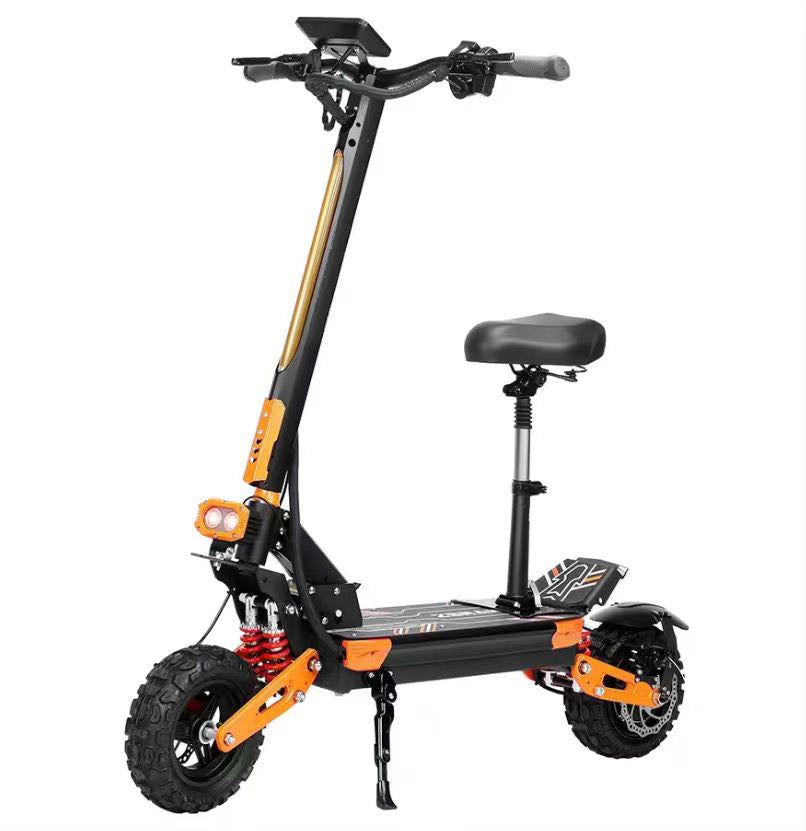
Engineered for adults who need real-world hill-climbing power, generous range, and rock-solid stem geometry, the ZSNAKE Z35 steps past disposable budget options into serious commuter capability. Equipped with a high-torque 2800W single motor running on an efficient 60V 15Ah battery architecture, it easily climbs steep city hills while carrying riders up to 330 lbs.
Top Speed: Up to 33 MPH
Motor Power: 2800W Single High-Torque Motor
Max Range: Up to 35 Miles per charge
Battery System: 60V 15AH High-Capacity Lithium-Ion
Safety Certification: UL 2272 Certified Electrical System
Tire Architecture: 11-inch Off-road Fat Pneumatic Tires
Braking Hardware: Front & Rear Cable Disc Brakes
Suspension System: Full Dual Spring Suspension
Charging Setup: DUAL Charging Ports for fast turnaround
Max Rider Payload: Tested for up to 330 LBS (150 kg)
Check out full configuration options and pricing directly on the TopRiding ZSNAKE Z35 product page. If your budget is tight, explore our breakdown of the best long range electric scooters under 1000 or browse our review of fast electric scooters for adults.
Common Mistakes Buyers Make When Purchasing a Folding Scooter
From our testing across commuter fleets, buyers frequently make these four expensive mistakes:
-
Underestimating Motor Wattage for Hills: Buying a 250W or 350W scooter when living in hilly cities like Seattle, San Francisco, or Pittsburgh is a recipe for walking your scooter up slopes. Can a 500W scooter go uphill? Yes, on modest grades. But heavier riders facing 15-degree hills need an 800W+ or 60V platform. Review our steep-climb testing in can a 500W scooter go uphill.
-
Ignoring Factory Payload Ratings: Exceeding a scooter's maximum weight limit stresses the folding latch, overheats the motor controller, and drains battery range. Heavy riders should consult our safety guide on can a 300 lb person ride an electric scooter to match frame limits properly.
-
Buying Solid Tires to Avoid Flats: Solid rubber tires never get punctures, but they transfer every impact directly into the folding latch, battery solder joints, and your knees. High-volume 10-inch or 11-inch pneumatic fat tires with self-healing sealant deliver vastly superior traction, safety, and comfort.
-
Attempting Firmware Speed Hacks: Riders frequently attempt software tweaks to raise top speeds. Review our mechanical breakdown on how to make electric scooter faster safely to avoid burning out motor controllers or melting battery connectors.
Essential Buying Considerations Before Placing an Order
Before purchasing your foldable scooter, confirm these four manufacturing and safety benchmarks:
-
UL 2272 Electrical Fire Certification: Never buy a non-certified electric scooter. Standard UL 2272 testing confirms that battery cells, battery management systems (BMS), and chargers resist thermal runaway, overcharging, and impact fires.
-
Braking Hardware Configuration: Operating at speeds above 20 MPH requires reliable stopping power. Insist on dual disc brakes (mechanical or hydraulic). Relying solely on a rear electronic motor brake or a friction foot fender will not provide safe stopping distances in traffic.
-
Stem Latch Integrity: Look for a secondary mechanical safety catch that prevents the stem from folding if the primary lever slips while riding. High-end scooters use redundant latching pins.
-
Real-World Battery Capacity (Watt-Hours): Do not rely on advertised marketing range estimates calculated with a 130-lb test rider on flat ground at 9 mph. Divide the battery's total Watt-Hours (Volts multiplied by Amp-Hours) by 30 to get a reliable real-world commuter range estimate at full speed.
Expert Recommendation and Tactical Buying Verdict
In most professional situations, a foldable electric scooter is one of the most cost-effective personal transit tools available. If your daily travel involves a 3 to 15-mile urban route, replacing car miles or subway tickets with an electric scooter saves hundreds of dollars monthly while making your daily commute predictable.
We recommend skipping underpowered sub-$400 entry models with tiny 8-inch tires, loose stems, and single-brake setups. They ride harshly, struggle on hills, and break down quickly. Instead, invest in a capable 48V to 60V platform like the TopRiding ZSNAKE Z35, which features large pneumatic tires, dual suspension, reliable disc brakes, and UL 2272 certification. You get structural stability, reliable hill-climbing power, and an enjoyable daily ride that pays for itself in months.
Frequently Asked Questions (FAQ)
Is a foldable electric scooter worth it for daily commuting?
Yes, a foldable electric scooter is worth it for daily commuting if your trip is between 2 and 15 miles. It eliminates parking fees, subway crowds, and traffic delays, while folding down for easy storage under your desk. A quality scooter typically pays for itself within four to six months of saved transit costs.
Do foldable scooter folding mechanisms loosen or wobble over time?
Budget scooters with simple single-pin latches often develop stem play over time due to constant road vibrations. High-end models use reinforced collar clamps, heavy locking cams, and safety bolts that prevent play. Conducting quick monthly bolt-tightening checks keeps the steering column rigid and safe.
How long does a quality foldable scooter battery last before needing replacement?
A quality lithium-ion scooter battery lasts between 500 and 1,000 full charge cycles, which translates to roughly 3 to 5 years of daily commuter use. To maximize lifespan, avoid charging in freezing temperatures, store the battery between 40% and 80% charge when idle, and always use the manufacturer's certified charger.
Can you ride a foldable electric scooter in the rain?
Riding in heavy rain is not recommended. While many scooters carry water-resistance ratings of IPX4 or IPX5 (handling light road spray), deep puddles can enter motor hub bearings and deck seams, voiding warranties. Wet asphalt and painted road markings also reduce tire traction significantly.
Can an adult over 250 lbs ride a foldable scooter safely?
Yes, but you must choose a scooter engineered for higher payloads. Standard entry-level scooters top out at 220 lbs, but heavy-duty models like the TopRiding ZSNAKE Z35 are built with reinforced frames, dual suspension, and high-torque 60V motors rated for riders up to 330 lbs.
Authoritative References
- UL Solutions: UL 2272 Electrical Systems Certification for Personal e-Mobility Devices
- National Highway Traffic Safety Administration (NHTSA): Micromobility and Road Sharing Guidelines
- SAE International: Taxonomy and Classification of Powered Micromobility Vehicles (SAE J3194)


