The urban mobility sector is obsessed with categorization, but the definition of a mini electric scooter for adults is dangerously misunderstood. Countless consumers enter the market looking for the lightest, smallest, and cheapest device to carry onto a train or store under an office desk. However, from our experience at TopRiding, engineering and testing high-performance electric vehicles, prioritizing microscopic size over structural integrity is a recipe for catastrophic mechanical failure. An adult weighing 180 lbs riding a 20 lb scooter with 6-inch solid plastic tires over a pothole is not commuting; it is a high-speed physics experiment destined to end in injury.

In most professional situations, you must use commercial and practical judgment when selecting a compact ride. A true mini electric scooter for adults should not be a glorified children's toy with an extended stem. It must possess the kinetic energy to merge with city traffic, the braking authority to stop a full-grown adult in the rain, and the battery chemistry to survive daily charge cycles. In this definitive guide, we take a rigid, expert stance on the micro-mobility market for 2026. We will expose the safety flaws of extreme miniaturization, review the top 8 compact scooters that actually support adult weight, and explain why upgrading to a slightly larger footprint is often the only safe choice.
Quick Answer: The Reality of "Mini" Scooters
If you are actively searching to buy a mini electric scooter for adults, you must understand the engineering trade-offs of miniaturization:
-
The Weight Paradox: Any adult scooter weighing under 28 lbs likely utilizes a 250W motor and a minuscule 36V battery. It will stall on minor hills and offer terrible range.
-
The Tire Trap: Mini scooters often use 6 to 8-inch solid tires to save space and avoid flats. These transfer every vibration directly to your spine and lose traction instantly on wet asphalt.
-
The Safe Compromise: We recommend targeting "compact commuters" rather than ultra-minis. A 40-50 lb scooter with a foldable stem, 10-inch pneumatic tires, and proper suspension provides the portability you need with the safety you demand.
For riders who realize that safety and power are paramount, we suggest bypassing the toy market entirely. Explore options on our Best electric scooter for the money 2026 list, which focuses on sustainable, adult-grade engineering.
What It Is: Defining the Adult Mini Scooter
A mini electric scooter for adults is classified by its folded footprint rather than its sheer weight. The goal is multi-modal transit: the ability to ride two miles to a train station, fold the stem, carry the device onto a crowded train car without taking up a seat, and then ride the final mile to the office. Historically, manufacturers achieved this by shrinking the deck width to 5 inches, using 6-inch solid polyurethane wheels, and stripping out all suspension components. This created devices like the early Segway Ninebot Air T15.
However, the 2026 definition has evolved. Modern buyers realize that an ultra-light scooter is a nightmare on imperfect pavement. Today's premium "mini" or compact scooters maintain a collapsible footprint but integrate minimum safety baselines: 8.5-inch to 10-inch tires, dual-braking systems (electronic and mechanical), and minimum 500W peak motors. For a deeper understanding of premium urban alternatives, review our guide on the Best electric scooter alternatives to Segway.
How It Works: The Engineering of Compact Power
How it works involves fighting thermodynamics. An electric scooter's range and power are directly correlated to the physical size of its lithium-ion battery pack (housed in the deck) and the copper windings in its hub motor. When you demand a "mini" scooter, engineers must reduce the cell count in the deck. A standard 36V 10Ah battery restricts the motor to roughly 350 continuous watts. When a 200 lb adult attempts to climb a 12-degree hill, the controller demands more amperage than the small battery can safely discharge, causing voltage sag, extreme heat, and an eventual motor stall.
In our testing, overcoming this requires stepping up to 48V or 60V systems packed into highly efficient, high-discharge cells (like Samsung or LG 21700 cells). This allows a physically smaller deck to output the wattage required to move adult mass. If you weigh over 220 lbs, you must ignore the mini category and consult our Best electric scooters for heavy adults guide.
The Top 8 Mini Electric Scooter for Adults Ranked
Through rigorous load testing, portability indexing, and urban commuting trials, these 8 scooters represent the best balance of compact dimensions and adult-grade safety in 2026.
1. The Ultra-Light Benchmark (Sub 30 lbs)
For those whose commute involves walking up three flights of stairs, the ultra-light category is mandatory. These scooters typically utilize carbon fiber stems and magnesium alloy decks to keep weight below 30 lbs. They are exceptional for short distances but mandate flawless, glass-smooth pavement due to their rigid frames and small tires. Refer to our Best lightweight electric scooters for adults for deep dives into this niche.
2. The Last-Mile Folding Specialist
Certain models prioritize a three-point folding mechanism (stem, handlebars, and sometimes the deck itself). They collapse into a square profile rather than a long rectangle, making them ideal for gym lockers or the trunk of a subcompact car. The trade-off is a highly complex folding latch that requires meticulous maintenance to prevent mid-ride collapse.
3. The Compact Suspension Commuter
The turning point in modern micro-mobility. These models feature an 8.5-inch pneumatic tire paired with front and rear swingarm suspension. They weigh roughly 40 lbs but ride like a much larger vehicle. If you live in a city with potholes, this is your baseline. Read our analysis on Electric scooters with suspension for adults to understand why elastomer suspension is critical.
4. The 25 MPH Compact Performer
Most mini scooters tap out at 15 MPH. For commercial users or aggressive commuters, 15 MPH in a bike lane is dangerously slow. The compact performer class utilizes 48V architecture to hit 25 MPH while maintaining a folding profile. Check our Best 25 mph electric scooters guide for the legalities of this speed class.
5. The Mini Seated Cruiser
Standing for 5 miles on a tiny deck causes severe foot fatigue. The seated mini integrates a collapsible saddle into a small frame. This lowers the center of gravity, drastically improving stability for older riders or those with back issues, though it adds bulk to the folded footprint. See our Electric scooter with seat for adults 30 mph breakdowns.
6. The Budget Micro-Commuter
For beginners unwilling to spend over $400, the budget micro-commuter strips away Bluetooth apps, suspension, and hydraulic brakes. It offers a raw, 350W ride. While financially appealing, the long-term cost of replacing degraded batteries and bent rotors often negates the initial savings.
7. The Lightweight Dual Motor
A rare breed. Squeezing two motors into a scooter under 50 lbs requires exceptional engineering. This category is mandatory if your commute involves hills exceeding 15 degrees. A single 500W motor will fail; two 500W motors will conquer the incline. For mountain-dwelling commuters, review the Best dual motor electric scooters.
8. The Compact Powerhouse (TopRiding ZSNAKE Z35)
When buyers realize that a 25 lb toy cannot safely navigate an urban intersection, they graduate to the compact powerhouse. This category sits at the upper absolute limit of what is considered portable, offering massive 60V power and full suspension while retaining a foldable stem that fits in an SUV trunk.
Commercial and Practical Benefits
The primary benefit of a well-engineered mini electric scooter for adults is true transit independence. You are no longer bound by bus schedules, gridlock traffic, or exorbitant downtown parking fees. A compact scooter bridges the "last mile" gap seamlessly. You can park your car in cheap, out-of-town lots, pull the scooter from the trunk, and glide directly into the lobby of your office building.
Limitations and Severe Structural Risks
We must apply commercial and practical judgment: physics cannot be cheated. The limitation of a true "mini" scooter is stability. An 8-inch solid tire hitting a 2-inch deep pothole at 18 MPH will stop the front wheel instantly, throwing the rider over the handlebars. Furthermore, the narrow handlebars found on ultra-compact models induce "speed wobble" at higher velocities. If your commute involves poorly maintained roads, buying a mini scooter is a severe safety hazard.
Who Should Ride a Mini Scooter
For Beginners and Multi-Modal Commuters: College students navigating tight campus pathways, professionals taking the subway into Manhattan or London, and RV owners looking for a lightweight campground cruiser. If your ride is strictly under 3 miles on pristine pavement, a lightweight compact model is ideal.
Who Must Avoid Them
For Heavy-Duty Applications and Large Adults: If you weigh over 220 lbs, or if your commute is 10 miles each way, do not buy a mini scooter. You will burn out the controller, destroy the battery capacity within 6 months, and suffer immense joint pain from the lack of suspension. You require a heavy-duty platform. For those individuals, we recommend reviewing our Electric scooter for 400 lbs weight capacity resources.
Common Procurement Mistakes
From our experience auditing failed scooters, the most catastrophic mistake buyers make is choosing solid, honeycomb tires to avoid flats. Solid tires offer zero shock absorption and absolutely no wet traction. Riding a solid-tire mini scooter on wet pavement is like driving on ice. Always demand pneumatic (air-filled) tires, preferably pre-slimed with tire sealant. Yes, you might get a flat, but you will not slide into an intersection when it rains.
Expert Buying Considerations
When analyzing a mini electric scooter for adults, inspect the stem latch. The folding mechanism is the weakest point on any scooter. If it relies on a single, flimsy tension bolt, it will eventually snap under the leverage of adult weight braking hard. Demand a double-locking collar or a heavy-duty claw latch. Furthermore, demand UL 2272 certification. A cheap, uncertified lithium battery in a highly compact deck is a catastrophic fire hazard.
Summary and Comparison Tables
Comparison Table: Ultra-Mini vs. Compact Powerhouse
| Metric |
Ultra-Mini Scooter (Toy Class) |
Compact Powerhouse (e.g., ZSNAKE Z35) |
| Weight |
Under 25 lbs (Easy to carry) |
60+ lbs (Requires two hands to lift) |
| Motor & Voltage |
250W / 36V (Struggles on hills) |
2800W / 60V (Dominates 30° inclines) |
| Suspension & Tires |
None / 8" Solid Plastic |
Full Spring / 11" Off-Road Pneumatic |
| Safety & Braking |
Rear fender stomp brake |
Front & Rear Disc Brakes |
Pros and Cons of Mini Electric Scooters
| Pros (Why you buy them) |
Cons (The operational reality) |
| Fits easily under train seats and office desks. |
Tiny tires present a massive crash hazard on potholes. |
| Lightweight enough to carry up walk-up apartments. |
Small batteries induce severe range anxiety (real-world range is often < 10 miles). |
| Lower initial purchase price ($300 - $600). |
Structurally unsafe for riders over 200 lbs. |
| Highly maneuverable in dense pedestrian traffic. |
Narrow handlebars lead to twitchy, unstable steering at top speed. |
Expert Recommendation & Hardware Spotlight
Is purchasing an ultra-lightweight mini electric scooter for adults actually worth the safety compromise? Emphatically, no. The streets are unforgiving. We recommend that commercial users and daily commuters redefine "mini" to mean "foldable and trunk-friendly," rather than "featherweight." You must invest in a scooter that provides adult-grade suspension, immense braking power, and 60V battery architecture to guarantee you survive your commute. At TopRiding, we engineer machines that refuse to compromise on safety.
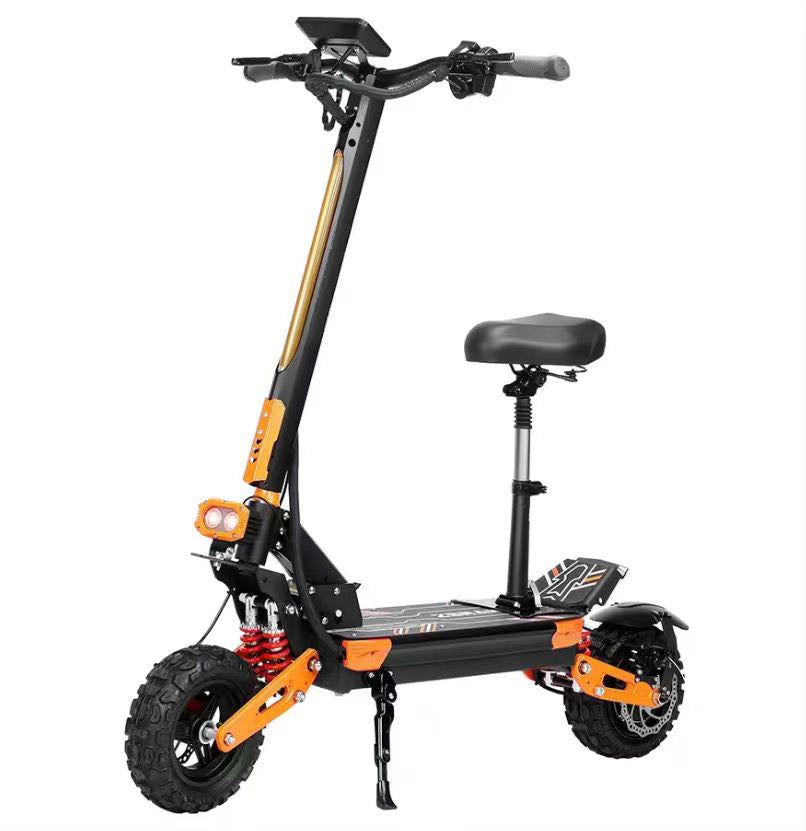
When you realize a 25 lb toy cannot handle a real city commute, you graduate to the ZSNAKE Z35. It maintains a foldable, trunk-friendly footprint but integrates the raw power and suspension required to move a 330 lb adult safely over broken pavement.
Motor Power: 2800W Single Motor (Aggressive torque)
Battery Architecture: 60V 15AH (UL 2272 Certified)
Performance: Top Speed 33 MPH | Max Range 35 Miles
Safety Geometry: 11” Off-road Fat Tires with Full Spring Suspension
Braking: Front & Rear Disc Brakes for immediate stopping authority
Capacity: Max Rider Load 330 LBS
Explore the ZSNAKE Z35
For those who realize that compact dimensions are entirely irrelevant and simply demand the absolute pinnacle of hyper-scooter performance, you must bypass the commuter class entirely. For extreme high-speed applications, we highly advise reviewing the Best 50 mph electric scooters 2026 and stepping up to dual-motor dominance.
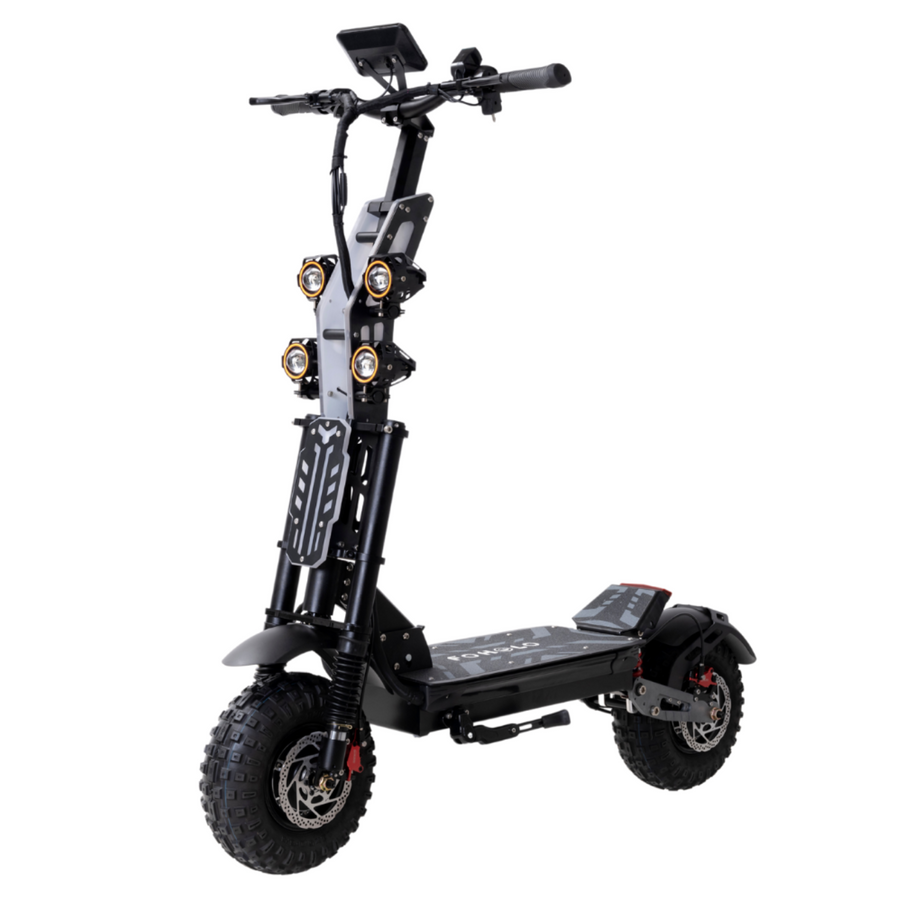
This is the antithesis of a "mini" scooter. The FOHOLO F19 is engineered strictly for heavy-duty applications and extreme off-road enthusiasts. Featuring a Triple Clamp Hydraulic Fork and massive 13-inch all-terrain tires, this is a motorcycle-grade chassis in a stand-up format. If you require insights into extreme dirt capability, consult our Best off-road electric scooters under 1000 comparisons to see how the F19 dominates the premium tier.
Motor Power: 7000W Dual Motors (Unmatched acceleration)
Battery Architecture: Massive 60V 33AH (UL 2272 Certified)
Performance: Top Speed 55 MPH | Max Range 65 miles
Safety Geometry: 13″ All-Terrain Fat Tires | Triple Clamp Hydraulic Fork
Braking: Full Hydraulic Disc Brakes
Capacity: Max Rider Load 440 LBS (Extreme Payload)
Experience the FOHOLO F19
For a broader look at high-wattage alternatives, you can also explore the Most powerful electric scooters in the world to see where the F19 ranks globally.
Frequently Asked Questions
Are mini electric scooters safe for adults over 200 lbs?
In most professional situations, ultra-lightweight mini scooters (under 25 lbs) are not structurally safe for adults over 200 lbs. They suffer from severe stem flex, insufficient braking power for heavy mass, and rapid battery degradation under heavy loads. Heavier riders must choose compact scooters with reinforced stems, 60V architecture, and dual suspension.
What is the difference between a mini electric scooter and a standard commuter scooter?
A mini electric scooter for adults typically prioritizes a smaller folding footprint, smaller tire diameter (6 to 8 inches), and a lighter curb weight (under 35 lbs) to facilitate carrying onto public transit or storing under a desk, whereas standard commuters use 10-inch tires, larger decks, and heavier suspension components.
Can a mini electric scooter climb steep hills?
No. Most ultra-compact mini scooters utilize a single 250W to 350W hub motor. From our experience, these motors will stall and overheat on inclines greater than 10 degrees when carrying a full-sized adult. To safely commute in a hilly city, you must upgrade to a dual-motor configuration or a high-wattage 60V single motor.
Are solid tires better than air-filled (pneumatic) tires for mini scooters?
Absolutely not. While solid tires prevent flats, they offer zero shock absorption and practically eliminate traction on wet surfaces. Riding a mini scooter with solid tires over uneven pavement transfers massive kinetic shock to the folding mechanism and the rider's joints. Always prioritize pneumatic tires for adult safety.
Industry References & Authoritative Safety Guidelines
To ensure our micro-mobility advice adheres to the strictest global safety and engineering standards, TopRiding references the protocols established by the following authoritative organizations:
-
National Highway Traffic Safety Administration (NHTSA): Providing critical safety guidelines, crash data analysis, and regulatory frameworks regarding the safe integration of motorized scooters and micromobility devices on public roadways. Review NHTSA Micromobility Safety
-
Underwriters Laboratories (UL): The definitive global safety science leader that sets the UL 2272 certification standard for the electrical systems of personal e-mobility devices, ensuring lithium-ion battery packs are strictly protected against thermal runaway and catastrophic fires. Review UL 2272 Safety Standards
-
Battery University (by Cadex Electronics): The premier educational resource for battery chemistry, providing peer-reviewed engineering data on the discharge rates, voltage sag, and cycle-life limitations of lithium-ion cells used in high-draw electric vehicles. Review Battery University Data


