When you strip away the aggressive marketing campaigns and flashy YouTube rollouts, evaluating high-performance personal mobility comes down to raw mathematics, build quality, and technological relevance. If you are entering the performance commuter market in 2026, you have undoubtedly crossed paths with the Apollo Ghost. For years, it was heralded as the undisputed champion of the mid-tier dual-motor segment. But the electric vehicle industry moves at a blistering pace, and what was revolutionary three years ago is often a liability today.

Consumers consistently ask our team at TopRiding: is the Apollo Ghost a good scooter to purchase right now? We believe in providing commercial and practical judgment, not recycled spec sheets. The reality is that while the Ghost laid the foundation for modern dual-motor commuters, continuing to invest in an aging 52V architecture when vastly superior 60V systems are available for the same price is a poor financial decision. In this uncompromising guide, we will break down exactly what the Apollo Ghost gets right, where it critically fails, and provide five heavily vetted alternatives that deliver vastly superior Return on Investment (ROI).
Quick Answer: The Verdict on the Apollo Ghost
Is the Apollo Ghost a good scooter? Yes, it remains a mechanically capable machine with excellent suspension and an innovative split-rim design that makes flat tire repairs manageable. However, we do not recommend buying it at full retail price in 2026. Its archaic QS-S4 trigger throttle, notorious stem wobble issues, and 52V battery limit its competitive edge. If you want true heavy-duty performance, superior torque, and modernized displays, you should pivot your capital toward 60V alternatives like the TopRiding ZSNAKE Z35 or the VSETT 9+.
What It Is: The Ghost's Pedigree
The Apollo Ghost is a mid-weight, high-performance electric scooter manufactured by the Canadian brand Apollo. Originally launched to bridge the massive gap between sluggish 15 mph entry-level commuters and terrifying 60 mph hyper-scooters, the Ghost hit the sweet spot. Built around an aerospace-grade forged aluminum frame, it packs a 52V battery feeding dual 800W brushless DC motors.
How It Works: Dual Motors and Suspension
Mechanically, the Ghost operates on a front and rear swingarm suspension system utilizing adjustable coil springs. This geometry allows the scooter to absorb deep urban potholes and cracked asphalt with relative ease. The dual 800W motors generate a combined peak output of roughly 2000W, propelling the rider to a top speed of 39 mph. The rider controls acceleration via a QS-S4 trigger throttle—a staple of older generation scooters that integrates a rudimentary LCD screen displaying speed, battery voltage, and odometer readings.
The Benefits: Why People Loved It
From our experience, the Ghost's most universally praised feature is its split-rim wheel design. Traditional electric scooters are notorious for requiring brute force, specialized levers, and boiling water just to change a simple flat tire. The Ghost's motor hub splits in half with a few hex bolts, allowing you to swap inner tubes in under ten minutes. For commercial users or hardcore commuters who cannot afford downtime, this is a massive operational advantage.
Additionally, the adjustable spring suspension offers excellent tactile feedback. You can dial in the preload to match your exact body weight, ensuring the deck does not bottom out when navigating aggressive drops.
The Limitations: Why It Is Aging Poorly
We must evaluate the Ghost against the current 2026 market standards. First and foremost is the infamous stem wobble. The folding mechanism on early and mid-generation Ghosts utilizes a collar that inevitably loosens under heavy braking torque, leading to a terrifying back-and-forth play in the handlebars at high speeds. While aftermarket rugged clamps exist, you should not have to fix a structural flaw on a premium scooter out of the box.
Secondly, the 52V architecture is a limitation. If you want to know how to make electric scooter faster, you need higher voltage to overcome voltage sag. A 52V battery feels incredibly sluggish once it drops below 50% charge. In contrast, modern 60V systems maintain aggressive torque and top-end speed much deeper into the battery's discharge cycle.
Finally, the QS-S4 display is effectively a relic. It is difficult to read in direct sunlight and relies on a harsh trigger throttle that causes severe ergonomic hand cramping on long rides.
Who Should Use It & Who Does Not Need It
For beginners stepping up from a standard rental scooter, the Apollo Ghost offers a relatively safe introduction to dual-motor torque, provided you keep it in Eco mode initially.
Who does not need it: For heavy-duty applications or riders exceeding 250 lbs, this scooter will struggle on steep inclines. If you are wondering can a 300 lb person ride an electric scooter, the answer is yes, but the 52V Ghost is the wrong tool for the job. You will burn out the controllers. You need a dedicated 60V or 72V machine. Furthermore, if you are searching for the best scooters for college commuting, the Ghost’s 64-pound weight makes it an absolute nightmare to carry up three flights of dorm stairs.
Common Mistakes Buyers Make
In our testing, the most frequent mistake consumers make is buying a used Apollo Ghost V1 without inspecting the motor phase wires or the stem collar. Older models suffered from controller overheating if pushed too hard up sustained hills. Additionally, riders often ignore basic battery thermodynamics. If you are wondering how cold weather affects scooter battery performance, be aware that a 52V battery stored in a freezing garage will lose up to 30% of its total range capacity.
Crucial Buying Considerations
Before executing a purchase in this price bracket ($1,400 - $1,800), you must prioritize three metrics:
-
Voltage: Do not settle for 52V if a 60V option is available for the same price. Higher voltage equals better efficiency and lower heat generation in the wires.
-
Braking Systems: At 35+ mph, mechanical disc brakes require constant cable tension adjustments. You must demand full hydraulic brakes.
-
Tire Size and Type: 10-inch pneumatic tires are the absolute minimum for stability. If you intend to take your machine off the pavement, verify your options by reading can electric scooters go off road to understand the necessity of 11-inch knobby tires.
Expert Recommendation & Top 5 Alternatives
In most professional situations, we advise clients to pivot away from the Apollo Ghost in favor of modern, high-voltage platforms that deliver superior ROI. Explain not only WHAT something is, but WHETHER it is actually worth using, buying, or upgrading. Right now, the Ghost requires too many aftermarket upgrades (hydraulic brakes, rugged stem clamps, thumb throttles) to make it viable.
Here are the 5 definitive alternatives that outclass the Ghost in 2026:
1. TopRiding ZSNAKE Z35 (The Ultimate Value & Heavy-Duty Pick)
If you want raw, unadulterated power without the inflated brand tax, this is the undisputed champion. The TopRiding ZSNAKE Z35 obliterates the Ghost's 52V architecture by utilizing a massive 60V 15AH system. Paired with a 2800W motor, this scooter is engineered to handle brutal inclines and heavy riders without breaking a sweat.
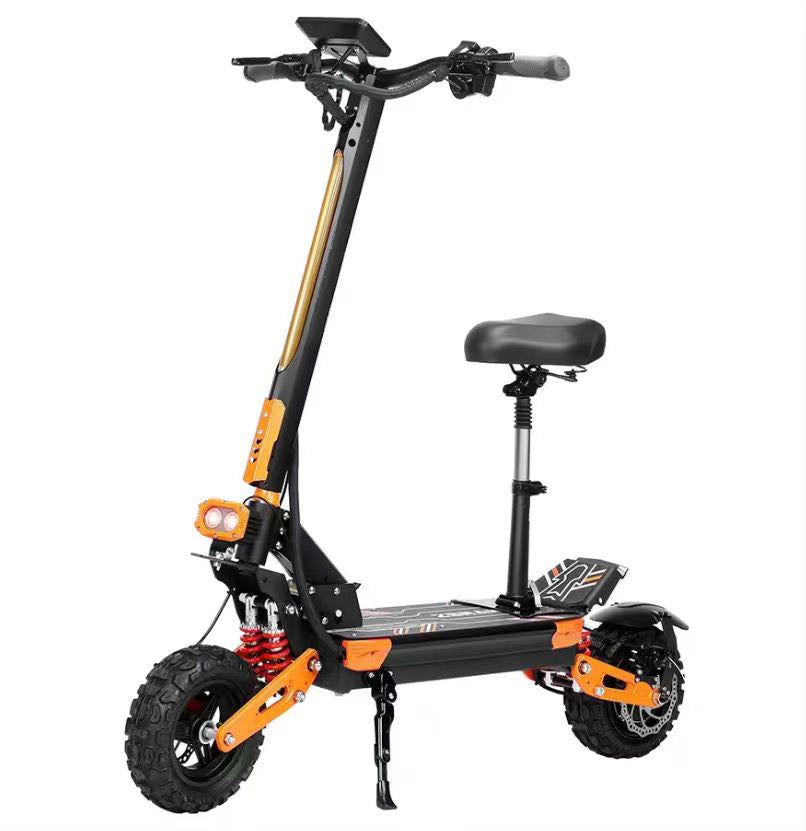
TopRiding ZSNAKE Z35 - Best Budget Electric Scooter
Built for the rider who demands aggressive off-road capability and extreme durability. Featuring massive 11-inch off-road fat tires and full spring suspension, the Z35 glides over terrain that would destroy a standard commuter. It boasts rigorous UL 2272 Certification for battery safety.
-
Top Speed: 33 MPH
-
Motor: 2800W Single Motor
-
Battery & Range: 60V 15AH / Max Range 35 Miles
-
Payload: Max Rider Load 330 LBS
-
Features: Front & Rear Disc Brakes, DUAL Charging, 11" Fat Tires
View the ZSNAKE Z35
2. VSETT 9+
The VSETT 9+ is a masterclass in agility. While it operates on a 48V system, its dual 650W motors are tuned to absolute perfection. It features vastly superior turn signals integrated into the handlebars, NFC card key lock security, and a suspension system that feels like floating on a cloud. It is slightly slower than the Ghost but infinitely more refined.
3. Kaabo Mantis V2
The Mantis V2 is the Ghost’s most direct historical rival. Upgraded with sine-wave controllers, the Mantis delivers butter-smooth acceleration, completely eliminating the jerky, whiplash feeling of the Ghost’s square-wave controllers. It also features a superior lighting package and a rock-solid stem.
4. Segway Ninebot Max G2
If you realize you do not actually need dual-motor power and just want absolute bulletproof reliability, look here. If you are comparing the best long range electric scooters under 1000, the Max G2 offers self-healing tubeless tires, hydraulic front suspension, and Apple Find My integration. It tops out at 22 mph, but it will never break down.
5. Apollo City Pro
If you want to stay within the Apollo ecosystem but want a modernized machine, the City Pro is the answer. It abandons the high-maintenance split rims for 10-inch self-healing tubeless tires, features a beautifully integrated display, and utilizes regenerative braking so efficient you rarely have to pull the mechanical brake levers. It is an excellent choice for navigating areas detailing where electric scooters are not allowed due to its sleek, non-threatening aesthetic.
Data & Comparison Tables
Quick Summary Table: The 2026 Scooter Verdict
| Scooter Model |
Voltage / Power |
Top Speed |
Best Suited For |
| Apollo Ghost |
52V / Dual 800W |
39 MPH |
DIY Mechanics / Split-rim lovers |
| TopRiding ZSNAKE Z35 |
60V / 2800W |
33 MPH |
Heavy Riders / Off-Road Dominance |
| Kaabo Mantis V2 |
60V / Dual 1000W |
40 MPH |
Smooth Sine-Wave Acceleration |
| VSETT 9+ |
48V / Dual 650W |
33 MPH |
Urban Agility & Advanced Security |
Comparison Table: Apollo Ghost vs. TopRiding ZSNAKE Z35
| Feature |
Apollo Ghost |
TopRiding ZSNAKE Z35 |
| Battery Architecture |
52V (Subject to heavier voltage sag) |
60V (Superior sustained torque) |
| Max Payload |
285 lbs |
330 lbs (Heavy-duty certified) |
| Tire Size |
10-inch standard pneumatic |
11-inch Fat Off-Road Tires |
| Safety Certification |
Basic CE |
UL 2272 Certified (Rigorous fire safety) |
Pros and Cons Table: Apollo Ghost
| Pros (Advantages) |
Cons (Limitations) |
| Split-rim design makes inner tube changes incredibly fast and simple. |
Notorious stem wobble requires frequent tightening or an aftermarket clamp. |
| Forged aluminum frame is highly resistant to cracking under stress. |
Archaic QS-S4 trigger throttle is un-ergonomic for long rides. |
| Adjustable coil suspension allows for customized ride stiffness. |
52V battery architecture is outdated compared to modern 60V competitors. |
Buying Guide Table: Selecting Your Scooter
| Rider Profile |
Crucial Specification |
Recommended Alternative |
| Rider over 250 lbs or tackles steep hills |
Must have 60V architecture and 2500W+ peak output. |
TopRiding ZSNAKE Z35 |
| Food Delivery Courier |
Must have tubeless self-healing tires and IPX5+ water resistance. |
Apollo City Pro (or see Best electric scooters for delivery business) |
| Urban Commuter in High-Theft Area |
NFC Keycard lock and foldable, portable dimensions. |
VSETT 9+ |
Frequently Asked Questions
Is the Apollo Ghost a good scooter?
Yes, the Apollo Ghost is a good scooter, particularly noted for its robust dual 800W motors and split-rim design that makes tire changes incredibly easy. However, by 2026 standards, its 52V architecture, archaic QS-S4 display, and tendency for stem wobble make newer 60V alternatives a much better value for the money.
How fast does the Apollo Ghost go?
The Apollo Ghost is capable of reaching a top speed of 39 mph (62 km/h) under optimal conditions with a fully charged 52V battery. Performance will decrease as the battery drains due to voltage sag.
Is a 60V scooter better than a 52V scooter like the Apollo Ghost?
In most professional situations, yes. A 60V system provides higher top speeds, better sustained torque for hill climbing, and less voltage sag at lower battery percentages compared to a 52V system. This is why alternatives like the TopRiding ZSNAKE Z35 outperform the Ghost in heavy-duty applications.


