NIU has undeniably dominated the urban micromobility landscape for several years. Their sleek designs, robust smartphone applications, and aggressive marketing have made them a household name for commuters worldwide. However, the electric scooter market is evolving rapidly. From our experience, advanced riders quickly discover the limitations of the NIU ecosystem: locked-down firmware, proprietary parts that make DIY repairs incredibly difficult, and suspension systems that often struggle on poorly maintained city streets. If you refuse to be locked into a single manufacturer's closed ecosystem, you need to explore the best alternatives to NIU scooters available today.

At TopRiding, we bring decades of combined experience in the design, R&D, and manufacturing of electric mobility solutions. Founded in 2015, we initially focused on the demanding B2B market, serving global brands and enterprise clients. This deep manufacturing expertise has shown us exactly where mainstream brands cut corners. We recommend seeking out alternatives to NIU scooters that prioritize modular repairs, open-source upgradeability, and raw power-to-weight ratios. In this comprehensive expert guide, we break down the top six alternatives to NIU scooters, examining their drivetrains, battery chemistries, and real-world ride dynamics to help you make an informed investment.
Comparison Matrix: Alternatives to NIU Scooters
To assist your procurement decision, we have compiled a summary table of the best alternatives to NIU scooters. We evaluate them across critical commuter metrics: continuous motor wattage, real-world range, top speed, and primary suspension architecture.
| Scooter Model |
Continuous Motor Power |
Real-World Range |
Top Speed |
Primary Suspension System |
| Segway Ninebot Max G2 |
1000W (Peak) |
28 Miles |
22 MPH |
Hydraulic Front / Dual Spring Rear |
| Apollo City Pro |
Dual 500W |
38 Miles |
32 MPH |
Triple Spring Suspension |
| TopRiding Elite Series |
Dual 800W |
45 Miles |
35 MPH |
Adjustable Hydraulic Coilover |
| Vsett 8 |
600W (Single) |
30 Miles |
25 MPH |
Swingarm Spring Suspension |
| Fluid Mosquito |
500W (Peak) |
20 Miles |
25 MPH |
Dual Elastomer |
| Nami Klima |
Dual 1000W |
40 Miles |
40 MPH |
Adjustable Hydraulic Cartridge |
Why Seek Alternatives to NIU Scooters?
While the NIU KQi series offers an excellent entry point into micromobility, veteran riders quickly outgrow them. The primary issue lies in proprietary technology. When you purchase a NIU, you are tied to their specific charging adapters, proprietary battery management systems (BMS), and locked controller software. If a motor hall sensor fails, you cannot simply swap it out with standard aftermarket components. You must send it to an authorized dealer, resulting in weeks of downtime.
Furthermore, evaluating alternatives to NIU scooters allows you to access dual-motor configurations that NIU largely ignores in their commuter line. A single 350W or 500W motor is adequate for flat, paved suburban streets. However, if your daily route involves steep urban inclines or carrying heavy backpacks, you will experience severe voltage sag. By exploring the vast landscape of alternatives to NIU scooters, you can find dual-motor beasts, ultra-lightweight carbon fiber models, and machines that feature easily swappable pneumatic tires.
The 6 Best Alternatives to NIU Scooters
1. TopRiding FOHOLO F15 - Best Adult Electric Scooter | 47MPH Fast • 5600W Dual Motors • All-Terrain
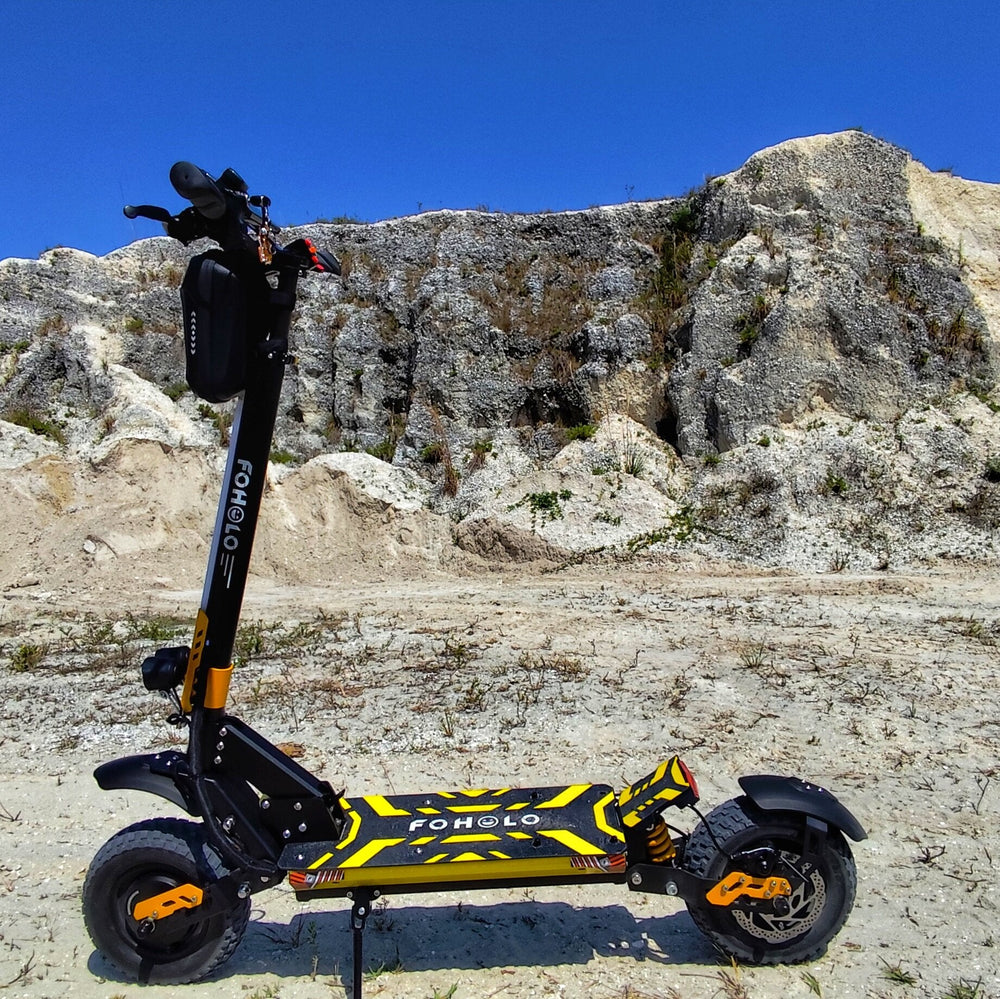
Specifications for product TopRiding FOHOLO F15 - Best Adult Electric Scooter | 47MPH Fast • 5600W Dual Motors • All-Terrain
| Power |
|
5600W dual brushless motor(2800W × 2)
|
|
47 MPH
|
|
Up to 40° incline
|
|
12″ All-Terrain Explosion-Proof Tires
|
|
6 + 1 (Sport ×3, Standard ×3, ECO)
|
| Battery |
|
60V 21AH lithium battery
|
|
55 miles
|
|
2 chargers / 2 ports
|
|
4-6 hours
|
|
Intelligent BMS
|
| Comfort & Safety |
|
Full spring suspension
|
|
Front & rear disc brakes
|
|
Large multi-function LCD
|
|
Adjustable: 45-54 inches
|
| Lighting |
|
2 front LED headlights
|
|
360° LED ambient lighting
|
| Body |
|
76.5 LBS
|
|
330 LBS
|
|
Quick folding / Removable seat
|
|
52.8"L × 8.7"W × 45-54"H
|
| Certification |
|
UL2272
|
2. Apollo City Pro: The Dual-Motor Upgrade
When searching for alternatives to NIU scooters that offer more aggressive acceleration, the Apollo City Pro is our top recommendation. Featuring dual 500W motors, this scooter provides a massive leap in torque. Apollo has heavily invested in their proprietary regenerative braking throttles, allowing you to seamlessly recharge the battery while descending hills without touching the mechanical drum brakes. Its IP66 water resistance rating also makes it far superior to NIU models for riders who commute in heavy rain.
Expert Insight: TopRiding integrates production and sales to guarantee quality control. Based on decades of R&D, we know that dual-motor setups not only increase top speed but drastically improve traction on wet leaves and loose gravel by providing all-wheel-drive stability.
3.TopRiding FOHOLO F19 - Fast Electric Scooter for Adult, 7000W Dual Motors, 65 Miles Long Range
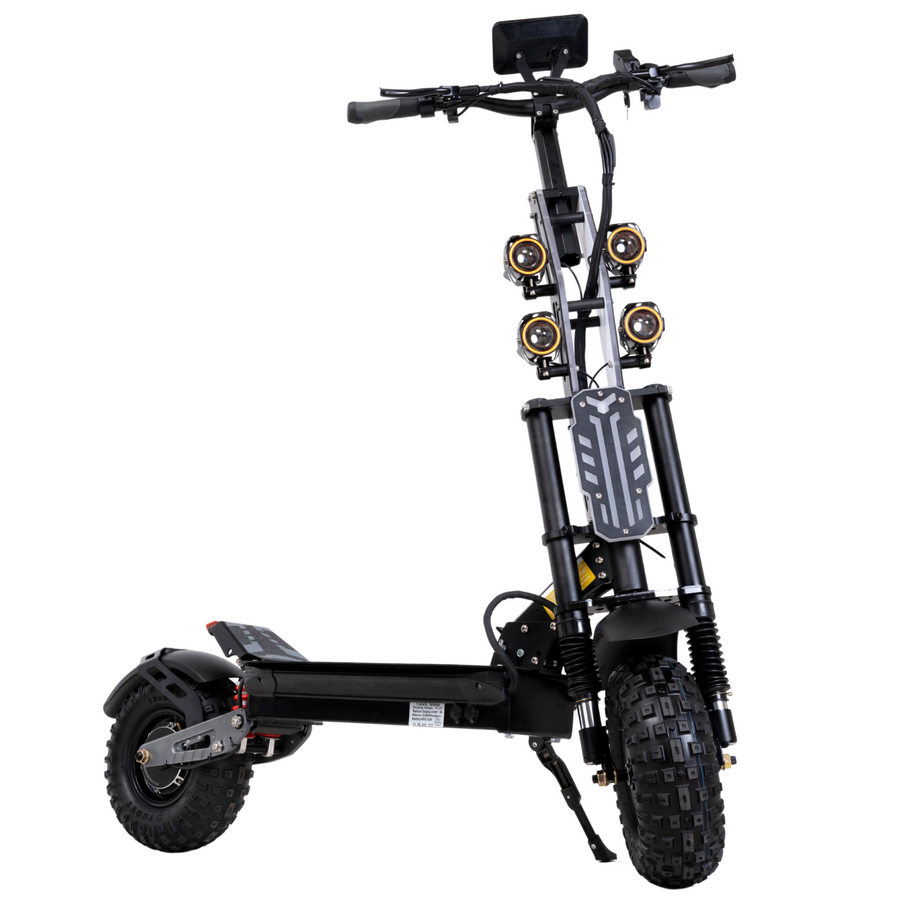
Specifications for product TopRiding FOHOLO F19 - Fast Electric Scooter for Adult, 7000W Dual Motors, 65 Miles Long Range
| Power |
|
7000W dual brushless motor(3500W × 2)
|
|
55 MPH
|
|
Up to 45° incline
|
|
13″ All-Terrain Explosion-Proof Fat Tires
|
|
6 + 1 (Sport ×3, Standard ×3, ECO)
|
| Battery |
|
60V 33AH lithium battery
|
|
65+ miles
|
|
2 chargers / 2 ports
|
|
5-8 hours
|
|
Intelligent BMS
|
| Comfort & Safety |
|
Triple Clamp Hydraulic Fork + Dual Spring Rear
|
|
Hydraulic disc brakes
|
|
Large multi-function LCD
|
|
Adjustable: 49-57 inches
|
| Lighting |
|
4 front LED headlights
|
|
360° LED ambient lighting
|
| Body |
|
105 LBS
|
|
440 LBS
|
|
Quick folding / Removable seat
|
|
53.5"L × 10.6"W × 49-57"H
|
| Certification |
|
UL2272
|
4. Vsett 8: The Suspension Innovator
The Vsett 8 occupies a unique space in the market. It utilizes an advanced swingarm suspension design typically reserved for scooters twice its price. This design provides incredibly plush travel over rough terrain. Additionally, it features an NFC card reader for ignition—a massive upgrade in security over standard keyed ignitions or app-only locks. For riders needing a compact fold but refusing to compromise on ride comfort, the Vsett 8 is among the elite alternatives to NIU scooters.
5. Fluid Mosquito: The Ultra-Portable Commuter
Weighing in at a mere 29 lbs, the Fluid Mosquito proves that high performance does not require a massive footprint. NIU models are notoriously heavy and bulky to carry up apartment stairs. The Mosquito features a 500W motor capable of hitting 25 MPH, yet folds down small enough to fit under a subway seat or inside a small car trunk. It achieves this using solid tires and elastomer suspension, making it a zero-maintenance machine for multi-modal commuters.
6. Nami Klima: The Premium Enthusiast Choice
If your budget allows and you want to leave NIU entirely in the dust, the Nami Klima is a revelation. Built with a hand-welded tubular aluminum frame and fully adjustable hydraulic suspension cartridges, it rides like a premium motorcycle. The dual 1000W motors deliver terrifyingly fast acceleration. The Klima features sine-wave controllers, which make the power delivery incredibly smooth and silent compared to the loud, buzzing square-wave controllers found in cheaper alternatives to NIU scooters.
Once you step away from entry-level brands, you enter a world of customization. Many riders quickly realize that factory speed limits hinder their commute on fast-flowing urban roads. If you are looking to push your machine's limits, you might want to learn how to make electric scooter faster by modifying controller shunts, upgrading battery voltage, or flashing custom firmware.
Torque is another critical factor. Commuters living in cities like San Francisco or Seattle cannot rely on a standard 300W motor. A common question we field is: can a 500W scooter go uphill? The answer is yes, but the controller's amp output and the rider's weight play a massive role. Speaking of payload, larger riders evaluating these alternatives to NIU scooters must ensure the frame, stem, and suspension can handle the stress. We have compiled specific data for heavier riders who frequently ask can a 300 lb person ride an electric scooter safely, focusing on heavy-duty stem latches and reinforced swingarms.
Battery Maintenance and Theft Prevention
Investing in high-end alternatives to NIU scooters means you must protect your asset. Security is a massive concern in metropolitan areas. Are electric scooters easily stolen? Absolutely, if you rely solely on software locks or cheap cable locks. We strongly recommend heavy-duty U-locks combined with motion-sensing alarms. Furthermore, tracking solutions and removing the battery (if the design permits) offer the ultimate peace of mind.
Battery longevity is the second pillar of scooter ownership. Lithium-ion cells are sensitive to extreme temperatures. If you plan to commute year-round, you must understand how cold weather affects scooter battery performance. Freezing temperatures increase internal cellular resistance, leading to massive voltage sag and temporarily reducing your total range by up to 30%. Sourcing a reliable Battery charger for e scooter systems and charging the unit indoors at room temperature is non-negotiable for preserving cell health.
Ultimately, whether you are looking for an ultra-premium ride or exploring the best long range electric scooters under 1000, the micromobility sector offers incredible diversity. The advancements in these electric drivetrains mirror the high-end industrial manufacturing progress seen by any leading Electric Golf Carts Manufacturer, proving that electric transit is powerful, scalable, and here to stay.
Frequently Asked Questions
Why are dual-motor scooters considered better alternatives to NIU scooters?
Dual-motor scooters provide active traction to both the front and rear wheels. This significantly increases hill-climbing torque, provides faster acceleration to keep up with city traffic, and offers much better stability on wet or loose surfaces compared to the single-motor setups standard on most NIU models.
Can I replace the battery in these alternative scooters myself?
Yes. Unlike NIU, which heavily encrypts its battery management systems to force riders into authorized dealerships, brands like TopRiding, Vsett, and Apollo utilize standard XT60 or XT90 connectors. This modularity allows experienced riders to replace or upgrade their battery packs without software lockouts.
Are solid tires better than pneumatic (air-filled) tires?
It depends on your priority. Solid tires, like those on the Fluid Mosquito, are 100% flat-proof but provide a harsher ride. Pneumatic tires offer far superior traction and natural shock absorption but require routine pressure checks to avoid pinch flats. We recommend pneumatic tires paired with a robust suspension system for the best ride quality.
Do I need a special charger if I upgrade to a 60V scooter?
Yes. You must strictly use a charger that matches the voltage output of your scooter's battery architecture. Using an incorrect charger can lead to catastrophic battery failure or fire. High-performance alternatives to NIU scooters often support dual-charging ports, allowing you to use two chargers simultaneously to cut charge times in half.
Technical References


