If you have ever ridden a solid-tire micromobility vehicle over a pothole-riddled city street or a cracked sidewalk, you already know the physical toll it takes on your wrists, knees, and lower back. When buyers enter the market, they obsess over top speed, motor wattage, and battery capacity, treating ride quality as a secondary luxury. From our experience evaluating hundreds of commercial and consumer models, this is a dangerous oversight. The reality is that speed is useless if the vehicle shakes violently enough to blur your vision.

We are frequently asked whether electric scooters need a suspension system, or if thick air-filled tires are enough to absorb the shock. As industry practitioners, we do not view suspension merely as a comfort feature; it is a critical safety and handling requirement. When you strike a bump at 20 mph without shocks, your tires lose contact with the pavement. In that split second of airborne travel, you have zero braking power and zero steering control. In this comprehensive guide, we will break down the mechanics of ride dampening, evaluate the real-world costs and benefits, and provide you with the commercial and practical judgment necessary to make the right purchasing decision.
Quick Answer: Do Electric Scooters Need a Suspension System?
Whether electric scooters need a suspension system depends directly on your riding speed, route terrain, and body weight. In most professional situations, yes, electric scooters need a suspension system. If you ride faster than 15 mph, commute on typical urban streets with potholes, or weigh over 200 lbs, a mechanical suspension is mandatory for maintaining braking traction and structural integrity. However, if you are strictly using the scooter for short, low-speed "last mile" trips on perfectly paved indoor or campus pathways, you can skip the suspension to save on vehicle weight and upfront cost.
What It Is: Understanding Scooter Suspension Types
A suspension system is a mechanical assembly connecting the scooter's deck (where you stand) to its wheels. Its sole purpose is to absorb kinetic energy from road impacts and dissipate it before it reaches the rider's body. If you are looking at electric scooters with suspension for adults, you will encounter three primary architectures:
-
Spring (Coil) Suspension: The most common type. It uses a coiled steel spring that compresses upon impact. It is highly durable and inexpensive but can feel slightly "bouncy" if not paired with a dampener.
-
Hydraulic / Air Suspension: Found on premium and high-speed models. These use fluid or compressed air inside a cylinder to absorb shocks. They offer the smoothest, most responsive ride and prevent the pogo-stick bouncing effect.
-
Rubber / Elastomer Suspension: Uses dense polyurethane blocks that compress under weight. They are lightweight, require zero maintenance, and are highly effective for urban environments, though they lack the deep travel distance required for heavy off-roading.
How It Works: The Physics of Dampening
When asking if electric scooters need a suspension system, you must understand traction dynamics. When a wheel hits a bump, the kinetic energy forces the wheel upward. Without suspension, that energy lifts the entire scooter—and the rider—off the ground. While airborne, your brakes are useless.
A suspension system allows the wheel to move vertically independently of the scooter deck. The shock compresses, absorbing the upward force, and immediately rebounds, pushing the tire back down against the asphalt. This ensures continuous tire-to-road contact. This mechanism is why we emphatically state that electric scooters can go off road only if they possess heavy-duty front and rear independent suspension.
The Core Benefits of Suspension
From a commercial and practical standpoint, investing in a suspension system yields massive returns in three specific areas:
-
Enhanced Safety and Braking: As established, suspension keeps your tires planted. On corrugated roads or wet gravel, maximum traction is the only thing standing between you and a collision.
-
Rider Fatigue Reduction: "Micro-vibrations" from continuous riding on rough asphalt cause severe joint fatigue. For commercial users, such as those relying on the best electric scooters for delivery business, suspension is an ergonomic necessity to survive an eight-hour shift without developing repetitive stress injuries.
-
Frame Longevity: Heavy impacts transfer stress directly to the folding stem and deck welds. A robust suspension absorbs this sheer force, preventing premature frame fracturing. This is particularly vital for heavier riders. If you are wondering can a 300 lb person ride an electric scooter safely, the answer is yes—but strictly on a dual-suspension model that can handle the increased dynamic load.
Limitations and Mechanical Trade-offs
We do not advocate blindly throwing features at a vehicle without considering the trade-offs. If electric scooters need a suspension system for comfort, they must sacrifice portability to get it.
Suspension components add significant weight to the chassis. A standard commuter scooter without shocks might weigh 28 lbs, whereas a dual-suspension model easily pushes past 50 lbs. If your commute involves carrying the scooter up four flights of stairs or lifting it onto a crowded commuter train, that extra 20 lbs will quickly become a logistical nightmare. Furthermore, moving parts require maintenance; hydraulic fluid can leak, and springs can squeak if exposed to heavy rain or road salt. You must factor this into your long-term ownership costs.
Quick Summary: Evaluating Suspension Needs by Terrain
| Terrain Type |
Average Speed |
Do Electric Scooters Need a Suspension System? |
Recommended Setup |
| Smooth Bike Paths / Campus |
10 - 15 mph |
No |
Large pneumatic (air) tires only. |
| City Streets / Moderate Potholes |
15 - 25 mph |
Yes |
Front spring or dual elastomer suspension. |
| Off-Road / Gravel / Forest Trails |
20+ mph |
Absolutely Mandatory |
Full dual hydraulic/spring suspension. |
Who Should Use It & Who Does Not Need It
For commercial users and heavy-duty applications: Delivery couriers, long-distance commuters, and off-road enthusiasts must utilize full-suspension systems. Additionally, if you live in a region with poor infrastructure or steep inclines, the added traction from a suspension system is non-negotiable. Many riders ask can a 500W scooter go uphill effectively; while the motor provides the torque, it is the suspension that ensures the front wheel does not bounce and lose grip on the incline.
Who does not need it: College students navigating pristine pedestrian pathways or urban dwellers seeking a hyper-portable "last mile" solution from the subway to the office. If you are reviewing the best scooters for college commuting, ultra-lightweight rigid scooters with pneumatic tires often provide the best balance of cost and portability.
Product Spotlight: Heavy-Duty Performance
When customers ask for a vehicle that perfectly bridges the gap between aggressive off-road capability and brutal urban commuting, we consistently point to models that prioritize structural integrity and deep-travel suspension. You do not have to spend $3,000 to acquire a safe, highly capable machine.
TopRiding ZSNAKE Z35 - Best Budget Electric Scooter for Adult
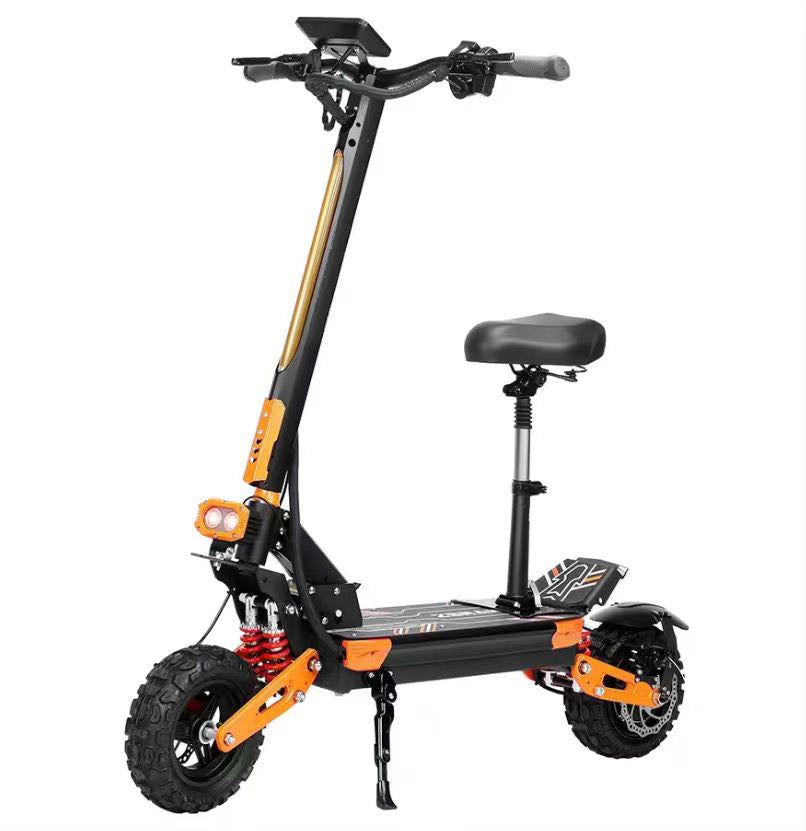
If you are looking for the best long range electric scooters under 1000 that absolutely refuse to compromise on ride quality, the ZSNAKE Z35 is an engineering triumph. It definitively answers whether electric scooters need a suspension system by providing a massive Full Spring Suspension setup paired with 11" Off-road Fat Tires, guaranteeing unmatched stability at high speeds.
-
Extreme Power: 2800W Single Motor reaching a Top Speed of 33 MPH.
-
Distance & Capacity: Max Range of 35 Miles (60V 15AH Battery) and supports a Max Rider Load of 330 LBS.
-
Safety First: UL 2272 Certification with aggressive Front & Rear Disc Brakes.
-
Efficiency: DUAL Charging capability significantly reduces downtime.
View the ZSNAKE Z35 Specifications
Common Mistakes Buyers Make
In our testing, we frequently see consumers make dangerous assumptions regarding micromobility hardware. The most common mistake is assuming that thick, solid rubber tires paired with a basic front spring equate to a "comfortable" ride. Solid tires transfer massive amounts of kinetic energy directly to the suspension, overwhelming cheap springs instantly. Always pair mechanical suspension with pneumatic (air-filled) tires for true dual-stage dampening.
Another major error is failing to account for regional legislation when upgrading to high-performance, suspended scooters. Before purchasing a heavy-duty 30+ mph scooter, you must research do you need a license for an electric scooter in your state. For example, understanding electric scooter laws in New York will prevent you from facing heavy fines or vehicle impoundment. High-speed scooters blur the legal line between micromobility and mopeds.
Pros and Cons: Full Suspension Electric Scooters
| Pros (Advantages) |
Cons (Limitations) |
| Maximum safety and braking traction on uneven roads. |
Increases overall vehicle weight by 15-30 lbs. |
| Protects the frame and folding stem from impact fractures. |
Higher initial purchase cost. |
| Eliminates joint fatigue during long daily commutes. |
Requires periodic maintenance (lubrication, cleaning). |
| Allows the vehicle to traverse off-road environments. |
Can make the scooter bulky and harder to store indoors. |
Expert Buying Considerations
When selecting your next electric scooter, you must apply commercial and practical judgment. If you are riding in environments that dip below freezing, you must understand how cold weather affects scooter battery performance, but also how it hardens rubber elastomer suspensions, making them feel rigid. Opt for coil or hydraulic shocks if you are a winter commuter.
Furthermore, consider vehicle security. High-end, full-suspension scooters are highly desirable targets for theft. You must ask yourself are electric scooters easily stolen in your city? If you cannot bring a heavy 60 lb suspended scooter into your office building due to weight, you must invest heavily in premium U-locks and GPS tracking alarms if you leave it chained outside.
Our Final Expert Recommendation
In most professional situations, we unequivocally state that electric scooters need a suspension system. The era of treating electric scooters as disposable toys is over; these are legitimate, high-speed commuting vehicles. The safety ROI of a dual-suspension system—specifically the drastically reduced braking distance on uneven pavement and the prevention of speed-wobble—far outweighs the negative aspects of increased vehicle weight and cost. Unless your absolute primary concern is carrying the scooter up multiple flights of stairs daily, you should never purchase a rigid-frame electric scooter for adult commuting.
Frequently Asked Questions (FAQ)
Do electric scooters need a suspension system for city riding?
Yes. City streets are rarely perfectly smooth. Potholes, expansion joints, and uneven pavement cause severe vibrations that fatigue the rider and reduce braking traction. A suspension system absorbs these impacts, ensuring a safer and more comfortable commute.
Can pneumatic tires replace a suspension system?
No. While large pneumatic (air-filled) tires provide a baseline level of shock absorption, they cannot dampen deep impacts or high-speed vibrations effectively on their own. For optimal safety and comfort, you need both pneumatic tires and a dedicated mechanical suspension.
Is suspension necessary for heavy riders?
Absolutely. Heavier riders place significantly more downward force on the scooter frame. Without a robust suspension system, the scooter frame absorbs 100% of the road impact, which can lead to premature structural failure and a dangerously unstable ride.
Authoritative Industry References
To ensure our safety and mechanical recommendations align with established transportation engineering standards, we consult the following authoritative bodies: